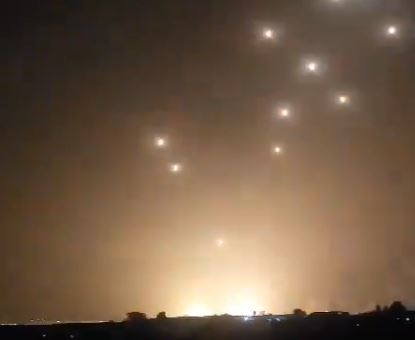
Melbourne: With Iran’s firing of some 180 ballistic missiles at Israel overnight, the Middle East is again on the brink of what would be a costly, ruinous regional war. Israel and its ally, the United States, shot down most of the missiles.
Israeli Prime Minister Benjamin Netanyahu immediately vowed to retaliate for the attack. He called it a “big mistake” that Iran will “pay for”.


The strike marked a dramatic shift in Iran’s calculations following weeks of escalating Israeli attacks on the leaders of its proxy groups, Hamas and Hezbollah, and their forces in both Gaza and Lebanon.
Iran has traditionally outsourced its fighting to Hezbollah and Hamas. It has been very much concerned about getting dragged into direct confrontation with Israel because of the ramifications for the ruling regime – namely the possible internal dissent and chaos that any war with Israel might generate.
When Hamas political leader Ismail Haniyeh was killed in Tehran in late July, Iran’s leaders said they would respond appropriately. They basically left it to Hezbollah to do that.
And as Israel intensified its military campaign against Hezbollah in Lebanon in recent weeks, another Iranian proxy group, the Houthi rebels in Yemen, claimed to have retaliated by launching missiles and drones at Israeli cities and US destroyers in the Red Sea. Israel responded with airstrikes on Yemen.
In this context, from the Iranian point of view, it looked like Iran was just sitting on the fence and not performing its leadership role in challenging Israel. So, to a large extent, Iran had to exert its role as the leader of the so-called “axis of resistance” and get into the fight.
Fighting Israel is very much a pillar of state identity in Iran. The Iranian political establishment is set up on the principle of challenging the United States and freeing Palestinian lands occupied by Israel. Those things are ingrained in the Iranian state identity. So, if Iran doesn’t act on this principle, there’s a serious risk of undermining its own identity.
A delicate balancing act
Yet there are clearly serious risks to this type of direct attack by Iran.
Domestically, the Iranian political regime is suffering from a serious crisis of legitimacy. There have been numerous popular uprisings in Iran in recent years. These include the massive “Women, Life, Freedom” movement that erupted following the death of Mahsa Amini in police custody for allegedly not properly wearing her hijab.
There is also a major dissenting view in Iran that challenges the regime’s anti-US and anti-Israel state identity and its commitment to perpetual conflict with both countries.
So, the authorities in Iran have been concerned that direct confrontation with Israel and the US would unleash these internal dissenting voices and seriously threaten the regime’s survival. It’s this existential threat that has stopped Iran from acting on its principles.
In addition, Iran has a new president, Masoud Pezeshkian, who belongs to the reformist camp and has an agenda of improving Iran’s relations with the West. He has been talking about reviving the Iran nuclear deal with the international community, sending signals that Iran is prepared to talk with the Americans.
But the problem is the regional dynamics have completely changed since that deal was negotiated with the Obama administration in 2015. Iran has been a pariah state in recent years – and even more so since the conflict between Israel and Hamas began a year ago.
Since then, no Western country would deem it appropriate or politically expedient to engage in nuclear talks with Iran, with the aim of alleviating international sanctions on the regime. Not at a time when Iran is openly calling for the destruction of Israel, supporting Hezbollah and Hamas in their attacks on Israel, and now engaging in confrontations with Israel itself.
So the timing is awful for Pezeshkian’s agenda of repairing the damage to Iran’s global standing.
Ultimately, though, it’s not the president who calls the shots in Iran – it is Supreme Leader Ayatollah Ali Khamenei and the Supreme National Security Council who consider matters of war and peace and decide on the course of action. The supreme leader is also the head of state and appoints the head of the Islamic Revolutionary Guard Corps (IRGC).
The IRGC generals have been advocating for more serious and resolute action against Israel ever since the war in Gaza started. And it looks like the supreme leader has finally listened to this advice.
So, the regime has been maintaining a delicate balance of these factors: preserving Iran’s state identity and what it stands for in the region, and the need to manage internal dissent and ensure its survival.
In normal circumstances, it was easy for Iran to maintain this balance. It could manage its internal opponents through brutal force or appeasement and advocate an aggressive foreign policy in the region.
Now, the scales have tipped. From the Iranian perspective, Israel has been so brazen in its actions against its proxies, it just didn’t look right for Iran to continue sitting on the fence, not taking action.
As such, it has become more important for Iran to emphasise its anti-American, anti-Israel state identity and perhaps deal with an acceptable level of risk coming from a rise in internal dissent.
Where things go from here
With its attack on Israel, Iran is also prepared for another risk – direct retaliation from Israel and all-out war breaking out.
The conflict in the region is really going according to Netanyahu’s playbook. He has been advocating for hitting Iran and for the United States to target Iran. Now, Israel has the justification to retaliate against Iran and also drag the United States into the conflict.
Unfortunately, Iran is also now prepared to see the entire Persian Gulf get embroiled in the conflict because any retaliation by Israel and perhaps the United States would make US assets in the Persian Gulf, such as navy ships and commercial vessels, vulnerable to attacks by Iran or its allies. And that could have major implications for trade and security in the region.
This is the way things are heading. Iran would know that hitting Israel would invite Israeli retaliation and that this retaliation would likely happen with US backing.
By Shahram Akbarzadeh, Convenor, Middle East Studies Forum (MESF), and Deputy Director (International), Alfred Deakin Institute for Citizenship and Globalisation, Deakin University
The Conversation