Change rarely arrives announced. But when a popular movement stirs, transformation can sweep in like a tide. The recent by-election results in India show exactly that pattern. Voters in Bankipur, Bihar and Datia, Madhya Pradesh, delivered outcomes that could reshape the political map. Manjalpur in Gujarat however, saw no change.
The most closely watched contest was in Bankipur, a seat held for 30 plus years, first by Nabin Kishore Prasad Sinha and later by his son, Nitin Nabin. Seen as Prime Minister Narendra Modi’s chosen candidate, Nitin Nabin became national president of the BJP on 20 January 2026.
Also Read


After being elected to Rajya Sabha, his resignation resulted in the by-poll in Bankipur Assembly seat. After results were declared, efforts to downplay the significance of the seat began almost immediately. But the outcome may point to a broader trend in coming days. Most media coverage had predicted a straight fight between the Rashtriya Janata Dal and BJP. That forecast has been proven wrong.
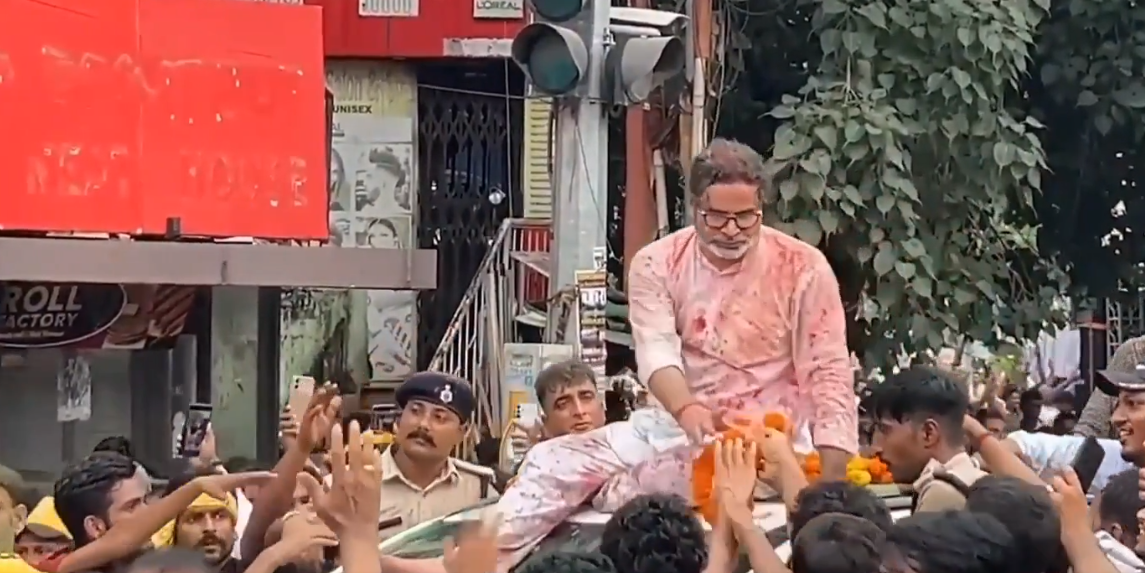
In an upset, Prashant Kishor, chief of the Jan Suraaj Party and a longtime election strategist defeated his closest rival, BJP’s Niraj Kumar Sinha by 18,953 votes, marking what many are calling a historic win.
Analysts say the results across the three seats suggest that when voters turn decisively against a party, neither paper ballots nor electronic voting machines do not matter much. In Madhya Pradesh’s Datia constituency, the Indian National Congress reclaimed a seat it had previously held, a result seen as a signal about the state’s shifting political mood. In Gujarat’s Manjalpur constituency, where the by-election followed the death of the sitting lawmaker, the BJP retained its seat.
Bankipur was at the center of the political action over the past 30 days, as several Union ministers, the state’s chief minister, state ministers and senior leaders set up camp there. Despite the money, manpower and strategy BJP deployed, its defeat in the seat is being seen as a major setback for the party. In the 2025 Bihar Assembly election, the Jan Suraaj Party fielded candidates in 238 of the state’s 243 seats but failed to win a single one. Critics later said Prashant Kishor’s decision not to contest himself was his biggest mistake, arguing that voters are unlikely to trust a leader who won’t enter the electoral fray himself.
Kishor appears to have taken that criticism to heart, running as a candidate himself in this by-election. Rather than dwelling on his party’s defeat in the last Lok Sabha elections, he pressed ahead with his strategy. The student movement that began at Jantar Mantar in New Delhi may also have influenced the outcome of the Bihar by-election. Its effects reached Bihar several days after the protests started in the national capital.
After the students agitation intensified sharply in Bihar on 25 July, Union Minister Dharmendra Pradhan resigned at Prime Minister Narendra Modi’s direction. Beyond Jantar Mantar in Delhi, students’ protests took fierce forms in Maharashtra and Bihar. In both states, each governed by a ‘double-engine’ BJP-led government, the intensity of the youth-led protests appears to have had palpable impact. The results in Bihar and Madhya Pradesh could be an early signal for the 2029 Lok Sabha elections.
Protests at Jantar Mantar showed that discontent among youth and students is deepening. The central government’s response of using police to brutally beat up protesters, file cases against them and send party workers to intimidate their parents appears to have further fueled anti-BJP sentiments, as reflected especially in the Bankipur result.
The Bihar by-poll points to another key trend. Voters looking to defeat the BJP won’t necessarily rally behind one established Opposition party. The ‘There Is No Alternative’ (TINA) factor no longer holds much relevance. Voters turning away from the BJP are not guaranteed to shift to the Congress or any strong regional party.
Instead, wherever an acceptable candidate emerges, that candidate becomes the alternative in that constituency. That could substantially diminish the importance of an established party symbol and the influence of party workers. Against this backdrop, it remains unclear whether nationwide youth and student discontent will have serious impact in future elections. How that plays out could shape the outcome of the 2029 general elections.