As the US-Israeli war with Iran escalates, the infrastructure and transit routes that sustain global energy flows are increasingly drawing fire, rattling financial markets. But the biggest risk is not necessarily a sustained loss of the physical supply of oil. It is the tightly integrated energy system on which almost every country relies that could experience a massive financial and geopolitical shock.
The initial trigger was the US-Israeli strike on Iran’s main oil shipping terminal on Kharg Island, the departure point for nearly all of the Islamic Republic’s crude exports. Roughly 10% of Iran’s GDP is directly tied to oil revenues, so targeting this single export node is not merely a tactical blow; it strikes at the regime’s primary source of foreign currency and fiscal stability.


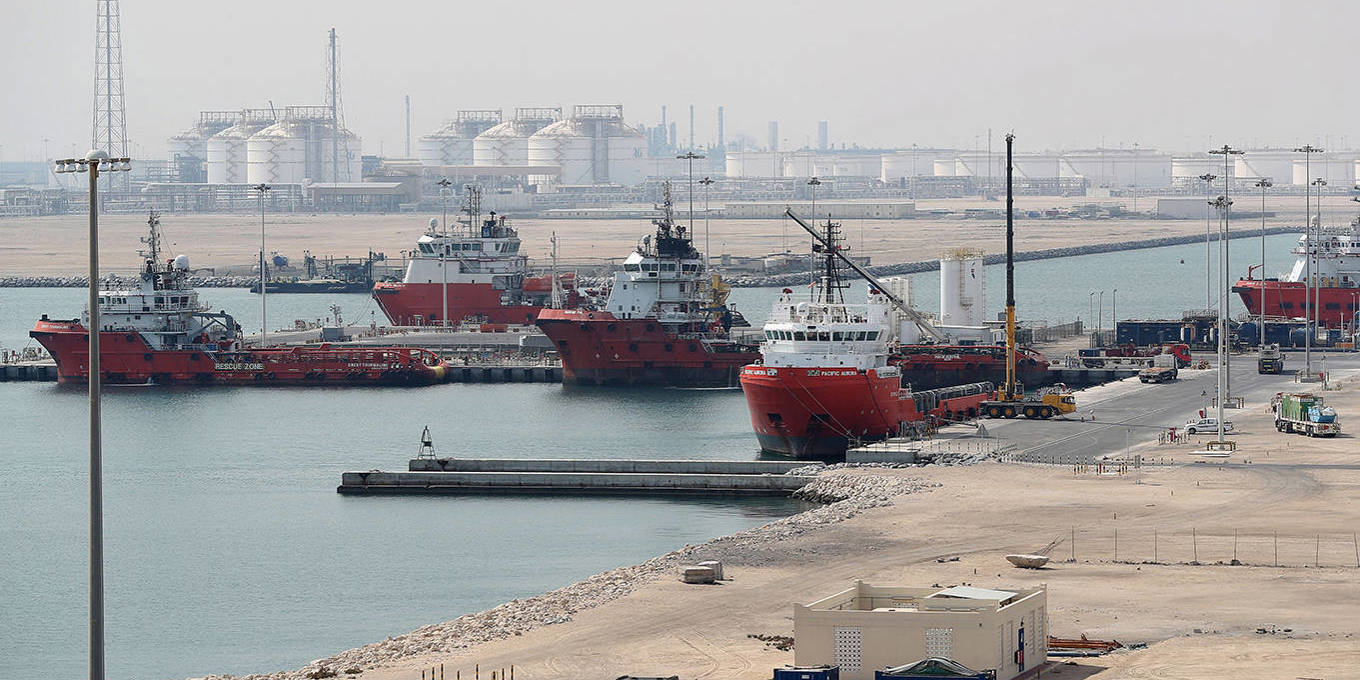
But Iran has responded in kind. The closure of navigation in the Strait of Hormuz – through which nearly one-fifth of the global trade in oil and liquefied natural gas (LNG) passes – transforms a direct military exchange into a global risk event. With traffic halted, shipping capacity has contracted, war-risk insurance premiums have spiked, and energy markets have been adjusting accordingly.
The increased pressure on Saudi refining capacity directly affects downstream fuel markets, not just the crude supply. Refineries such as Ras Tanura are bottlenecks in the global fuel chain. When they are threatened or temporarily shut down, diesel and jet-fuel markets can tighten even if oil production itself remains intact. The effect is immediate and product-specific.
The disruption to Qatari LNG facilities operates differently. Although LNG markets are more flexible than pipeline systems, supply remains concentrated. Qatar alone is expected to account for roughly one-quarter of the global LNG market in the coming decade. The market is therefore highly sensitive. Already, LNG futures have surged by roughly 50% in intraday trading, reflecting an immediate re-pricing of geopolitical risk even without physical disruption.
Since the sharp reduction in Russian pipeline gas deliveries in 2022, Europe has become structurally dependent on seaborne LNG imports, with Qatar among its key long-term suppliers. Any sustained disruption to Qatari exports would therefore directly affect European gas balances, as well as those of major Asian importers.
These examples all underscore the structural fragility of the global energy trade. Even a temporary closure of the Strait of Hormuz is sufficient to raise shipping costs, insurance premiums, and forward contracts, embedding a systemic risk premium in global gas markets.
Moreover, these developments could draw additional regional players more directly into the conflict. After all, Saudi Arabia and other Gulf producers face a strategic dilemma: A failure to respond to attacks on their energy infrastructure could invite further targeting, but any escalation could widen and prolong the war. In any case, the stakes could not be higher, because the region’s energy facilities are not peripheral assets. They are central to national revenue, political stability, and geopolitical influence.
True, Iran’s leverage is not unlimited. The Strait of Hormuz is a critical chokepoint, but it is also heavily patrolled. Its narrow geography does mean that even limited missile or drone attacks on commercial vessels can disrupt traffic. But the US maintains a significant naval presence in the Gulf. If Iran tried to effect a prolonged blockade, it could invite overwhelming retaliation against its naval assets and coastal infrastructure. In that sense, its threats to close the Strait may be aimed at raising risk premiums, rather than representing a sustainable military strategy. Even if traffic resumes quickly, this episode will have demonstrated that it doesn’t take much interference to produce outsize financial effects.
Then there is the broader macroeconomic backdrop. The global economy is already heavily burdened by elevated public debt, persistent inflationary pressures, and uneven growth. A sustained disruption to Gulf exports would push oil and LNG prices sharply higher, with immediate inflationary consequences.
The implications for emerging markets are especially worrisome because energy often accounts for a substantial share of their total import bill. Higher dollar-denominated prices, combined with currency depreciation, could trigger balance-of-payments strains and sovereign-risk repricing. By targeting infrastructure that affects not only its immediate adversaries but also global consumers, Iran is attempting to broaden the economic costs of confrontation. The objective is not necessarily to shut down global supply, but to generate sufficient instability to force a wider diplomatic or strategic recalculation.
This strategy has many his torical parallels. The 1973 OPEC oil embargo fundamentally re-shaped Western foreign policy; Iran’s previous attacks on Saudi oil facilities in 2019 briefl y rat tled markets without generating sustained shortages; and Russia’s weaponisation of gas flows prior to 2022 demonstrated how quickly energy interdependence can become a source of geopolitical leverage. The current crisis shares elements of each of these episodes, but it is unfolding in a more financially integrated and faster-moving global economy. Energy prices will have a bearing on inflation data, central-bank policymaking, and political approval ratings within weeks, if not days. The sheer speed of these ramifications further increases the strategic value of disruption, as well as raising the stakes for regional actors whose own economies depend on stable export revenues. Again, the economic logic of this escalation does not depend on a sustained blockade or large-scale supply collapse. It depends on a universal vulnerability. When infrastructure concentration meets geopolitical tension, markets transmit stress rapidly across regions. If energy infrastructure continues to be targeted, the risk will extend beyond prices. Prolonged instability in Gulf energy assets could alter investment decisions, insurance markets, and diplomatic alignments.
The ongoing escalation is a test not just of military deterrence but of how resilient the global energy system is to deliberate political shock. In a tightly interconnected economy, regional wars rarely remain regional when energy flows are at stake.
The writer is Director of the Yannay Institute for Energy Security at the School of Sustainability at Reichman University.