Odisha News, Odisha Latest news, Odisha Daily - OrissaPOST
  • Home
  • Trending
  • State
  • Metro
  • National
  • International
  • Business
  • Feature
  • Entertainment
  • Sports
  • More..
    • Odisha Special
    • Editorial
    • Opinion
    • Careers
    • Sci-Tech
    • Timeout
    • Horoscope
    • Today’s Pic
  • Video
  • Epaper
  • News in Odia
  • Home
  • Trending
  • State
  • Metro
  • National
  • International
  • Business
  • Feature
  • Entertainment
  • Sports
  • More..
    • Odisha Special
    • Editorial
    • Opinion
    • Careers
    • Sci-Tech
    • Timeout
    • Horoscope
    • Today’s Pic
  • Video
  • Epaper
  • News in Odia
No Result
View All Result
OrissaPOST - Odisha Latest news, English Daily -
No Result
View All Result

Scientists lend mice ‘night vision’

Updated: March 3rd, 2019, 13:57 IST
in Sci-Tech
0
Share on FacebookShare on TwitterShare on WhatsAppShare on Linkedin

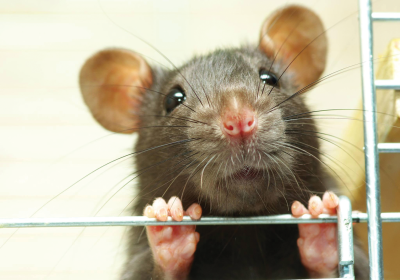
Washington: Scientists claim to have successfully given ‘night vision’ to mice, allowing them to see infrared light with minimal side effects.

The research could lead to advancements in human infrared vision technologies, including potential applications in civilian encryption, security, and military operations, scientists said.


Also Read

Drones

Ukraine offers drone defence tech as geopolitical bargaining tool

1 week ago

Andhra Pradesh to ban social media for children under 13 in 90 days

1 week ago

According to the study published in the journal Cell, a single injection of nanoparticles in the mice’s eyes bestowed infrared vision for up to 10 weeks with minimal side effects, allowing them to see infrared light even during the day and with enough specificity to distinguish between different shapes.

Humans and other mammals are limited to seeing a range of wavelengths of light called visible light, which includes the wavelengths of the rainbow.

Infrared radiation, which has a longer wavelength, is all around us. People, animals and objects emit infrared light as they give off heat, and objects can also reflect infrared light.

“The visible light that can be perceived by human’s natural vision occupies just a very small fraction of the electromagnetic spectrum,” said Tian Xue of the University of Science and Technology of China.

“Electromagnetic waves longer or shorter than visible light carry lots of information,” said Xue.

“When light enters the eye and hits the retina, the rods and cones — or photoreceptor cells — absorb the photons with visible light wavelengths and send corresponding electric signals to the brain,” said Gang Han from the University of Massachusetts Medical School in the US.

“Because infrared wavelengths are too long to be absorbed by photoreceptors, we are not able to perceive them,” Hans said.

Scientists made nanoparticles that can anchor tightly to photoreceptor cells and act as tiny infrared light transducers.

When infrared light hits the retina, the nanoparticles capture the longer infrared wavelengths and emit shorter wavelengths within the visible light range.

The nearby rod or cone then absorbs the shorter wavelength and sends a normal signal to the brain, as if visible light had hit the retina.

The researchers tested the nanoparticles in mice, which, like humans, cannot see infrared naturally.

Mice that received the injections showed unconscious physical signs that they were detecting infrared light, such as their pupils constricting, while mice injected with only the buffer solution didn’t respond to infrared light.

To test whether the mice could make sense of the infrared light, the researchers set up a series of maze tasks to show the mice could see infrared in daylight conditions, simultaneously with visible light.

In rare cases, side effects from the injections such as cloudy corneas occurred but disappeared within less than a week.

“We believe this technology will also work in human eyes, not only for generating super vision but also for therapeutic solutions in human red color vision deficits,” Xue said.

Current infrared technology relies on detectors and cameras that are often limited by ambient daylight and need outside power sources.

The researchers believe the bio-integrated nanoparticles are more desirable for potential infrared applications in civilian encryption, security, and military operations.

PTI

Share2TweetSendShare
Suggest A Correction

Enter your email to get our daily news in your inbox.


OrissaPOST epaper Sunday POST OrissaPOST epaper

Click Here: Plastic Free Odisha

#MyPaperBagChallenge

Surya Sidhant Rath

December 12, 2019
#MyPaperBagChallenge

Ramakanta Sahoo

December 12, 2019
#MyPaperBagChallenge

Keshab Chandra Rout

December 12, 2019
#MyPaperBagChallenge

Adyasha Priyadarsani Sendha

December 12, 2019
#MyPaperBagChallenge

Sibarama Khotei

December 12, 2019
#MyPaperBagChallenge

Faiza Firdous

December 12, 2019
#MyPaperBagChallenge

Diptiranjan Biswal

December 12, 2019
#MyPaperBagChallenge

Ankita Balabantray

December 12, 2019
#MyPaperBagChallenge

Aishwarya Ranjan Mohanty

December 12, 2019
#MyPaperBagChallenge

Kamana Singh

December 12, 2019
#MyPaperBagChallenge

Bijswajit Pradhan

December 12, 2019
#MyPaperBagChallenge

Sarmistha Nayak

December 12, 2019
#MyPaperBagChallenge

Rajashree Pravati Mohanty

December 12, 2019
#MyPaperBagChallenge

Spinoj Pattnaik

December 12, 2019
#MyPaperBagChallenge

Pitabas Tripathy

December 12, 2019
#MyPaperBagChallenge

Debasis Mohanty

December 12, 2019
#MyPaperBagChallenge

Anup Mahapatra

December 12, 2019
#MyPaperBagChallenge

Pragyan Priyambada

December 12, 2019
#MyPaperBagChallenge

Archana Parida

December 12, 2019
#MyPaperBagChallenge

Jhili Jena

December 12, 2019
#MyPaperBagChallenge

Priyabrata Mohanty

December 12, 2019
#MyPaperBagChallenge

Chinmay Kumar Routray

December 12, 2019
#MyPaperBagChallenge

Adrita Bhattacharya

December 12, 2019
#MyPaperBagChallenge

Smitarani Sahoo

December 12, 2019
#MyPaperBagChallenge

Pratik Kumar

December 12, 2019
#MyPaperBagChallenge

Sipra Mishra

December 12, 2019
#MyPaperBagChallenge

Sarfraz Ahmad

December 12, 2019
#MyPaperBagChallenge

Pratik Kumar Ghibela

December 12, 2019
#MyPaperBagChallenge

Narendra Kumar

December 12, 2019
#MyPaperBagChallenge

Jyotshna Mayee Pattnaik

December 12, 2019

Archives

Editorial

Diplomatic Drift

March 15, 2026

On 4 November 2013, then Prime Minister Manmohan Singh spoke to over 120 heads of Indian missions and outlined the...

Read moreDetails

Selective Accountability

Power of Continuity
March 14, 2026

In Rajasthan, accountability has recently discovered a rather dramatic sense of urgency. A ten-minute technical glitch at Prime Minister Narendra...

Read moreDetails

War Travails

War
March 11, 2026

The energy crisis engulfing the whole world is deepening with no sign of the war between Israel-USA and Iran ending...

Read moreDetails

Nepal’s Rapper PM

balendra shah
March 10, 2026

Nepal did what Bangladesh could not. Its Gen Z has transformed its pent-up anger against mainstream political parties and their...

Read moreDetails
  • Home
  • State
  • Metro
  • National
  • International
  • Business
  • Editorial
  • Opinion
  • Sports
  • About Us
  • Advertise
  • Contact Us
  • Jobs
Developed By Ratna Technology

© 2025 All rights Reserved by OrissaPOST

  • News in Odia
  • Orissa POST Epaper
  • Video
  • Home
  • Trending
  • Metro
  • State
  • Odisha Special
  • National
  • International
  • Sports
  • Business
  • Editorial
  • Entertainment
  • Horoscope
  • Careers
  • Feature
  • Today’s Pic
  • Opinion
  • Sci-Tech
  • About Us
  • Contact Us
  • Jobs

© 2025 All rights Reserved by OrissaPOST

    • News in Odia
    • Orissa POST Epaper
    • Video
    • Home
    • Trending
    • Metro
    • State
    • Odisha Special
    • National
    • International
    • Sports
    • Business
    • Editorial
    • Entertainment
    • Horoscope
    • Careers
    • Feature
    • Today’s Pic
    • Opinion
    • Sci-Tech
    • About Us
    • Contact Us
    • Jobs

    © 2025 All rights Reserved by OrissaPOST