
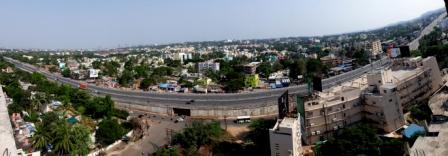
Bhubaneswar: Bhubaneswar will celebrate its 71st Foundation Day April 13. The region, including the old town, was historically called the Ekamra Khetra (Temple City).
The city’s infrastructure has seen many changes of late. Events like the World Cup Men’s Hockey tournament and the ‘Make in Odisha’ conclave has changed it substantially. The city has also seen many new initiatives like Mo Bus and Mo Cycle.
This time the Foundation Day will be celebrated amidst elections with Bhubaneswar going to the polls April 23.
Urban Planner Piyush Ranjan Rout said Bhubaneswar is still not a big city, and that means it still has a chance to better itself. Bhubaneswar has lots of greenery and that gives its residents a chance to enjoy nature.
Bhubaneswar has many educational institutions of both international and national standards. It is the only city that has heritage sites linked to Hinduism, Buddhism and Jainism. It also has natural rivers and is India’s first planned capital city by Otto H. Konigsberger. This makes the city a suitable candidate for UNESCO’s World Heritage City tag.
Bhubaneswar has also emerged as India’s sports capital by hosting events like the Asian Athletics meet, World Cup Men’s Hockey, Champions Trophy Hockey, Men’s World Hockey League and Soccer etc.
The city’s main drawback is its loss of greenery due to the increasing number of buildings and roads.
Most of the city’s waterways are now sewage channels. As a result, instead of adding beauty to the city, these canals have become an ugly picture.
Women or children do not have enough space to relax outside their homes in the city. A child will find it difficult to move around the city on a bicycle and women will find it difficult to cross streets, although Bhubaneswar claims to be a child and women friendly smart city.
Bhubaneswar is vulnerable to climate change, and that is visible in its hot summers. A sudden rain can flood the city anytime as the city has lost its wetlands which functioned as sponges.
With personal vehicles increasing, there is traffic congestion and parking problems. The city doesn’t have a waste processing facility.
Sriram Singh Rattan, a city-based social media activist, said that Bhubaneswar has grown substantially in the last 10 years.
“The city has topped the Smart City list and has become an educational and IT hub. I hope the city grows more and attracts visitors,” he added.
The old town has new signage, and it’s easy to navigate and learn more about the history of the city now. The temple trail, tribal museum trail and art trail and ‘Patha Utsav’ organised by the city are great ways to unwind and gain insight into Odisha’s culture.
The availability of Mo bus, Mo cycle, and third party services has made travel easier. The city has got good parks and fitness centres for kids as well as adults. It also has a host of dining and shopping options too.
The roads are wider and the traffic system was overhauled during the recent Hockey World Cup tournament.
But the city lags behind in nightlife. Foreigners visiting the city want guides and a good all round help centre. The city is not equipped to handle major events without police diverting traffic elsewhere.
There is no metro and this increases the number of buses and auto- rickshaws thus creating pollution. The city is still not safe for women after 10 pm which makes it difficult for women who work late. Travelling late night for flights is still unsafe for women.
The city doesn’t have enough shelters for commoners or the homeless where people can rest after paying a nominal charge.
Filmmaker Amartya Bhattacharya said Bhubaneswar has deep roots. “The city, especially the old town, still retains the charm of Odia culture and heritage. A city with no roots may look glossy, but it will have only a superficial lifestyle. Thankfully, Bhubaneswar has a heart and a soul. It’s a very small city and it takes very little time to travel from one area to another. It’s well planned with good roads, and is clean compared to other cities. The pollution here is less than that in bigger cities. It is also a very peaceful city, and there are wonderful, affordable food joints,” he said.
Environmentalist Neelima Mishra said in the craze for infra development the city’s environment is being destroyed, and that must be prevented.