
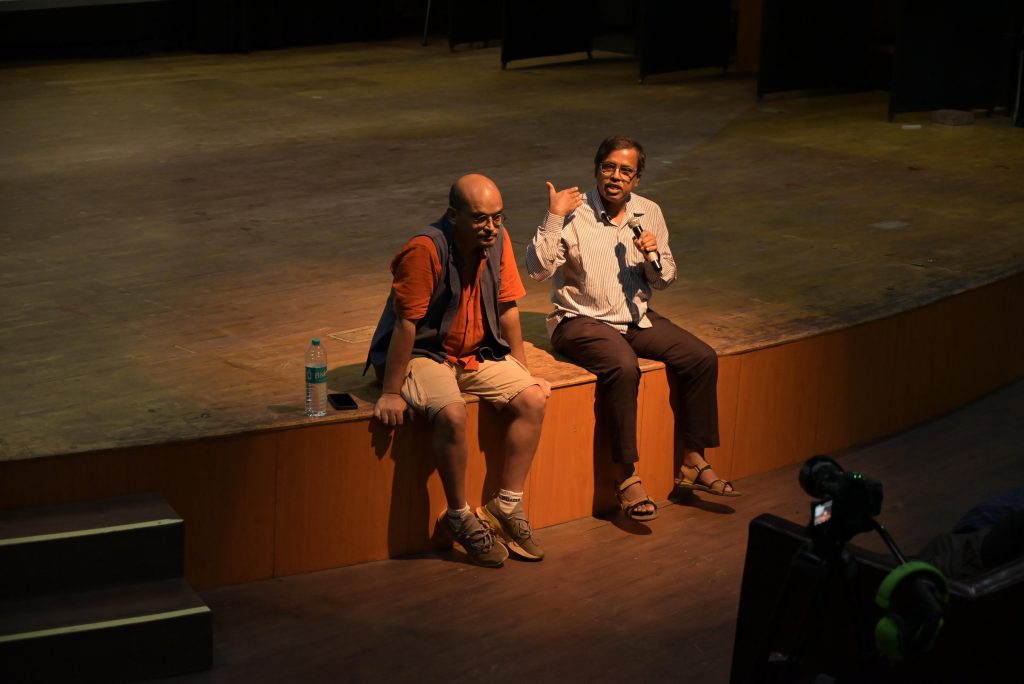
Bhubaneswar: The 7th Indian Documentary Film Festival Bhubaneswar (IDFFB) 2026, a four-day event organised by the Film Society of Bhubaneswar (FSB), opened Wednesday at the GKCM Odissi Research Centre with an impressive lineup of films from across India and South Asia. The inaugural day began with Metancherry by Sunil Nambu, an animated meta-narrative that humorously captures the history and culture of Mattancherry, near Kochi, Kerala. It was followed by Where Did Our River Flow To? Blending observation, oral histories and personal narration, the film by Biswajit Das moves between memory and the present, revealing how ecological change quietly alters landscapes, livelihoods and cultural traditions.
As part of a retrospective on historian Uma Chakravarti, her film Ye Lo Bayaan Humare was screened next. Deba Ranjan Sarangi’s Odia documentary Arupa Rupa was screened next. It explores the spiritual and transformative journey of Mahima Swamy and Bhima Bhoi, whose religious movement challenged caste hierarchy and social exclusion in India.
The post-screening conversation focused on the history of Mahima Dharma, its radical vision of a casteless society, the changes that have taken place in the cult over the years, and how idol worship and appropriation by conservative forces have undermined the core philosophy of Mahima Swamy and Bhima Bhoi. The day continued with Tanvi Jadwani’s documentary Banjaran Sisters. The film documents three sisters who sing folk music in the Malwa region of Madhya Pradesh and are known for keeping oral traditions and the soulful songs of mystic poets such as Kabir and Meera alive. Balaji Maheswar’s Bhaavi is set in a remote tribal village, where a community unearths an age-old well, reviving not just their water source but also their deep-rooted cultural and spiritual ties to nature. Anuradha Bansal’s A Good Wife captivated the audience with its deeply personal exploration of womanhood, marriage and freedom within an Indian Marwari Hindu community.
The day ended with the screening of Deepa Dhanraj’s We Have Not Come Here to Die, which traces the rise of a powerful anti-caste student movement in the country following the suicide of Dalit PhD scholar Rohith Vemula at the University of Hyderabad in 2016. The opening day drew students from Birla Global University and Centurion University of Bhubaneswar. Orissa POST and Dharitri are the festival’s official print media partners.
Orissa POST – Odisha’s No.1 English Daily