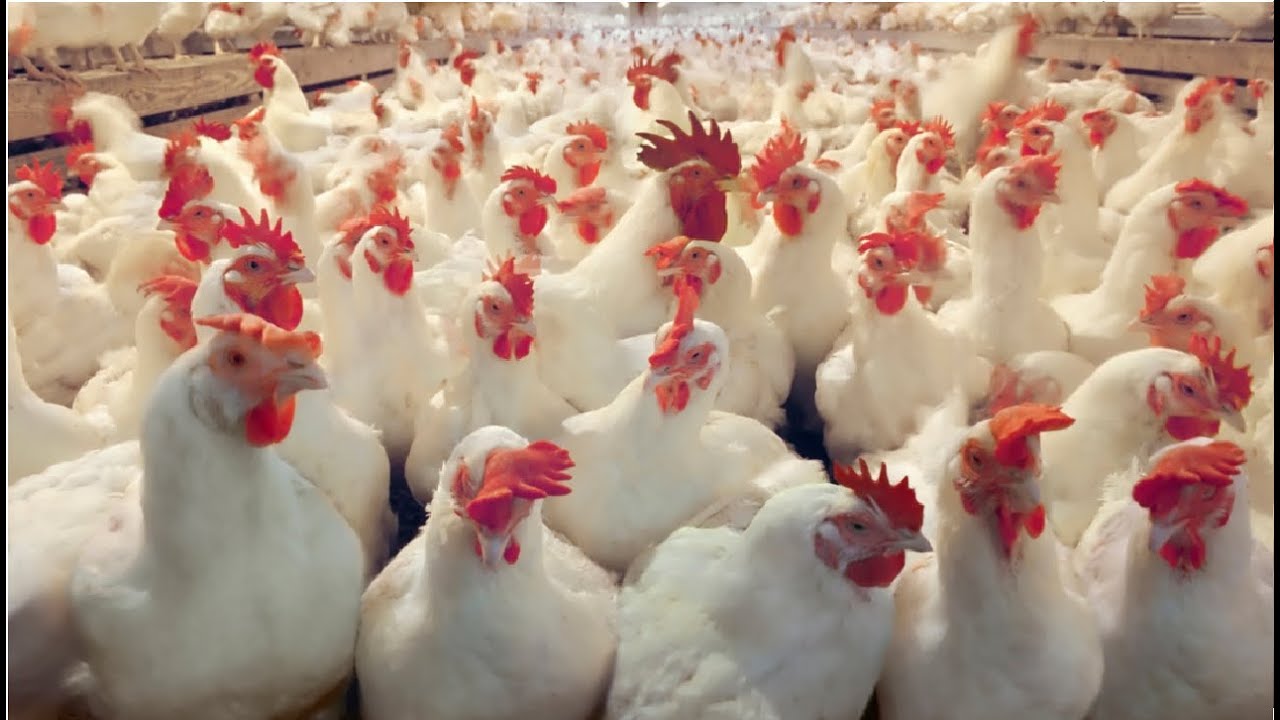
When cooking chicken or meat, most people carefully wash and cook the flesh properly. Unfortunately, there are some things which any amount of washing, boiling or roasting cannot clean out – and they are drugs.
There is a cocktail of drugs in your meat and all of them are going into your body.
Also Read

These drugs are a mainstay of meat production in many parts of the world and Indian producers have adopted Western practices of food production that keep profit far ahead of animal or human health. In 2018, India produced 4.3 million tonnes of buffalo (carabeef) and cattle (beef) meat – 1.5% higher than in 2017.
Chicken meat increased from 1.9 million tonnes in 2013-14 to 3.46 million tonnes in 2016-17. Goat meat increased from 0.97 million tonnes in 2013-14 to 1.4 million tonnes in 2016-17. Sheep increased to 0.5 million tonnes. This means an estimated 238 crore chickens and 1.2 crore pigs were slaughtered for their meat in 2016-17 to get over 10 million tonnes of meat.
How does a meat producer get to kill so many animals, and how does he get them to put on weight in the quickest possible time so that he can get more meat? How does he do this without spending money on feed? The answer is that he pumps drugs into these animals. One of the main drugs is Ractopamine, which was approved by the FDA in 2003.
Ractopamine is a beta agonist drug that binds itself to fat and muscle cells in the animals’ body, reducing the metabolism of fat while increasing the size of muscle fibres. Consequently, less fat is produced and less fat is stored in the carcass. Muscle fibre size replaces some of the weight normally found from fat, and the total carcass contains a higher percentage of lean muscle. This makes the animal more muscular, reduces fat content and increases the profit per animal because the same amount of food produces a much bigger animal with more meat on its bones.
However, as much as 20% of Ractopamine can remain in the meat by the time it reaches our plates.
In fact, the residue in humans can be so high that it could even be detected in a dope test! Internationally-acclaimed cyclist Alberto Contador failed a Tour de France anti-doping test in 2010 for levels of Clenbuterol (a drug of the Ractopamine family), which he had gotten from eating meat.
Ractopamine is used in the USA but has been banned in the EU, China, Russia and 160 other countries for being dangerous to both animals and humans. Taiwan has, in fact, banned American beef imports because of Ractopamine usage. However, the drug is commonly given to animals in India.
In animals, Ractopamine is known to cause reproductive dysfunction, hyperactivity, broken limbs and birth defects such as short limbs, missing or fused digits, open eyelids, enlarged hearts, stress, lameness and even premature death. How could an animal, that is itself so sick, possibly give good quality meat?
In human medicine, beta-agonists are inhaled directly into lungs of asthma patients to relax muscles that constrict airways; they are routinely used on smooth muscle tissue through direct entry into the cardiopulmonary system, and pregnant women who are in premature labour have beta-agonists injected into their blood to relax the muscle tissue of the uterus, preventing premature births.
But if eaten through food, Ractopamine (Optaflexx) has been linked to increased heart rates, high arterial blood pressure, chromosomal abnormalities, anxiety, intoxication, tremors, headaches, muscle spasms and many more serious effects. This poses a particular risk to children, or people with cardiovascular disease.
Another alarming beta-agonist drug used in animal production to increase weight – Zilmax or Zilpaterol is considered worse than Ractopamine. Zilpaterol was approved by the FDA in 2006. Cattle and pig feeders use feed additives like Zilmax to increase the rate of weight gain without any additional feed. It can add many pounds of meat to a bull or buffalo. An estimated 700 million pigs receive beta-agonist drugs, each producing six additional pounds of pork.
However, this comes with a trade off. Zilmax has been known to cause severe reactions in animals leading to painful hoof loss and, very commonly, death. Since the drug was introduced in 2007 in the US, several hundred cattle have unexpectedly died after being fed Zilmax. In fact, in just two years after Zilmax’s introduction, the number of cattle euthanised at meat production farms rose by 175% from previous years. The makers of Zilmax, Merck and Co., recruited animal welfare specialist, Dr Temple Grandin, to help review the product in 2013. In an interview with Reuters, he indicated that there have been incidents of stiffness, soreness and heat stress since the use of beta-agonists began.
Zilmax is considered to be about 125 times more potent and dangerous than Ractopamine, and this is the likely reason why side effects in Ractopamine studies are often overlooked when compared with the destructive power of Zilmax. About 60% to 80% of feedlot cattle in the US are fed beta-agonists. America refuses to remove beta agonists from cattle feed: The reason? Stopping their use will result in each animal carcass being about 10-15 pounds less – a total of 0.5 billion pounds of beef, or about 1% to 1.5% of production. More corn will be needed to feed cattle to reach the same weight. This will raise the prices of the rest of the beef.
Another contaminant hiding in meat is Glyphosate. It is the active ingredient in Roundup (made by Monsanto) – one of the most widely used weed killers in India. In India, the consumption of glyphosate was 148 million tonnes in 2014-15, the highest for any herbicide.
These crops are fed to animals and when you eat the animal’s meat, along with it comes Glyphosate. Studies around the world have shown Glyphosate to cause cancer, genetic mutations and disrupt endocrine functions in human consumers. It is toxic to our DNA even when diluted to concentrations 450-times lower than what is allowed in agricultural use. This is not a drug to be taken lightly. The direct deaths of humans from pesticides have been estimated at 7,000 in 2015 and are increasing every year. Yet, no one has related the deaths from cancer from eating the same pesticides in meat. Glyphosate use is permitted only for one crop: tea. But it is sold by dealers all over India where no tea is grown. It is also used for cotton which is sold for cattle feed. And the more BT cotton is grown, the more glyphosate is used. A study in the Journal of the American Medical Association (JAMA) found that exposure to glyphosate in the US, where GM crops were introduced in the early 1990s, increased almost five times in 23 years.
Animal meat producers use over 450 animal drugs, drug combinations and feed additives, to promote growth of animals and suppress the negative effects of confined and unhygienic conditions in animal factories. Apart from the ones above, synthetic hormones, such as zeranol, trenbolone acetate and melengestrol acetate are commonly used. These have been shown to increase the risk of breast cancer and prostate cancer. In India it is also common to feed chickens with arsenic to help them get fatter faster and develop a better colour. This arsenic reaches your plate through chicken meat.
Are you eating meat or a dead body that during its lifetime, bore little resemblance to the animal it was supposed to be? Do you eat food to be healthy or to get sick?
You need to want safer food for your family. The industry is demand-driven, so if people are unwilling to eat dirty chemical treated meat, producers will be forced to stop these practices.
Maneka Gandhi