Arrogance, subterfuge and disrespect towards people in general seem to have become the hallmark of puny politicians across the globe. There are no statesmen in the world today. All actions of politicians are aimed at only garnering votes for the next election. They are incapable of thinking beyond what will make people vote them back to power. The attitude of dividing citizens on various lines to create a vote bank has also become the backbone of politics everywhere. The example of France is something that can be viewed to understand what is happening across the world.
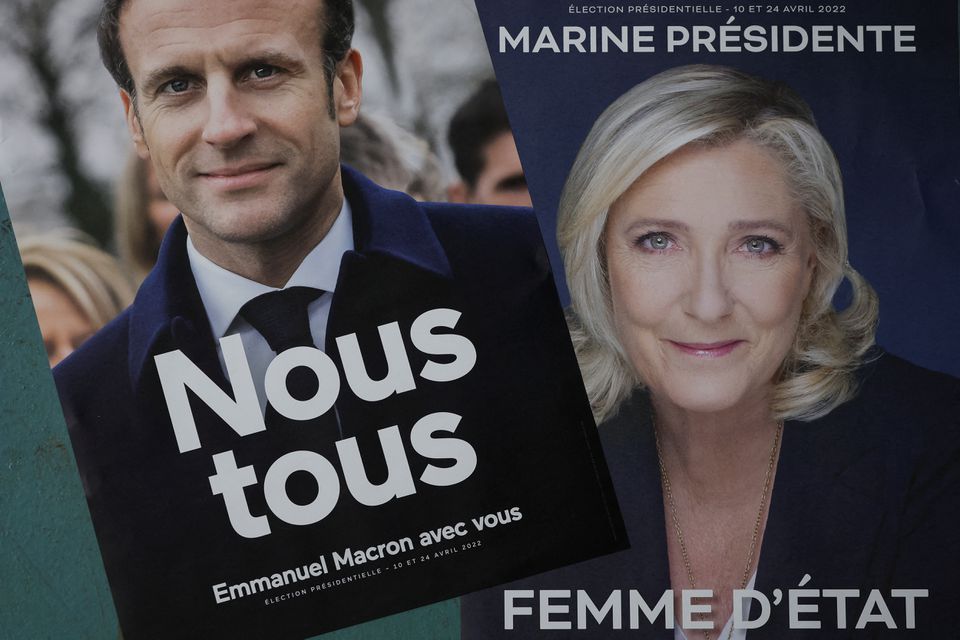
The Presidential election of France is poised for a nail-biting finish at the second round April 24. The incumbent President Emmanuel Macron is facing a stiff challenge from the Far-right candidate Marine Le Pen who has arduously tried to change her image as a pugnacious nationalist. This is indeed remarkable since the majority of French voters have traditionally demonstrated their antipathy towards Far-right politics advocated by her father Jean-Marie Le Pen. On the other hand, Macron is no longer as popular as he was in 2017 when he won the election for the first time. The youth of France are going to play a crucial role in making or marring Macron’s bid for a second term as they have become disillusioned with his brand of politics and aloofness from the people, seemingly behaving like a monarch with not much respect for democratic functioning. This section of the population has sided with the Leftist candidate Jean-Luc Melenchon in the first round, but now has no option but to choose between Macron and Le Pen after Melenchon was trounced in the first round. Macron got over 27 per cent of the votes against Le Pen’s 23 per cent in the first round. What France is waiting to see with bated breath is whether most of these voters will abstain from voting as they have been votaries of a campaign that said “Ni Macron Ni Le Pen” (neither Macron nor Le Pen). However, their aversion to the Far-right politics of Le Pen, it is being hoped, may eventually help Macron get maximum number of their votes since they are expected to cast their votes for the “lesser evil.”
Also Read


The French voters sprang a surprise by ensuring that Marine Le Pen is in a position to challenge Macron and switching their support in sizable numbers to the former. Only weeks back, the war in Ukraine had appeared to be helping Macron for his handling of the crisis. Two weeks after Russian President Vladimir Putin invaded Ukraine, Macron garnered support from 31 per cent of voters, as shown by a survey, compared with just 18 per cent for Marine Le Pen. Macron did win the most votes in the election’s first round, but Le Pen, whom he had comprehensively defeated in 2017, now has good prospects in the second round of voting. This is because she can rely on support from voters who cast ballots for another Far-right candidate Eric Zemmour and also anti-establishment members of the working class who had rebelled against Macron. Though it is expected that the majority of supporters of Melenchon, who managed to get almost 22 per cent of the votes in the first round, are unlikely to rally behind Le Pen, Macron will have to convince them about better functioning for his second term. For, Macron’s well known pragmatism is now viewed as opportunistic and his style of functioning smacks of arrogance in popular perception. On the other hand, Le Pen has softened her image and does not instill too much fear among the people for her racist policies as she used to. Since taking over the National Front party from her father in 2011, Marine Le Pen has worked to make her party, now called National Rally, more palatable to a broader swath of the French public. She is no longer resorting to her Far-right political rhetoric, but concentrating on economic policies.
The French people want a leader who would make a material difference in their lives. Their disappointment with Macron and Le Pen’s changed stance, which is being viewed as a mere ploy to garner votes, may result in a record number of abstentions, as analysts predict. This may not be music to Macron’s ears since he cannot simply depend on the people’s mistrust of Le Pen. His challenge for the second round is to convince voters, in particular those of Melenchon, to cast votes for him instead of abstaining. For that, he will have to demonstrate that casting a ballot for him will produce meaningful change in his governance.
Macron did not waste time to assuage people’s anger by responding to the gilets jaunes or “yellow vests” protests. The movement that gathered momentum started as a spontaneous mobilisation against fuel price hikes, but later turned into an anti-establishment one. Macron launched a Grand Débat National (Great National Debate) in which government officials and he himself heard grievances from French citizens across the country. He also promoted public spending to address the economic fallout in the aftermath of the COVID-19 pandemic. His current campaign veers around supporting single mothers and more funding for education. However, this might not be enough to placate the voters who find his agenda on climate action, policing, health care, and education to be insufficiently progressive. A survey showed only 27 per cent people believe he “understands” their problems compared with 46 per cent for Le Pen.
This is not a good sign for Macron. Moreover, Le Pen is desperately trying to dispel fears among leaders of the European Union that if she captures power she will pursue “Frexit” on the model of Brexit which will further weaken the EU. She says this is false propaganda.
Macron still has the edge over Le Pen. But, the perceptions of the French people will decide the fate of the two contenders who do not have much to exhibit to plead their respective cases.