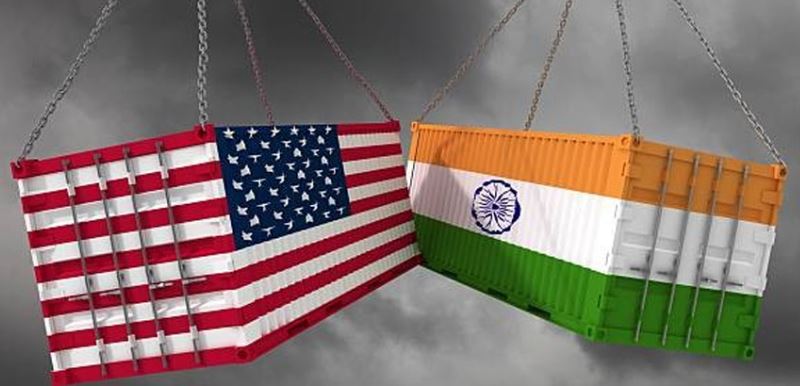
The fresh Indo-US trade deal announced by US President Donald Trump 2 February will see American tariffs on Indian goods go from 25 per cent to 18 per cent. An additional 25 per cent ‘penalty’ imposed on India for its purchase of Russian oil has also been dropped. India, on the other hand, will have to remove all tariffs and non-tariff barriers on US products.
Both Trump and Prime Minister Narendra Modi are euphoric over the deal since, on the surface, it appears to be for mutual benefits. In the absence of a formal statement, there is no way to know exactly what they agreed to. Trump claimed that India has agreed to stop buying Russian oil and will purchase $500 billion worth of US goods—both of which seem hard to believe, while Modi has only stated that tariffs will be coming down. What counts at the moment is that the negotiated settlement has broken the logjam persisting for the past few months since Trump imposed the impossibly high tariffs.
Also Read


The exact nature of the deal is still being kept a closely guarded secret, probably fearing backlash, especially in India, which seems to have caved under Trump’s constant pressure. It is suspected India has bartered away its vital interests in agriculture and dairy sectors, due to which the government is shying away from sharing details of the agreement with the public. For one thing, this announcement is of crucial importance, especially for India. Trump’s deal comes at a time when US’s own NATO ally, the UK, has been forced to embrace China to safeguard its economic interests, severely battered by his tariff war. India and the European Union have also clinched what is being stated as a “mother of all deals” in their bid to multilateral cooperation in the face of the US’ one-sided aggression and big-brotherly attitude. This might be the reason for the timing of US trade negotiations with India.
Apparently, the deal provides an opportunity for India to see the rate of US tariffs drop from 50 per cent to 18 per cent and for the US to gain unprecedented market access in India. But the devil, as they say, is in the details. This means the balance sheet of gain and loss will be clear only when the detailed architecture of the deal is known.
US-India ties have floundered for much of the past year. This trade deal appears to be a measure that can help both sides work through their various issues, including giving New Delhi a chance to gain Washington’s favour by playing its cards right this time around. India desperately needed concessions from the US for its beleaguered economy reflected in its Budget proposals placed in Lok Sabha 1 February. The US is India’s top export market. To cushion itself from the American shock given by Trump, India has been seeking help from China and the EU. The just-concluded free trade agreement with the EU was made in India’s frantic search for another top export market. But it is hard to compensate for the loss of US market. That is why India was eager to agree to a US deal, whatever cost it may entail. There is logic in the argument put forward by some financial experts that Trump’s announcement of the trade deal in his Truth Social post leaves major questions unanswered.
For example, there is no clarity on what products are covered, what the timelines are and whether India has really agreed to zero tariffs and zero non-tariff barriers, especially in sensitive areas like agriculture and regulated imports. The headline figure of $500 billion in US purchases is also unclear. India currently imports less than $50 billion a year from the US, suggesting this is more an aspiration than a firm commitment. Another unresolved thorny issue hurting India’s interests is that even after the trade deal, US Section 232 tariffs on steel, aluminium and copper will remain at 50 per cent and on a few auto components at 25 per cent. Also, zero tariffs for pharmaceuticals, aircraft and parts, and some mechanical and electronic components will continue. The deal hinges on India halting cheap oil imports from Russia, one of its closest partners. It has reduced its imports of Russian oil since new US sanctions on Russia were implemented in November.
The scale of the purchase will now further go down, and the US may want exactly that. Whatever the final outcome, it appears Trump’s presidency revolves round transacting business deals through a torturous bargaining process for the other party, throwing diplomacy and political ideology to the wind. India on the other hand, needs to tread very carefully this time around for it cannot afford another trade or tariff war with the US.
Orissa POST – Odisha’s No.1 English Daily