Beijing, Nov 9: President Donald Trump thursday wrapped up two days of intense talks with his Chinese counterpart Xi Jinping as both sides inked deals worth over $250 billion, but doubts lingered about any headway over his efforts to push Beijing to take strong action to rein in nuclear-armed North Korea.
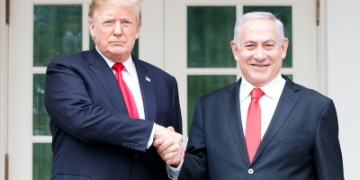
On the second day of his visit, which was marked by lavish red-carpet welcome with an impressive guard of honour by the Chinese military troops, Trump continued his overnight talks with Xi at the Great Hall of People here.


“Just now, the President and I witnessed the signing of some major cooperation agreements by our businesses. During this visit, the two sides signed over $250 billion of commercial deals and two-way investment agreements,” Xi said summing up his talks with Trump, who has been accusing China of not doing enough to address the massive $370 billion bilateral trade deficit.
China’s Commerce Minister Zhong Shan said the two sides signed deals worth some $253.4 billion over the past two days. “This is truly a miracle,” Zhong told the media. On pressuring North Korean dictator Kim Jong-un to halt his nuclear and missile programmes, which was Trump’s main agenda of the maiden visit, Xi reiterated China’s stand that Beijing is faithfully implementing the UNSC resolutions.
China is North Korea’s close ally and top trading partner. “On the Korean Peninsula nuclear issue, we reiterated the firm commitment to achieving denuclearisation of the Peninsula and upholding international non-proliferation regime,” Xi said.
The two sides will continue to fully and strictly implement the UN Security Council resolutions. At the same time, the two sides commit to working toward a solution through dialogue and negotiation, he said.
On the South China Sea dispute, Xi said, “the Pacific Ocean is big enough to accommodate both China and the US”. China claims sovereignty on almost all of the South China Sea which is disputed by Vietnam, the Philippines, Malaysia, Brunei and Taiwan. The US has been accusing China of violating international rules and norms by laying claims on the disputed South and East China seas. (PTI)