Kaushik Basu
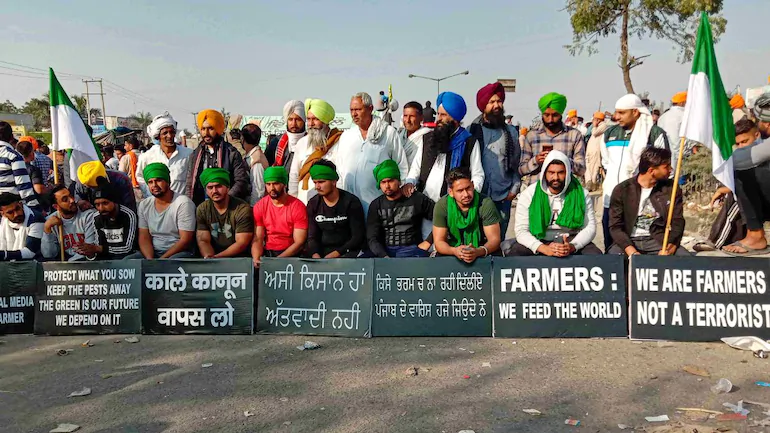
India’s three new farm laws, enacted in September 2020 with little public or parliamentary debate, have attracted enormous global interest. Prime Minister Narendra Modi’s government described the measures as a gift to farmers, but farmers in several Indian states, led by smallholders in Punjab and Haryana, have refused to accept them. Sustained and highly polarising protests have followed.


The situation in India is unfortunate, but it is not unique. Agriculture is an intricate issue that raises important questions not just for India but for all economies struggling to strike a balance between the market and the state.
I had long felt that India’s existing farm laws needed changing, and that the country’s food grain market needed to be more open. The new laws, among other things, permit farmers to sell grain outside designated state-regulated areas called mandis in states where they previously were not allowed to do so. The government appears to be giving farmers more choice. Why should anyone object to that?
Then I read the fine print of the legislation. With their uncanny grassroots intuition, the farmers had realised something that many economists, including me, had missed.
If the government permitted farmers to sell their products outside the mandi, the farmers would surely benefit, even if the market outside the mandi was unregulated. With all else remaining constant, they would simply be gaining an additional option. But belief in the ceteris paribus condition – that all other conditions will remain unchanged – requires farmers to trust the government. They clearly don’t – and, on closer examination, with good reason.
Farmers the world over receive government subsidies. In 2019, China spent an estimated $185.9 billion on farm subsidies, followed by the European Union ($101.3 billion), the United States ($48.9 billion), and India ($11 billion). But different countries give these subsidies in different ways.
Indian farmers currently have the right to sell their products, mainly wheat and rice, to the government for a guaranteed minimum support price (MSP) that is set periodically each year. The MSP system runs largely on trust. Policymakers can effectively dismantle it by setting the price so low that no farmer will want to sell, or by not providing accessible product collection centres. In many parts of India today, for example, farmers are told they can sell their grain at a certain price, but there is nowhere in their vicinity to sell it.
If the government dismantles the MSP system instead of reforming it, millions of farmers will be forced to sell their products to four or five big agribusiness corporations. And this is precisely what the fine print of the new laws reveals.
If a corporation violates a contract with a farmer, the new laws prohibit the farmer from seeking redress in a regular court. The legislation further helps big business by removing restrictions on stockpiling food grain that were put in place to discourage firms from artificially raising prices.
I believe big corporations are needed in agricultural markets. And I think the Indian government’s new laws would have been more acceptable had policymakers shown sensitivity to the need for antitrust enforcement to level the playing field for the millions of farmers who would be pitted against a few large firms. Even in the supposed free-market bastion of the US, prominent legal scholars such as Eric Posner, Suresh Naidu, Glen Weyl, and Cass Sunstein have expressed concern about the need for antitrust laws to regulate monopsonies, like big corporate buyers.
India’s farm-law debate thus prompts a related question: Is providing more choice always desirable?
Clearly, in some cases it is not. The southern US state of Louisiana enacted a law in 1859 giving people of colour the “freedom” voluntarily to opt in to slavery, a practice often described as “warranteeism.” Today, countries such as China give workers the option of working in export-processing zones in exchange for basic labour rights. No one is forcing anyone to work under these conditions, goes the specious argument: it is just an extra option.
Most people would deplore these additional choices. On the other hand, government suppression of individual freedom often has its origins in knee-jerk objections. Fortunately, as I show in my book Beyond the Invisible Hand, we can apply to these real-world contexts a sophisticated argument rooted in the work of the philosopher Derek Parfit.
This goes back to the ancient Greek “sorites paradox.” According to a common formulation, if n grains of sand do not make a heap, then surely n+1 grains of sand cannot constitute a heap, either. The paradox arises from the fact that if we start with nothing and keep adding one grain of sand at a time, we will eventually make a heap.
Similarly, each individual decision to give up basic rights in exchange for a job in an export-processing zone may enhance that person’s welfare. But when lots of people do it, all workers may be worse off.
In short, what we need is not market fundamentalism, but a market that functions freely, within the broad parameters set by well-crafted laws. The Indian government should repeal its new farm laws and, through a careful deliberative process, craft legislation that stands the test of reason and can benefit poor farmers and consumers most of all.
The writer is a former Chief Economist of the World Bank and Chief Economic Adviser to the Government of India. ©Project Syndicate