SASHIKANTA MANSINGH, OP
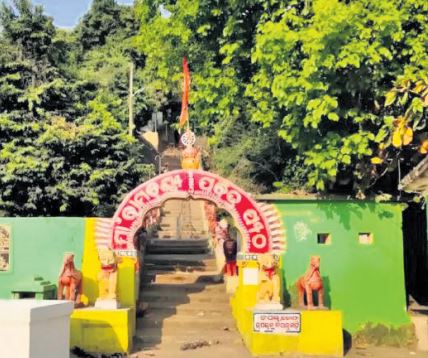
I n the quiet, undulating landscape of Khurda district, the hill shrine of Maa Ramachandi at Gadamanitri stands as a place where faith is shaped as much by nature as by narrative. Located around 22 km from Khurda town, the shrine remains relatively secluded, adding to its mystique. There is no ornate temple here, no sculpted idol placed by human hands. Instead, a towering natural stone rising from the earth is worshipped as the Goddess herself, believed by locals to be Swayambhu—self-manifested and eternal. For generations, villagers have looked upon this stone not merely as a symbol, but as a living presence that protects their land, their crops and their lives.


The Legend of the Tiger and the Bull
Among the many stories that surround the shrine, the most enduring is that of the tiger and the bull, a legend rooted deeply in the realities of agrarian life. Long ago, the temple priest owned a pair of bulls, essential for ploughing his field. One night, a tiger from the nearby forest attacked and killed one of the bulls, leaving the priest distraught. With only one bull remaining, he had no means to till his land. In his despair, he prayed to Maa Ramachandi, asking how he could survive without the pair that sustained his livelihood. That night, the Goddess is believed to have appeared in his dream and assured him that the one responsible for his loss would return. She instructed him to go to his field the next morning and yoke that very creature to his plough. At dawn, the priest found the tiger standing quietly at the edge of his field. Gathering courage from his faith, he tied the tiger alongside the remaining bull. What followed defied all natural instinct—the tiger offered no resistance and ploughed the land in perfect rhythm with the bull. From that day onward, it is said, the tiger never harmed humans or cattle again. The legend endures as a powerful reminder of divine justice, where destruction was transformed into service and fear into balance.
The Stone That Once Grew
Another widely recounted belief adds to the mystique of the shrine, and it centres on the very stone that is worshipped as Maa Ramachandi. Elders say that this main stone once grew gradually in height over time, as though the Goddess herself was rising from the earth. What began as a sign of divine wonder soon became a challenge for the priest, who found it increasingly difficult to perform daily rituals as the height kept increasing. Unable to continue his worship properly, he is believed to have prayed with humility, requesting the goddess to remain at a height he could serve. From that moment, the growth is said to have stopped, and the stone has since remained unchanged—standing today as both a symbol of immense power and quiet compassion.
A Landscape of Quiet Mystery
The hill itself carries an air of mystery, with natural rock formations adding to the sense of the sacred landscape. Adding to this intrigue is another striking feature— another relatively small stone that has long rested naturally atop the main stone. Despite heavy rains and storms over the years, the smaller stone remains perfectly balanced in its place, a sight that continues to surprise and fascinate visitors and devotees alike. For many, it is yet another quiet testament to the shrine’s enduring mystique.
When the Hill Comes Alive
While the shrine is steeped in silence for much of the year, it transforms dramatically during festivals, when devotion takes on the colour and rhythm of a vibrant rural fair. On occasions such as Ram Navami, Dussehra, Raja Parba and Panchu Dola Yatra, thousands of devotees from across Khurda district and beyond gather at Gadamanitri. The paths leading up the hill fill with pilgrims, while the foothills turn into a lively expanse of temporary markets. Rows of stalls are erected, selling offerings, sweets, toys and local delicacies, creating an atmosphere that resembles a bustling fairground. The air is filled with the fragrance of incense, the sound of devotional songs and drums, and the constant hum of people arriving, praying and celebrating. For many, the journey is as much about participation in this shared cultural and spiritual gathering as it is about seeking blessings.
Faith Rooted in Land and Life
For the people of Gadamanitri, Maa Ramachandi is not confi ned to myth or ritual. She lives in the land, in the cycles of farming and in the stories that continue to be told with conviction—stories where a tiger becomes a companion in labour, where a stone once grew and then chose to stop, and where a quiet hill, at certain times of the year, comes alive as a powerful expression of faith and community. Santosh Kumar Martha of Balibereni village, located near the shrine, says that during Mahasaptami Puja in Dussehra, many devotees visit the hill to offer sacrifices of cocks and goats after the fulfilment of their wishes. “People come here with deep faith. When their prayers are answered, they return to offer thanks in the way they have promised,” he says. Rajib Lochan Subudhi of Daleiput village, a frequent visitor to the shrine, says his faith in the goddess remains unwavering. “She listens to prayers offered with a clear heart,” he says. He adds that the site is not only a place of worship but also a space for community gatherings throughout the year. “Many functions such as marriages, nirbandhas and birthday celebrations are held here. It brings people together, and the natural surroundings make it a very special place,” he says.
Orissa POST – Odisha’s No.1 English Daily