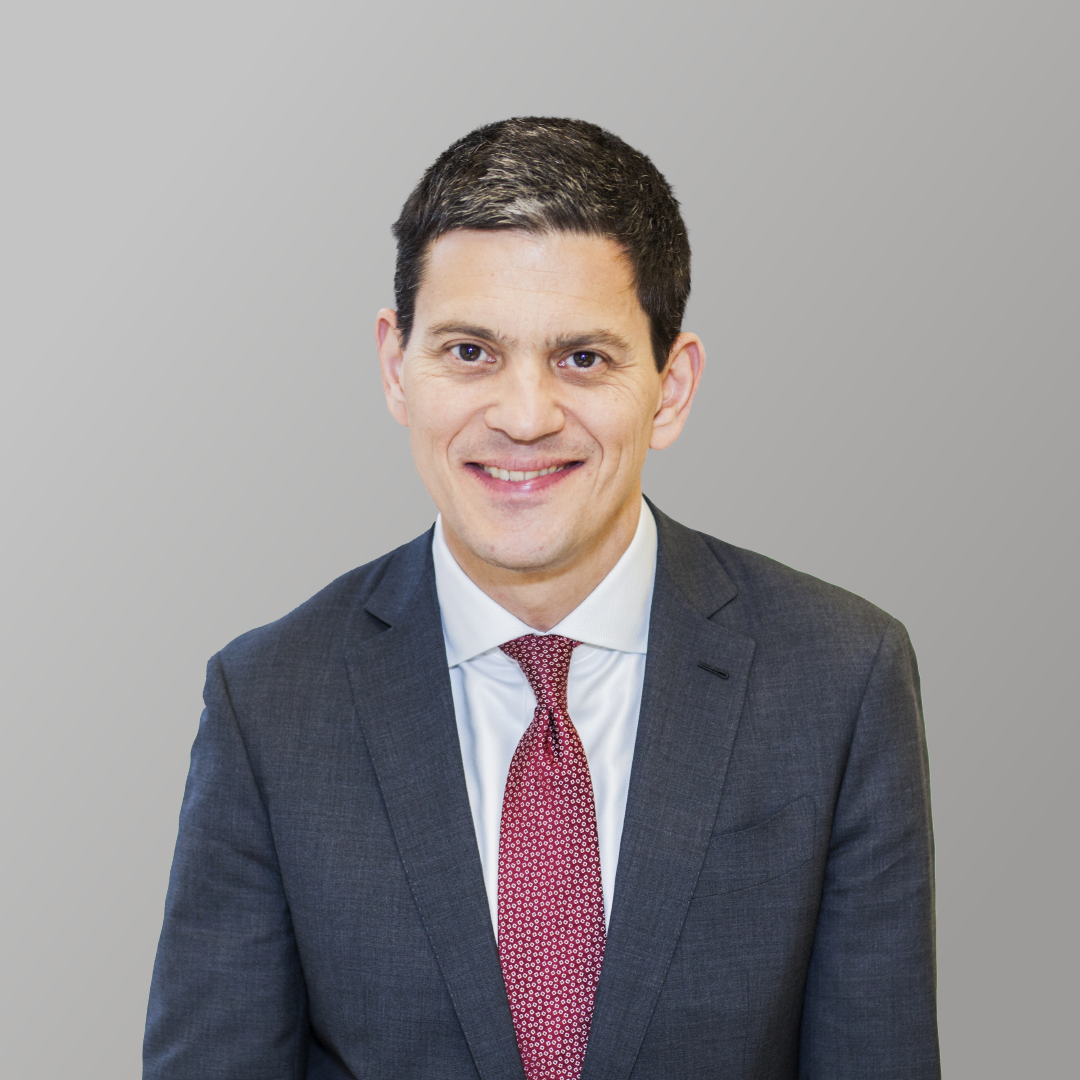
David Miliband
America’s role in international aid has been turned upside down since January, with institutions shuttered, policies upended, and funding slashed. It is now unclear what lies ahead for American policy, the international aid system, or the world’s poorest. All we know is that a massive gap needs to be filled.
Also Read


The situation is urgent. The World Bank recently revised up its estimate of people living in extreme poverty (on less than $3 per day) to 831 million – about 10% of the global population. Over half of the world’s extreme poor now live in fragile, conflict-affected states, and this figure is predicted to rise to two-thirds in the next five years. Nearly 40% of these countries’ populations already live on less than $3 per day, compared to 6% in other developing economies.
In this context, my organization, the International Rescue Committee (IRC), ran the numbers to determine which countries are most in need of aid. We came up with a list of 13, typified by Sudan, home to the world’s largest humanitarian crisis. While 29% of the world’s extreme poor live in these hardest-hit countries, only 9% of international aid is allocated to them, implying a $35 billion funding gap.
Since Russia’s full-scale invasion of Ukraine in 2022, Ukraine has become the biggest global aid recipient. Moreover, European countries are increasingly spending funds classified as “overseas aid” on refugee integration at home. These outlays now account for around 14% of the total global aid bill, about the same as is spent on humanitarian aid.
So, even without US funding cuts, there would be a need for fresh thinking about how the aid sector works. First, we should focus grant aid – which accounts for more than 90% of the global aid budget (the rest being concessional loans) – on the poorest people in the poorest places. That means addressing the mismatch between the approximately 50% of the extreme poor who live in fragile and conflict-affected states, and the 25% of the global aid budget that goes to those countries.
Second, we need to devote resources to evidence-based, proven, cost-effective programming, like the community-based vaccine drive the IRC has pioneered in eastern Africa, where we delivered over 20 million doses for $2 each. We have also proposed a simplified protocol for treating moderate and severe acute malnutrition. In our study involving 27,800 acutely malnourished kids in Mali, we achieved cost savings of around 20%. But scaling up these approaches will require a change of mindset from donors, so that their efforts aggregate results, rather than diluting them.
Third, we need more innovation in programs, finance, and delivery. For example, the IRC is currently using AI to cut the diagnosis time for monkeypox in Africa from two weeks to five minutes, and we have also shown how the technology can help achieve impressive learning outcomes for kids whose education is interrupted by conflict and disaster.
Of course, innovation requires new commitments of capital. Disaster-risk financing, for example parametric insurance that pays out as soon as triggers are hit for rainfall, establishes predictable and fast flows of support. But we also need to bring debt swaps into the humanitarian arena. These approaches have already been used to fund environmental improvement projects worth $1.7 billion in seven countries.
Fourth, we need accountability for outcomes, rather than for inputs, in order to cut bureaucracy, increase flexibility, promote value for money, and drive innovation. Governments and international institutions should follow the example of Sweden, which holds us accountable for the outcomes we achieve. What matters is educational attainment, not the number of teachers trained, and the number of healthy newborns, not the number of neonatal health consultations.
Fifth, we need to align the aid burden with the composition of the global economy. The United States accounts for 25% of global income, but its share of national income devoted to foreign aid is only 0.22%, a figure set to decrease after the recent cuts. Still, in a February poll, around 89% of Americans said that 1% of the federal budget should go to overseas aid. Since that is close to the actual figure, maintaining such funding could be unifying mission for America and Americans.
Today, 80% of acutely malnourished children in conflict zones are not treated, 60% of maternal deaths in childbirth occur in fragile states, and 85 million kids in these countries are out of school. Effective international aid is the answer to these challenges, not the problem. Humanity has more resources to do good than at any time in its history, so it is up to us to use them wisely. Setting aside 1% of a federal budget is not excessive. The money can be put to good use, and it is in America’s own interest to do so. The sooner it happens, the better.
The writer, a former British foreign secretary, is President and CEO of the International Rescue Committee.
©Project Syndicate