
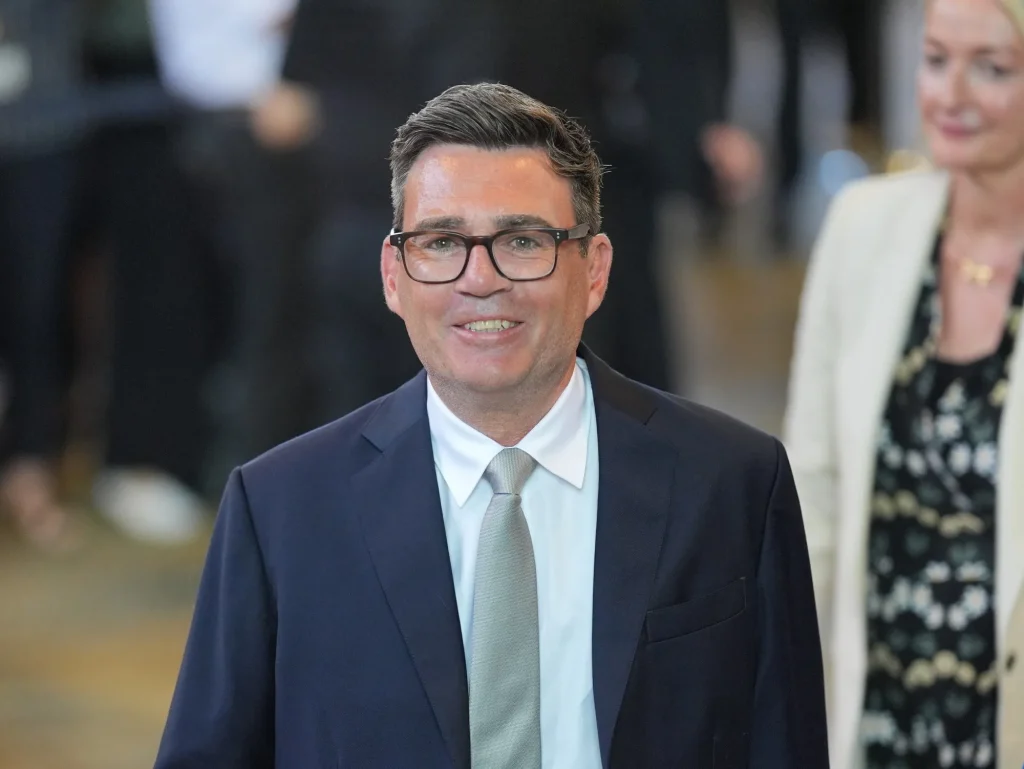
London: Andy Burnham took a step closer to becoming Britain’s next prime minister without a contest Wednesday when Cabinet minister Darren Jones, touted as a possible rival, said he would not run.
Meanwhile, Keir Starmer, seeking to secure a legacy before he leaves office, faced the weekly Prime Minister’s Questions session in Parliament before flying to Berlin to meet European allies for talks on Ukraine and the Middle East.
Starmer announced his plan to resign Monday and will be out of office within weeks once the governing Labour Party picks a new leader.
Starmer and his government took a roasting from Conservative Party leader Kemi Badenoch, who reeled off a list of alleged failures and said the Labour Party had betrayed and abandoned Starmer for Burnham, whom she joked was just a pair of eyelashes and a black T-shirt.
Starmer said he was proud of his record, arguing that he had worked to reverse years of austerity under the Conservatives.
The test for every prime minister is handing over this country in better shape than you found it, he said. I know I can do that.
Jones, a Starmer ally, had been encouraged to run so that Burnham faces a test of his ideas and policies in front of Labour lawmakers and members. Others argue that a leadership contest will only focus attention on the party’s internal divisions and extend a period of political uncertainty.
Jones told Sky News that running for the leadership is not something that I’m going to do.
But he cautioned Burnham against veering too far to the left in economic policy, a concern of some in the business and financial worlds. Burnham is expected to choose a new Treasury chief to replace Starmer appointee Rachel Reeves. Jones said it must be someone that can reassure the markets, reassure the trade unions and reassure the parliamentary Labour Party, and by extension the public.
Burnham is expected to make a speech next week outlining some of his economic plans.
Starmer is leaving after two years in office marred by missteps and judgment errors that eroded his standing with his party and the public.
Burnham, a former Cabinet minister who served since 2017 as mayor of Greater Manchester, won a special election last week for a seat in Parliament with the express aim of challenging Starmer for leadership of the Labour Party and the country.
So far, he faces no challengers. Former Health Secretary Wes Streeting, who was considered his main rival, says he will back Burnham.
Nominations for the Labour leadership will open July 9 and close a week later. If Burnham is the only contender, he could be prime minister by July 17. If there is a contest, the winner should be in place by the time Parliament returns from its summer break September 1.
Starmer told the weekly meeting of his Cabinet Tuesday that he will try to oversee an orderly transition to his successor.
He is also keeping up a busy schedule, trying to cement a legacy for his shortened term in office. However, he is not allowed to make new major policy announcements or spending commitments during what remains of his premiership.
Starmer’s trip to Berlin for a meeting of the E5 “Germany, France, Italy, Poland and the UK “ for talks on European defence, the war in Ukraine and conflict in the Middle East, underscores the role he has played on the world stage. He has appeared more sure-footed in working with allies to support Kyiv and deal with fallout from the Iran war than he has on the home front.
The British government is expected to publish a long-awaited defence investment plan – which sparked the resignation of Defence Secretary John Healey June 11 – before a NATO summit in Turkiye July 7 and 8 that Starmer is likely to attend.