By Daron Acemoglu
Robert Mugabe, Zimbabwe’s former dictator, won the big prize in the country’s national lottery in 2000. And he won for a simple reason: because he could. Once you destroy institutions constraining your power, as Mugabe did during his 37-year reign, you can rule for personal enrichment, personal aggrandizement, or simply personal entertainment. What better way to demonstrate unconstrained power than showing that the existing system of rules is a farce? The damage such behavior can do to norms and institutions is part of the design.


Mugabe’s lottery echoes through two recent decisions taken by US President Donald Trump’s administration, both of which advance an agenda that seeks to remove all constraints on Trump and his allies’ future behavior.
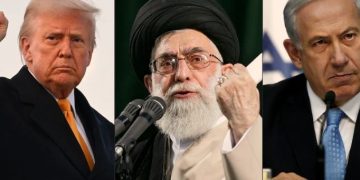
The first decision was to launch a joint US-Israeli attack on Iran and kill the country’s supreme leader, Ayatollah Ali Khamenei. Leaving aside the loss of life and the immediate chaos, it should be obvious that the attack will trigger a long period of instability in the Middle East.
To be sure, the Iranian regime was repressive, murderous, and bad for Iranians’ economic and social well-being. Khamenei, leading elites, and the feared Islamic Revolutionary Guard Corps had blood on their hands, including the killing and arrest of tens of thousands of protesters just since the beginning of the year.
But none of this justifies initiating a new war in the Middle East that lacks support from international allies or any kind of domestic buy-in.
The US is still considered a democracy where people’s views should, in principle matter, but with Trump risking region-wide carnage, the democratic veneer appears thinner by the day.
No matter how awful Khamenei’s track record was, he was no Nicolás Maduro, who had only a few diehard supporters even in Venezuela’s military by the time Trump intervened to capture him in January. There will be no puppet regime in Iran, where state institutions and nationalist feeling are strong. When the Shah’s regime collapsed in the face of the Iranian Revolution in 1979, the state apparatus remained largely intact and transferred its allegiance to the new Islamic Republic.
That state apparatus now will defend Iranian interests and seek to use the country’s proxies to destabilize other countries. This may even give a new lease on life to proxies such as Hezbollah and Hamas, both of which have been gravely weakened since the October 7, 2023, Hamas attack against Israel.
Moreover, by virtue of his religious role, Khamenei enjoyed respect and authority among Shia Muslims at home, where they constitute a huge majority of the population, and abroad. For many, his killing makes him a martyr – the last thing Iran or the region needs.
Trump’s other dangerous and destabilizing decision, which immediately preceded the first, was to designate the AI company Anthropic as a supply-chain risk. That designation, typically reserved for companies from foreign adversaries, such as China’s Huawei, bars federal contractors from using Anthropic’s models and heralds major restrictions on what the company can do in the future. “Effective immediately,” announced Secretary of “War” (Defense) Pete Hegseth, “no contractor, supplier, or partner that does business with the United States military may conduct any commercial activity with Anthropic.”
The reason? Anthropic wanted safeguards against its models being used for mass surveillance of Americans and autonomous weapon systems. Neither provision would have placed meaningful restrictions on the defense department in practice. Indeed, mass surveillance of US citizens is illegal under US law and autonomous weapon systems are not a near-term possibility.
But for Trump and Hegseth, it is the showdown and intimidation of Anthropic that matter. They must demonstrate that they can do as they please, just like Mugabe.
But unlike Zimbabwe’s rigged lottery, the Anthropic decision will have major consequences, perhaps more far-reaching than the attack on Iran. Regardless of what one thinks of current AI capabilities, there is little doubt that who controls AI in the future will have momentous implications for democracy, business, communication, and privacy.
Many in the industry may interpret the Anthropic ban to mean that the US government, not the private sector, will control AI.
Winner-take-all dynamics (whether real or perceived) had already driven the competition between OpenAI, Anthropic, and Google to fever pitch. Within hours of the Anthropic announcement, Sam Altman, the head of OpenAI, rushed to cut a deal with the defense department – a deal signaling that this competition is about to reach dangerous new heights. Altman is willing to give Hegseth everything Anthropic refused, including capabilities to violate US law and willingness to work on autonomous weapon systems.
The implications of the action against Anthropic could be even more far-reaching. This administration, and perhaps future administrations, can now impose hugely disproportionate penalties on any contractor they disagree with. The security of private property rights is now looking much shakier. Meanwhile, the Pentagon has signaled to the world that it is intent on mass surveillance and the development of autonomous weapon systems (why else bother about these two ineffective provisions in the contract?).
Trump has arguably achieved Mugabe-level absurdity with his military attack on Iran and legal attack on Anthropic. A president who came to power promising no new foreign entanglements, especially in the Middle East, has launched a potentially riskier one than the Iraq War a generation ago – and with even flimsier justification. A president who rails against “socialism” and “far-left Democrats” uses the state to crush a private company.
But in both cases, the absurdity is the point – as it was for Mugabe. The shock value and trampling of norms embody Trump’s personal and political credo: Rules are for suckers.
The writer, a 2024 Nobel laureate in economics, is Institute Professor of Economics at MIT