
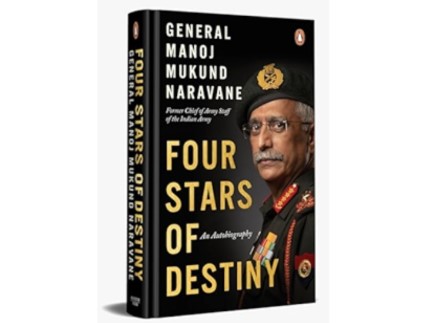
An unseemly controversy has been created over an unpublished book penned by former Army Chief General MM Naravane. It has already rocked the Parliament with Lok Sabha Speaker Om Birla and Defence Minister Rajnath Singh objecting to Leader of the Opposition (LoP) Rahul Gandhi’s attempt to raise it in the House, violating rules that stipulate contents of an unpublished book cannot be discussed in the Lok Sabha. But neither the Speaker nor the government is correct in stonewalling a debate on the specious plea of House rules, when the government is guilty of withholding permission for the publication of the book for far too long. Interestingly, the book is already in circulation on social media platforms in pdf format.
However, this resistance by the government to allow publication of the book itself suggests all is not well with it and it is oversensitive about discussion of defence policies, strategic decisions and military manoeuvres that may strengthen democratic institutions with new lights shed by top professionals rather than weaken them. Withholding any information about armed forces and how politicians deal with related issues from the taxpayer of a democratic nation can never be defended.
When the chiefs of India’s armed forces — the Army, Air Force and Navy — fold their uniforms and retire, they have every right like any other citizen of the country to share their experiences and perspectives in the form of books. Such works often take the form of accounts of military decisions, strategy, war memories, leadership principles and national security experiences. It would be diabolical to claim such memoirs can ever be security risks. These books form a treasure trove of historical information and insight into strategy and also for public discourse. Of course, they need to go through several security restrictions and government regulations to ensure no military or strategic secrets are divulged for the benefit of enemies of the country. At the same time, it would be childish to suggest that top military officials are so naive as not to know the rules of the game.
Also Read: Tightening Screws
Against this backdrop, the political storm unleashed by excerpts from the unpublished book of Naravane has raised serious concerns for the health of democracy and military accountability, apart from free speech, in the country. The former Army Chief has purportedly shared, among many other experiences, in his unpublished book given to a reputed publisher details of a high-altitude confrontation between Indian and Chinese forces. He has graphically portrayed how he awaited clearance from the top — the Defence Minister and the Prime Minister — for action against an intruding Chinese force. Immediate response was needed to stop the intruders, but the Defence Minister sat on the matter for far too long and then told the Army Chief that the PM’s message to him was to act in whatever manner he thought fit. Naravane felt terribly let down and “alone”, as the LoP said, quoting from excerpts of the unpublished book published by a media outlet.
There is no doubt the clearance processes are vital for preserving military secrets. All the same, the government is wrong to maintain prolonged silence and opaque delays for the publication of the book. If it thinks Naravane’s book contains too sensitive material to be published, it should say so. No official word till date only strengthens the suspicion that the government has something very big that it desires to hide. Question arises whether there is any conspiracy at work to suppress weakness on the part of politicians who have no qualms in claiming credit for successful military operations, relegating the actual heroes on the battlefield to the background, while refusing to take the blame in case any military manoeuvre goes wrong.
The tendency to make political capital of the heroic exploits of the country’s armed forces has become too pronounced in the past decade. Such blatant misuse of the military for political gain by the powers that be was not seen earlier. On the contrary, the political establishment does not show the same courage or leadership to share the blame for any failure in the battlefield.
Several senior officers associated with the Indian Army — former chiefs or senior commanders — have written or dictated books based on war experiences and leadership. General VP Malik’s book provides a detailed account of the 1999 Kargil War. Lieutenant General KJS Dhillon has written about recent cross-border operations against Pakistan. Other books focusing on adventure, struggle and military life are also available, revealing soldiers’ personal experiences. These works typically describe military decisions, battlefield strategies, difficult leadership choices and the hardships faced by soldiers.
The IAF’s top leadership has also shared its experiences. Former Air Chief PC Lal and others have books to their credit focusing on Air Force history and personal missions. Numerous writings based on the biographies, war memories and leadership values of senior pilots and commanders are also available as books.
All these suggest authentic, inside stories of the defence establishments and wartime experiences are welcome both for public knowledge and understanding defence policies. One more book does more good and no harm, but this unpublished book seems it could badly puncture falsely bloated egos of currently powerful people.