
BANDANA SETHI, OP
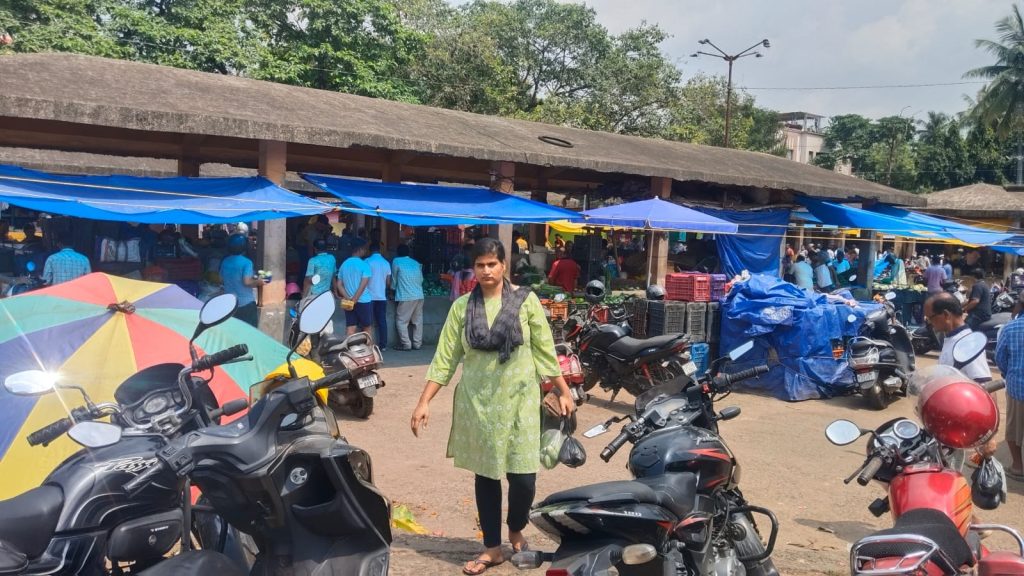
Bhubaneswar: Despite the City’s rapid transformation, Bhubaneswar’s traditional market culture remains vibrant. Amid high-rises, wider roads and sprawling shopping complexes, the City’s haats and bazaars continue to draw crowds from morning till night, with vendors’ calls and constant bargaining keeping them bustling.
However, market infrastructure has failed to keep pace with the City’s growing population and demand.
Small and large haats have emerged across Bhubaneswar over the years, with a few under the Bhubaneswar Municipal Corporation (BMC) and others managed by the Regulated Market Committee (RMC).
Yet, most of these markets continue to lack basic amenities. Vendors and residents face persistent problems with drinking water, toilets and parking, while poor sanitation remains a concern. Fire safety and other essential infrastructure are also inadequate.
Against this backdrop, Dharitri takes a closer look at BJB Nagar Haat, examining its infrastructure, civic amenities, fire safety measures and the challenges faced by traders and customers.
Business by day, anti-social hub by night
Located around 200 metres from Badagada High School, BJB Nagar Haat is a prominent local market serving several surrounding neighbourhoods. While vegetables, fish, meat, chicken, mutton, groceries and other essentials are sold, the market is popularly known as the Badagada Fish Market.
The market operates daily from 6 am to 11 am and again from 6 pm to 9 pm. Residents of Badagada, Brit Colony, Kalpana, Shivanagar, Chintaman iswar, BJB Nagar, Bud heswari, Sabar Sahi, Champa Pokhari, Laxmisagar, Laxmi Vihar and Oscar City depend on the market for their daily needs.
The market draws a large number of customers from nearby localities and remains busy throughout the day.
However, local residents allege that the scene changes after dark, with the premises becoming a gathering spot for anti-social elements. Their alleged presence at night has raised concerns over the safety and security of traders and local residents.
A market with a 38-year history
Established in 1988 during the tenure of then Chief Minister Janaki Bal labh Patnaik, BJB Nagar Haat initially spread over around 3 acres and 200 decimals of land. In its early years, a few fish vendors operated from scattered spots, while sand, cement, timber and country liquor were also sold on the premises.
The market was developed in an organised manner in 2008, with designated spaces for vendors. The same year, the BJB Nagar (Badagada) Haat Association was formed, and the market was formally registered.
Over the years, part of the original land was taken over by the Irrigation Department, while a settlement came up on another portion. The market now operates on around two acres. It has nine long platforms (pindis) and 493 vendors.
Of these, 375 sell vegetables, leafy greens and mushrooms, while the market also has 57 fish and dry-fish vendors, 43 grocery shops, one hotel, one snack shop, six mutton shops, six chicken shops and four tea stalls.
Though the BMC has controlled the market since its inception, vendors allege that poor maintenance has left the 38-year-old market lacking basic amenities. BMC staff collect Rs 10 a day from platform and temporary vendors, while those operating permanent shops pay a monthly rent of Rs 1,100.
The market has three main entrances and one smaller access route and is enclosed by a boundary wall, but lacks adequate security arrangements.
Located near Badagada and Laxmisagar villages, the market allegedly becomes a gathering spot for anti-social elements at night, with some reportedly consuming alcohol on the premises.
Traders have also previ ously alleged extortion and forced collection of money, vegetables and non-vegetarian items.
While such incidents have declined following efforts by the market association, they have not been completely eliminated. With Badagada Police Station nearby, police conduct night patrols in the area, though regular patrolling is not always possible.
No proper fire safety arrangements
The largely open market has no dedicated fire-safety measures, with only two or three vendors reportedly keeping fire extinguishers at their shops.
The market has just two toilets and a drinking-water facility. Poor maintenance of the nearby drain also raises concerns over sanitation and hygiene.
Garbage disposal remains a concern
The BMC allegedly does not clear garbage from the market regularly, leaving waste piled up across the premises and creating an unhygienic environment for traders and customers.
Chicken sold from fish sheds
The market faces several issues, including inadequate parking, misuse of fish sheds and alleged short-weighing of goods. The BMC has allotted 11 fish sheds to traders at monthly rents of Rs 2,500 to Rs 3,000.
While fish was initially sold from these sheds, they have now reportedly been converted into chicken and egg counters. Despite repeated warnings from the market association, the misuse of fish sheds continues.
The association has brought the matter to the BMC’s notice several times, but no action has reportedly been taken. Customers have also alleged short-weighing, particularly by non-vegetarian traders.
With many vendors being farmers, the market is popular for its fresh produce and attracts heavy footfall.
However, inadequate parking remains a major concern, as customers often park vehicles inside the market premises, obstructing the movement of shoppers and vendors.
Market set for major transformation
After years of demands, the BMC has initiated steps to redevelop the market, with the existing structure set to be replaced by a three-storey building.
The proposed complex will have eight fish sheds, 26 kiosks, eight puja platforms, five milk stalls, 85 vegetable and fruit stalls, and 49 fish stalls. The terrace will feature eight food vending zones, along with a central courtyard and dedicated pedestrian access.
The plan also includes a market complex, dedicated pedestrian ac cess and parking for up to 80 vehicles. The BMC has floated a Rs 25-crore tender for the project, with work expected to begin shortly.
Haat festivities
The market celebrates Ganesh Puja and Saraswati Puja with great enthusiasm every year over two days. A Ganesh temple within the market premises also attracts devotees during the festivities.
The market association collects Rs 10 a day from each trader, using the proceeds to organise the pujas and pay the salary of a sweeper engaged to maintain cleanliness on the premises.
President chosen by consensus
Since the market began functioning in an organised manner, two presidents have headed the market association.
In the 2024 election, local Ward 45 corporator Amaresh Jena was elected president.
According to the association, he has continued in the post with the support of the traders and has served as president for the past 12 years.
The secretary, joint secretary and treasurer are also selected unanimously by the traders.
Office-bearers
President: Amaresh Jena
Secretary: Ratiranjan Sahu
Joint Secretary: Bidyadhar Sahu
Treasurer: Pradipta Kumar Sahu
Renovation expected to address key issues
The market currently lacks adequate parking and security arrangements, but traders and the market association expect these issues to be addressed after the proposed redevelopment.
Following complaints of short-weighing, traders have been warned against the practice.
The BMC has also been accused of failing to clean the market drain regularly.
Traders allege that despite collecting fees, the civic body does not provide adequate services in return.
The market reportedly becomes a gathering spot for anti-social elements at night, with some allegedly consuming alcohol on the premises.
Police conduct intermittent patrols following complaints, but traders and residents say the measures are insufficient.
Prices higher than other markets
Customers have alleged short-weighing at the market and claimed that prices are relatively higher than those in other city markets.
Though the market is under BMC control, traders and customers allege that the civic body has failed to ensure proper monitoring, smooth business operations and adequate services for shoppers.