

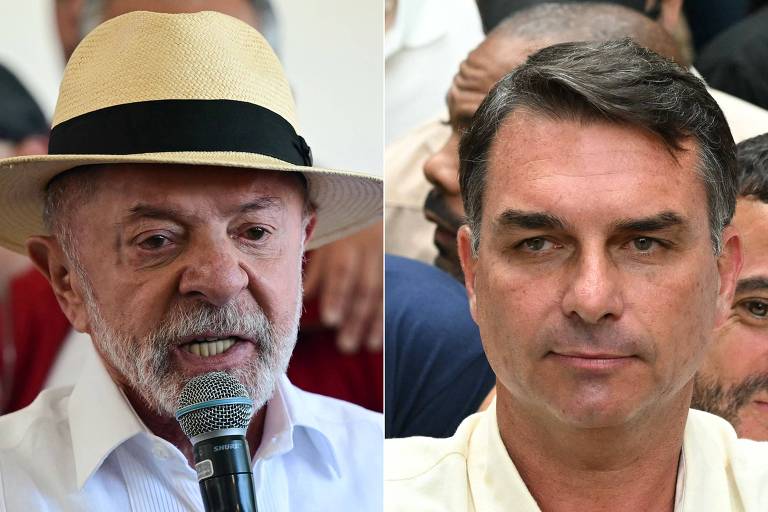
Brazil, the largest South American country with a Leftist government, is poised to come within the orbit of the influence of US President Donald Trump as Flavio Bolsonaro, son of far-right former President Jair Bolsonaro, finished ahead of President Luiz Inacio Lula da Silva in the election on 4 October, which will go to a run-off in three weeks. The surprise result proved wrong opinion poll projections that had shown President Lula in the lead. Flavio Bolsonaro got 47% of votes against the incumbent’s 45%. If Bolsonaro continues his winning streak in the October 25 election, Brazil will be the latest country to swing to the right in Latin America. The result has caused a shock to Lula who at 81 is seeking a fourth term in office. The veteran leftist had earlier called the vote a battle between democracy and “barbarism,” warning voters that Brazil’s sovereignty was in danger in the face of US pressure. Irony is Flavio Bolsonaro, 45, was little known nationally before his jailed father made him his political heir. He had never expressed ambition to follow in his father’s footsteps.
However, it has so turned out that his father’s powerful name virtually performed a miracle and the country’s conservative vote bank rallied behind the son, despite a campaign marked by scandals and mudslinging. In fact, during the campaign itself Flavio was under investigation for corruption over financing of the biopic “Dark Horse” about his father. But apparently it did not cut much ice with many voters. This is a remarkable fightback for the Bolsonaro family after Jair Bolsonaro lost a re-election bid in 2022 that led to violent riots in the capital and his conviction last year for attempting a coup. He is serving a sentence of 27 years in jail. His son has already announced that if he becomes President, he will appoint four new judges to the powerful Supreme Court that convicted his father and try to overturn the verdict. It has been Trump’s policy to ensure one Latin American country after another elects candidates he backs as Presidents. He had said he was watching the election in Brazil “very closely.” He has wielded tariffs and sanctions to corner Lula for the trial against his ally Jair Bolsonaro and alleged unfair trade practices. Lula repeatedly warned him not to “meddle” in the elections. Lula had endeared himself to his countrymen for social welfare programmes that lifted many out of poverty. He made a dramatic comeback to office in the 2022 elections after being jailed on a corruption conviction for 18 months. The charges, thrown out on procedural grounds, have continued to haunt him. In his third term, he managed the economy well, causing a drop in inflation and unemployment.
However, voters were seemingly unhappy with him for a high cost of living and a continuing spiral of crime and violence. In Brazil, the number one issue for voters is safety as there is a perception that security has worsened. Other reasons, experts point out, are persisting inequalities and a lack of access to land, markets and opportunities. If Flavio wins the race in the run-off elections, where only two candidates – he and Lula – will be allowed to contest, his main task will be to persuade Trump to ease high tariffs imposed on Brazil under Lula. Trump’s actions have hurt the Brazilian economy and that indirectly damages Lula’s chances of re-election. But being a close ally of the US does not automatically mean getting better treatment. There are chances Trump may treat Flavio with disrespect, as he has treated other allied governments earlier. A Lula win would leave Brazil among a shrinking group of Latin American countries standing up to Trump. If he loses, only Mexico and Uruguay will be the bigger countries left to take on the US.