
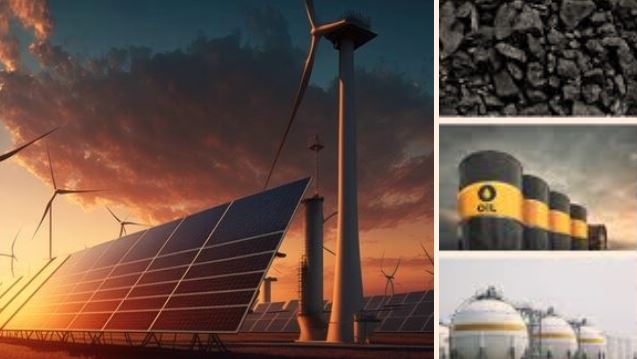
New Delhi: BRICS countries Saturday called for stronger energy security through diversified supply sources, resilient infrastructure and stable energy markets, while acknowledging that fossil fuels will continue to play an important role in the global energy mix, particularly for emerging and developing economies.
“We acknowledge fossil fuels will still play an important role in the world’s energy mix, particularly for emerging markets and developing economies (EMDEs),” the New Delhi Declaration said.
At the same time, BRICS called for “just, orderly, equitable and inclusive energy transitions” and lower greenhouse-gas emissions, while stressing technological neutrality and the principle of common but differentiated responsibilities.
The grouping said energy security required “energy market stability and maintaining undisrupted flows of energy from diverse sources”, as well as stronger value chains and protection of critical energy infrastructure, including cross-border facilities.
BRICS also endorsed the growing use of digital technologies in energy systems, saying artificial intelligence and advanced data analytics could improve grid management, renewable-energy integration and operational efficiency.
The bloc welcomed the BRICS Guiding Principles on Smart Grids and Energy Storage and an Indian chairship initiative to establish a BRICS Digital Centre of Excellence for Smart Grids and Energy Storage as a voluntary platform for cooperation.
NUCLEAR, HYDROGEN & RENEWABLES
BRICS said countries should pursue “balanced and diversified energy mixes reflecting national circumstances”, recognising a broad range of technologies.
“The widest variety of energy sources and technologies including but not limited to renewable energy, bioenergy, fossil fuels, nuclear energy, hydropower, hydrogen, low carbon technologies, energy storage technologies, which play an important role in achieving the SDGs and energy security,” the declaration said.
The bloc also encouraged cooperation on interoperable standards and certification for zero- and low-emission hydrogen and noted ongoing work on a joint report on hydrogen value chains.
CRITICAL MINERALS
BRICS also placed greater emphasis on securing supplies of critical minerals needed for the energy transition.
“We affirm the need to promote reliable, responsible, diversified, resilient, fair, sustainable, and just supply chains of critical minerals,” the declaration said.
It called for supply chains that ensure “benefit sharing, value addition and economic diversification in resource-rich countries”, while preserving countries’ sovereign rights over their mineral resources.
The declaration recognised the “key role of critical minerals for the development of zero- and low-emission energy technologies, energy security, and resilience of energy supply chains.”
START-UPS
BRICS also sought to deepen cooperation in advanced manufacturing and emerging technologies through its Partnership on the New Industrial Revolution (PartNIR).
The grouping welcomed the establishment of a BRICS Incubator Network and said it would consider creating a BRICS Startup Innovation Fund as a potential mechanism to support innovation-led growth.
It also highlighted efforts to strengthen the BRICS Startup Knowledge Hub and BRICS Startup Forum, while encouraging greater engagement among start-ups and small and medium-sized enterprises across member countries.
The energy language is notable because it seeks to bridge two sometimes competing priorities: maintaining affordable and reliable energy supplies for developing economies while pursuing the transition to lower-emission systems. Rather than prescribing a single energy pathway, BRICS explicitly backs a technology-neutral approach based on national circumstances.