
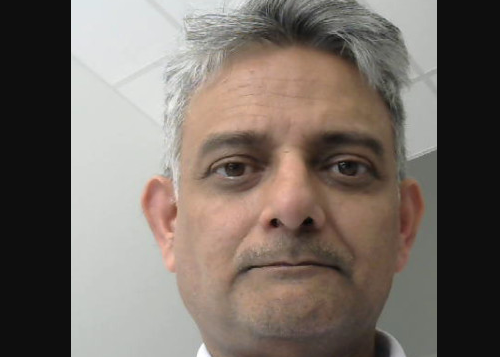
Dr Srimanta Misra
Understanding the changing geopolitical equation of the 21st century requires looking at history, where shifts in geopolitical power have followed changes in economic, technological and military strength—from sea routes and warfare to energy resources and artificial intelligence.
For centuries, power was closely associated with control over territory, populations, agricultural resources and trade routes. The Ottoman Empire controlled strategic territory connecting Europe, Asia and the Middle East, while the Mughal Empire dominated a vast and prosperous part of the Indian subcontinent. Their strength rested on agriculture, taxation, military power, territorial control and access to commercial routes. In this era, whoever controlled productive land, population centres, strategic cities and important trade routes possessed the foundations of power.
From the 15th century onwards, however, this equation began to change. Advances in navigation, shipbuilding, cartography, finance and military technology enabled European states to project power across oceans. Portugal and Spain were followed by the Netherlands, Britain and France in building extensive commercial and colonial networks.
The centre of geopolitical leverage gradually shifted from controlling land routes to controlling the seas and global commerce. Britain became the outstanding example of this new order. Its geographical position, powerful navy, commercial networks, financial institutions and industrial capacity enabled it to exercise influence far beyond its territory. Strategic maritime routes, the Mediterranean and, after 1869, the Suez Canal became essential components of imperial strategy. Then came another transformation: the Industrial Revolution. Coal, and later oil, became foundations of modern industrial and military power. Industrial production allowed states to manufacture weapons, ships, railways and aircraft on an unprecedented scale. Railways transformed the movement of armies and goods, while steamships accelerated global commerce.
Economic and military power therefore became increasingly dependent on industrial capacity and access to energy. Before the Second World War, much of the world’s political and economic power remained concentrated in Europe. Britain and France possessed vast colonial empires, while Germany competed for continental influence. Germany’s expansion accelerated the crisis. After annexing Austria and incorporating the Sudetenland, Germany occupied the remaining Czech lands in March 1939.
On 1 September, Germany invaded Poland, prompting Britain and France to declare war. In 1940, German forces conquered much of Western Europe, including France. Britain then faced Nazi Germany largely alone in Western Europe. During the Battle of Britain, from July to October 1940, the Royal Air Force resisted the Luftwaffe and prevented Germany from securing the conditions required for an invasion. Germany subsequently intensified bombing of British cities during the Blitz, including London, Coventry, Birmingham, Liverpool and Manchester, killing around 43,000 civilians. But Britain did not surrender. The war revealed a larger transformation. European powers were exhausting the economic and financial foundations on which their global empires had been built. Britain and France emerged victorious from WWII, but their finances were exhausted and their empires increasingly unsustainable.
Meanwhile, US power was rising, while decolonisation accelerated across Asia, Africa and the Middle East. India’s resistance to British rule had much deeper roots. The Paika Rebellion of 1817 was an important early uprising, while the Revolt of 1857 became the most serious armed challenge to British rule in the 19th century.
Although suppressed, it profoundly changed British rule, with the Crown assuming direct control of India. The Second World War produced a powerful psychological transformation across the colonial world. If European nations were fighting for sov ereignty and freedom, why should those principles not apply to the peoples they ruled? India’s demand for complete independence, expressed through the Congress adoption of Purna Swaraj in 1929, gained further momentum during and after WWII. India became independent in 1947, followed by other Asian territories through different paths. The post-war transformation also marked the rise of the US. The US emerged from WWII with an enormous industrial base, technological strength, fi nancial resources and global military capabilities. Unlike much of Europe, its industrial infrastructure had not been physically devastated by the war.
Beginning in 1948, the US supported Western European reconstruction through the Marshall Plan. Institutions such as the IMF and World Bank, together with NATO, helped establish a new international order. By the middle of the 20th century, the strategic centre of gravity had moved decisively across the Atlantic. The rise of the US had begun long before 1945. The 13 British colonies declared independence in 1776. France supported the American revolutionary cause, and American and French forces fought Britain, contributing to its defeat at Yorktown in 1781. American independence was formally recognised by the Treaty of Paris in 1783.
By the end of WWII, the US possessed a combination of economic, technological, military and financial capabilities unmatched by any other Western power. The dollar became central to the post-war financial system. American companies expanded globally, while its universities, research institutions, armed forces and technological industries became major sources of international influence. The question for the future is whether geopolitical power will shift again as prolonged conflicts, artificial intelligence, new energy technologies and China’s continued rise reshape the global equation. If China’s demographic dividend becomes a demographic burden while India retains a relatively larger working-age population, part of the economic and geopolitical centre of gravity could shift toward India. If earlier power crossed the Atlantic to reach the US, could the next major shift cross the Pacific?
The writer is a consultant in Hematology and is based in Troyes, France.
Orissa POST – Odisha’s No.1 English Daily