
When US President Donald Trump’s administration in a new fiat, made the coveted H-1B visa available to foreigners at a prohibitive cost, it virtually spelt doom for high-tech professionals and scientists from India, as well as a few other countries, who desired it most for high-paying jobs in America. In fact, 70 per cent of the visas were obtained by Indian professionals.
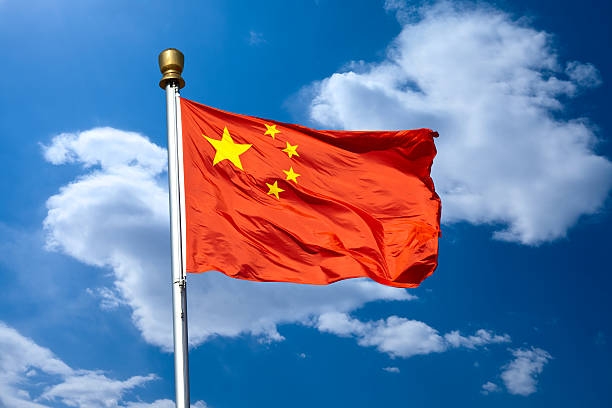
There was speculation then that Europe could be the alternative destination, even though the rising intolerance towards migrants in many of these countries may dampen job-seekers’ enthusiasm. Japan and China looked like probable destinations. But what appeared to be a possibility China seems determined to make it a certainty by officially launching its K Visas for work in the STEM (science, technology, engineering and mathematics) fields. When the new visa was first announced in August, it hardly attracted global attention. Days after Trump’s mad rush to stop Indian professionals from getting jobs in the US, the K Visa has shot into limelight.
Much of the scope of that visa is still unclear as it remains hazy whether it will actually allow foreigners to work in China or whether it just allows them easier access into the country. But it has already generated interest in India and also adverse reactions from tens of thousands of users on Chinese social media who have openly criticised the programme. Students in China who aspire to careers in STEM fields fear that the benefits extended to foreigners would trigger tough competition in a sluggish job market. It may be because China has traditionally not been a major immigration destination for foreign professionals.
Netizens in China have started crying foul against the new visa with pleas that China has innumerable bachelor’s degree holders, apart from a sizable number of master’s and doctoral degree holders, for which there is already a surplus of domestic talent. In such a situation, they angrily ask why the authorities are now trying to bring in foreign college graduates and professionals with work experience in the US and Europe. They have also questioned whether the authorities would be able to bring in a higher standard of talent by issuing this new visa. At the same time, to put off foreign job seekers, they are wondering whether foreigners would be able to adapt to life on the mainland, citing language barriers and China’s tightly controlled political system. What is even worse is that many of the comments had xenophobic and racist implications targeted specifically at Indian nationals. The backlash has been so intense that state media outlets have come out to assuage the fears. The Global Times in a recent article, supported the new scheme terming it as an opportunity “for the world to see a more open and confident China in its new era.” The People’s Daily went even further and issued a veiled warning to the Chinese public, stating, “misrepresenting the K Visa will only mislead the public.” Sounding optimistic, it said as China steps onto the global stage, it is hungrier for talent than ever before.
However, there are many unanswered questions for foreign professionals themselves. For example, there is no clarity as yet on whether they will find that space for creativity and innovation in China as was offered in the US. Creativity and innovation flourish in an open and liberal climat,e as is seen in the West, especially the US and European nations. Given China’s track record, this is unlikely to be experienced in that country. Language would certainly be a stumbling block. Many researchers and academics who have left the US for China in recent years are ethnic Chinese and fluent in Mandarin. Hence, they did not have to face the language or racism problem.
However, for foreign talent, especially Indians, communication with Chinese colleagues may prove to be a great hurdle. The Chinese are a cold and non-cooperative bunch of people who may just refuse to talk to foreign immigrants who do not speak their language. This is a concern that both employers and employees will need to address. The bigger issue is whether foreign science and tech professionals can adjust themselves to China’s tightly controlled political environment. Casual behaviour and talk may not seem that casually acceptable in China. Whatever the future may show, China seems to be enjoying its position as a new global messiah, taking advantage of Trump’s insular doctrine. Whether China would truly be a benefactor or whether it is having a sadistic pleasure at India’s plight at the hands of Trump is a million-dollar question.