By DK Giri
When South Korean President Lee Jae-Myung landed in New Delhi on April 19, 2026, it wasn’t just another photo-op at Rashtrapati Bhavan. It was the third time he and Prime Minister Narendra Modi met in 12 months, but the first time as the head of state on Indian soil. The timing is significant.


This is the first South Korean state visit to India in eight years, and the quickest by any Seoul President after taking office. That urgency tells us one thing: the India-Korea “Special Strategic Partnership,” announced in 2015, is finally getting a deadline. The Middle East is burning, the Strait of Hormuz is effectively closed, and both democracies have decided they can’t afford to keep their ties stuck in the CEPA (Comprehensive Economic Partnership Agreement)-2010 era.
In geopolitics, both democracies face one chokepoint problem. President Lee was blunt on X before boarding the plane: “Amidst ongoing supply chain instability and a global economic crisis stemming from the aftermath of the Middle East conflict, the Republic of Korea and India are emerging as increasingly vital strategic partners.”
The inference of the above statement is that Iran lost its Supreme Leader to US-Israeli strikes on Feb 28, Tehran is fractured, and Korean tankers can’t get through Hormuz. Korea imports 70 per cent of its crude through that strait. India, meanwhile, needs to de-risk Chinese inputs and find trusted partners. Both need each other’s geography.
So the summit wasn’t about culture. It was about chokepoints. National Security Adviser Wi Sung-lac said it plainly: the leaders would “maintain close coordination on energy supply chains amid rapidly shifting global dynamics.”
One expects India to leverage its Iranian Chabahar port and East African routes, while Korea brings maritime insurance, LNG ship tech, and its Hyundai/Hanwha shipyards.
But the subtext here is both countries are hedging. Trump’s America is unpredictable, China is assertive, and the Middle East is volatile. A Seoul-Delhi defence industrial corridor — from Vizag to Busan — gives both strategic autonomy. Various bilateral mechanisms already exist for “defence industrial cooperation.” This visit funds them.
On the people track, CEOs, students, and the ‘Kimchi-Curry’ soft power are top priority. Lee didn’t just meet Modi. He laid a wreath at Gandhi’s memorial, attended a business conclave, and met the Korean diaspora. First Lady Kim Hea Kyung was alongside. President Murmu hosted the state dinner.
Why it matters! India-Korea ties have always been elite-driven — Hyundai, LG, Samsung. But the next phase needs SMEs, students, and startups. Korea’s population is aging; India’s is young. Education visas, joint R&D in AI, and cultural familiarity will decide if this is transactional or transformational. Lee calling the summit a “turning point” only makes sense if 25-year-olds in Pune and Pohang start building together.
The Vietnam link shows Lee’s ‘Global South’ play and India’s role in it. Lee flew straight to Hanoi after Delhi. That’s not accidental. Wi called this trip part of Lee’s “Global South strategy” to “diversify supply chains and markets.”
India is the anchor of that strategy. If Korea can plug into India’s manufacturing and Vietnam’s critical minerals, it creates a non-China supply web for chips, batteries, and ships. For Delhi, that’s a win. It positions India not just as Korea’s market, but as Korea’s gateway to the Global South and ASEAN.
The India-Korea-Vietnam triangle mirrors the Quad’s economic logic, minus the military baggage.
What this visit actually changes? There could be three takeaways for Indo-Korean ties.
Takeaway 1: From Trade to Trust. For 15 years, India-Korea was about Hyundai cars and CEPA tariffs. After Hormuz and the Middle East war, it’s about energy security and war-proofing supply chains. That’s a strategic shift. You don’t share shipbuilding IP unless you trust the partner for 30 years.
Takeaway 2: From Bilateral to Networked. Lee’s India visit was leg-1 of an India-Vietnam tour focused on “critical minerals” and “energy supply chains.” India isn’t the destination; it’s the hub. We can expect Seoul to route more of its Indo-Pacific policy through Delhi.
Takeaway 3: From Intent to Investment. The test of this visit is the MOU signing ceremony and the business forum. If Hyundai Heavy, Samsung, and SK announce India capex by July, Lee’s “turning point” claim holds. If not, we’re back to 2018 communiqués.
In conclusion, the ‘special’ in strategic should be noted. “Special Strategic Partnership” has been diplomatic boilerplate since 2015. Lee Jae-Myung’s three-day visit in April 2026 finally put machinery behind the metaphor. Hormuz forced the issue; economics will sustain it.
For India, Korea is the rare partner that brings capital, technology, and no border dispute. For Korea, India is the rare democracy with scale, youth, and a navy that can sail from Hormuz to Malacca. The two leaders have now met thrice. The next meeting should be at a shipyard opening, not a summit. That’s when we’ll know the Korean kimchi (a foundational staple in Korean cuisine) has really met the Indian curry.
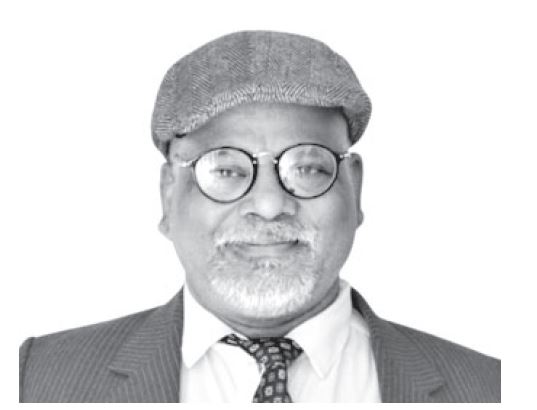
The writer is Professor of Practice, NIIS Group of Institutions.