
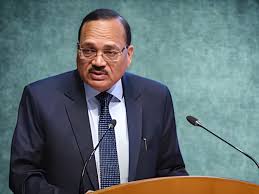
New Delhi: Chief Justice of India (CJI) Surya Kant emphasised the importance of a culture of healthy disagreement and deliberations at the BRICS Chief Justices’ Forum Saturday.
Addressing the gathering of heads of delegations and delegates from the BRICS member states and partner countries on the second day of the BRICS Chief Justices’ Forum, the CJI highlighted that timely and predictable delivery of justice is necessary.
The gathering was also addressed by judicial leaders from Brazil, Russia, China, South Africa and other member and partner countries of the grouping.
Luiz Edson Fachin, President, Supreme Federal Court of Brazil, addressed the gathering virtually. Other judicial leaders like Igor Krasnov, Chief Justice of the Supreme Court of the Russian Federation; Zhang Jun, Chief Justice of China and President of the Supreme People’s Court; Boulos Gahmy Iskander Boulos, Chief Justice of Egypt’s Supreme Constitutional Court; and Sunarto, Chief Justice of the Supreme Court of Indonesia, also addressed the gathering.
Some other leaders who addressed the audience included Mohammed Hamad Al Badi Al Dhaheri, President of the UAE Federal Supreme Court; Andrei Shved, Chairman of the Supreme Court of Belarus; Aslambek Mergaliyev, Chairman of the Supreme Court of Kazakhstan; Mahube Betty Molemela, President of the Supreme Court of Appeal of South Africa; Ayatollah Gholam Hossein Mohseni-Eje’I, Chief Justice of Iran; and Malikakhon Kalandarova, Deputy Chairperson of Uzbekistan’s Supreme Court.
Addressing the gathering virtually, the president of the Supreme Federal Court of Brazil called for multipolarity and greater international collaboration. He also emphasised that international law is of critical importance in the current period of global instability and transition, and stressed the need to uphold the rule of law in the international order.
The chief justice of China highlighted judicial cooperation as a valuable contribution to the BRICS member countries and called for solidarity and cooperation among the members and partner states. He also emphasised the promotion of rules-based international trade and commerce in the current times of industrial transformation.
He said the judiciary plays a significant role in promoting social equity and justice. He also spoke about the growing role of artificial intelligence in judicial functioning and identified the judiciary’s expanding role in resolving cross-border commercial disputes.
The chief justice of China also called for the promotion of cooperation among legal systems and contributing to the formation of a world judicial civilisation.
The chief justice of the Supreme Constitutional Court of Egypt spoke about a free and fair legal system with a common global voice, while the president of the Federal Supreme Court of Ethiopia focused on alternative-dispute-resolution mechanisms and discussed the interlinkage between the rule of law and economic development.
The chief justice of the Supreme Court of Indonesia called for the exchange of best practices and a durable platform for judicial dialogue among the member nations.
The chief justice of the Islamic Republic of Iran highlighted that BRICS is shaping economic and political developments, and raised concerns over widespread violations of human rights, sovereignty and territorial integrity, the humanitarian crisis and displacement of civilians.
The chief justice of the Supreme Court of the Russian Federation said BRICS has a key role in ensuring cooperation and a multi-polar world.
The president of the Supreme Court of Appeal of South Africa called for cooperation on international issues, while the president of the UAE Federal Supreme Court said arbitration and mediation are integral to modern economy.
On the second day of the BRICS Chief Justices’ Forum, four substantive sessions were conducted, in which discussions were held on mediation and international commercial disputes, cross-border enforcement of arbitral awards, artificial intelligence and the judiciary, and judicial leadership and sustainable development.
The forum enabled closer judicial dialogue, the promotion of the exchange of experiences and deeper cooperation among the BRICS member states and partner countries on emerging legal and institutional issues, according to a statement issued by the Supreme Court.