
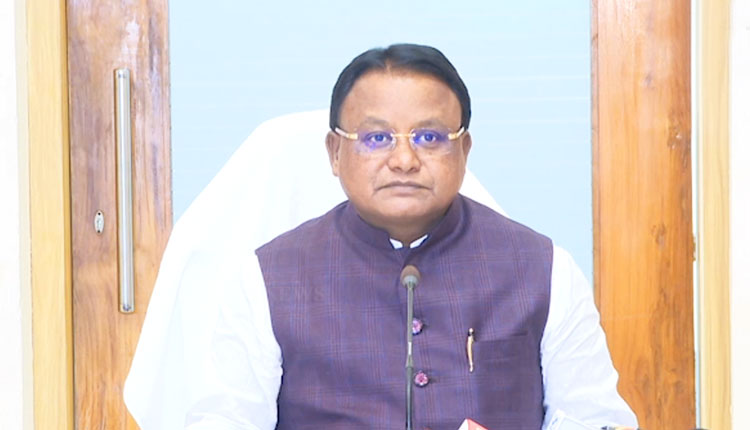
Bhubaneswar: Chief Minister Mohan Charan Majhi Monday chaired the State-Level Natural Calamity Committee (SLNCC) meeting and emphasised the need to maintain state’s globally recognised disaster management system while reinforcing the state’s commitment to achieving ‘Zero Casualty’ during natural disasters. In a major decision, the state government announced an annual maintenance grant of Rs 6 lakh for each of state’s 911 multipurpose cyclone and disaster shelters.
The funds will be provided to district administrations to ensure the availability of drinking water, lighting, cooking facilities and other essential services before any emergency situation arises. Addressing the high-level meeting at Lok Seva Bhawan Convention Centre, the Chief Minister said Odisha has developed a nearly foolproof disaster management framework over the years and stressed that no laxity in preparedness or response would be tolerated. He called for further strengthening of the system to safeguard lives and livelihoods across the state.
Majhi noted that Odisha’s disaster management model, particularly its “Zero Casualty” policy, has earned international recognition. He said the state’s long-standing disaster risk reduction and mitigation practices were recently appreciated by member nations during the BRICS Technical Meeting of the Disaster Risk Reduction Working Group held in Puri.
The meeting, attended by Deputy Chief Minister Kanak Vardhan Singh Deo and Revenue and Disaster Management Minister Suresh Pujari, reviewed disaster preparedness measures and adopted several key decisions aimed at enhancing resilience against cyclones, floods, droughts and other natural calamities. Recalling the state’s response to cyclones ‘Montha’ and ‘Dana’, Majhi said Odisha’s preparedness and timely intervention helped minimise damage and loss of life.
During Cyclone Montha, which affected 11 districts, around 38,000 people were evacuated from vulnerable areas and shifted to safety. The operation involved 33 ODRAF teams, five NDRF units and 123 Fire Services teams, enabling a swift restoration of normalcy. With forecasts indicating the possibility of below-normal rainfall due to the El Niño phenomenon, the Chief Minister directed the Agriculture, Water Resources and other concerned departments to work in close coordination under a “Whole of Government” approach.