
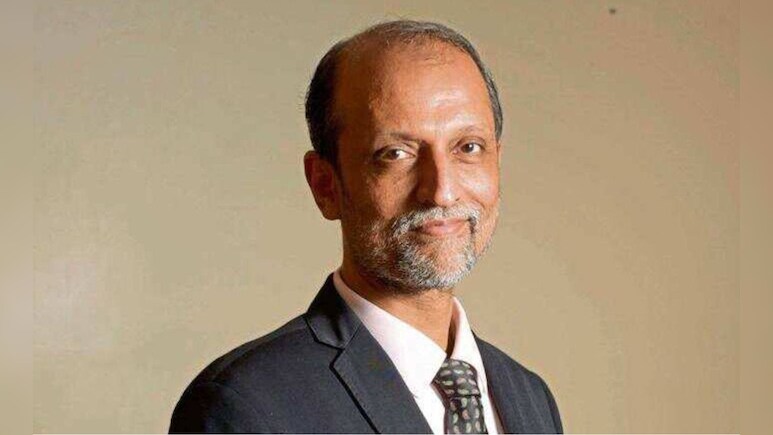
By Ajit Ranade
In his Independence Day address from the Red Fort, Prime Minister Narendra Modi made an important announcement. He acknowledged that coaching classes have become a major financial burden on families, with parents fearing that a child who does not attend coaching will fall behind. The government, he said, would therefore use India’s digital public infrastructure, good teachers and technology to build an extensive network offering free online coaching for examinations.
The intention is laudable. Coaching is expensive, and access to the better coaching institutes is heavily tilted towards those who can afford it. A talented child in a small town or a poor family should not lose out merely because another candidate can spend several lakhs on coaching. Free access to good teachers and material can certainly reduce this inequality.
But the announcement also contains a rather striking irony. Why has coaching become so indispensable in the first place?
In India, the flourishing bottled-water business and the flourishing coaching industry tell a similar story. When a public system fails to provide a service of adequate quality and reliability, a private industry moves into the gap. Families buy drinking water because they do not completely trust what comes out of the tap. They buy coaching because they do not completely trust ordinary schooling or college education to prepare their children for the gateways to higher education and employment.
Of course, private tuition has other causes too. But its extraordinary salience in India cannot be separated from weaknesses in the formal education system.
The numbers are revealing. According to the 2025 National Sample Survey cited in a recent India Forum article by Rahul Verma, 27% of school-going children take private coaching. At the senior secondary-level the proportion rises to 37%. Meanwhile, ASER continues to document serious deficiencies in foundational learning. In 2024, only 44.8% of Class 5 children in government schools could read a Class 2 text, and fewer than one-third could do basic division.
We therefore have the peculiar phenomenon of weak foundational learning coexisting with an increasingly sophisticated industry devoted to cracking examinations.
The phenomenon of “dummy schools” takes this contradiction further. Students remain officially enrolled in school but spend most of their time in JEE or NEET coaching. The classroom becomes incidental and the coaching centre becomes the real place of study. Students may spend eight to fifteen hours preparing for NEET but still struggle with elementary biology practicals. Speed, pattern recognition and familiarity with examination formats have not necessarily produced deeper understanding.
Beyond weak schooling, the more fundamental driver is scarcity. This year more than 16 lakh unique candidates registered for JEE Main. Only the top 2.5 lakh are eligible to proceed to JEE Advanced, from which a much smaller fraction ultimately enters the IITs. Similar bottlenecks exist for medical colleges, elite universities and, most dramatically, government employment.
When a small number of prized opportunities has to be distributed among millions of aspirants, the examination ceases to be merely a test of knowledge. It becomes a mechanism for rationing opportunity. It is for mass elimination.
If everyone spends twice as much on coaching, society does not get twice as many IIT seats or government jobs. Each family is behaving perfectly rationally, trying to improve its child’s relative position. Collectively, however, enormous amounts of money, time and youthful energy are spent in trying to get ahead in the queue.
This is also why examination integrity is so crucial. A candidate may accept odds of one in fifty or even one in a hundred if convinced that everyone faces the same examination under the same rules. A paper leak destroys that compact. India has experienced enough such episodes. A special law against paper leaks and organised malpractice has been enacted. When one examination can make or break a career, its credibility becomes a public good.
There is another distortion. The need to process millions of candidates favours standardised, easily machine-graded tests, especially multiple-choice questions. Such testing can be objective, scalable and less vulnerable to individual discretion. But when one high-stakes examination dominates a student’s future, teaching becomes test preparation. Knowledge becomes pattern recognition. And learning gets confused with eliminating three of four choices quickly.
Indeed, the National Education Policy of 2020 recognised precisely this danger. It called for moving away from high-stakes, single-point testing towards competency and conceptual understanding. Yet the underlying scarcity remains. As the India Forum analysis puts it, when institutional capacity does not expand alongside aspirations, entrance examinations become the organising principle of secondary education rather than merely its terminal assessment.
Coaching is not uniquely Indian. Japan and South Korea have had formidable cram school cultures despite much stronger school systems. Japan continues to perform well above the OECD average in mathematics, reading and science. Thus, intense coaching can arise simply from fierce competition for elite institutions.
At the other end, Finland puts far less emphasis on national high-stakes testing, while Germany provides respected vocational and apprenticeship pathways alongside university education.
The lesson is not that good public schooling makes coaching disappear. It is that young people need multiple credible pathways to education, skills, dignity and employment.
That is where the real reform agenda lies. Strengthen ordinary schools and universities. Expand the supply of good institutions rather than merely the number of institutions. Make examinations test understanding rather than coaching proficiency, and reduce the life-or-death importance of one afternoon’s performance.
Above all, create many more attractive and secure employment opportunities so that millions of young Indians are not stampeding towards a tiny number of government posts.
India’s digital infrastructure can certainly deliver free coaching to millions. But an even greater achievement would be to build an education and employment system in which families no longer feel compelled to buy coaching in the first place.
Making bottled water cheaper is useful. Making the water from taps trustworthy is the real solution.
The writer is a noted economist.