
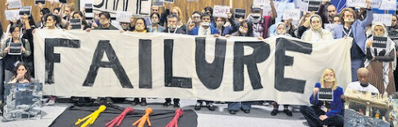
Antalya: UN climate talks collapsed Sunday as the European Union and others rejected a final draft deal put forward by COP31 presidents Turkey and Australia, saying it was too weak to advance the fight against global warming.
The failed talks reflect world governments’ struggle this year to muster ambitious action to address the worsening consequences of climate change, as wars, economic pressures and other crises compete for their attention.
After more than two weeks of negotiations that spilt two days into overtime — making it the longest COP on record — Turkey’s conference president Murat Kurum said at the closing plenary that he could see there was no agreement and confirmed he would not advance any new text. “There is nothing to do, we did all that we could,” he said.
“There will be no new text from now on.” He later left the stage in the midst of speeches being delivered by country representatives. Australia’s COP31 President of Negotiations, Chris Bowen, called the outcome “very disappointing” and said disagreements over fuels and climate finance were the deal breakers.
The last time UN climate talks failed to get a deal adopted by all was in Copenhagen in 2009. Ireland’s environment minister Darragh O’Brien said the European Union could not support the proposed deal in part because it made no mention of the fossil fuels that scientists say drive global warming. “It is unconscionable that we would have a climate act that makes no reference to fossil fuel, no reference to transitioning away from fossil fuels,” he said.
Saudi Arabia and other big oil producer countries had lobbied hard to keep their mention out of the text, according to observers at the summit. Panama also said it could not support the text because it failed to address the scale and urgency of the climate crisis. This year’s COP is the first since the UN’s environmental body in October confirmed the rise in global temperature was set to exceed 1.5 degrees Celsius (2.7 degrees Fahrenheit), a threshold countries agreed at Paris climate talks over a decade ago to try not to exceed, and beyond which extreme weather impacts intensify.
Belgium’s Climate Minister Jean-Luc Crucke said the failure of the deal was a difficult outcome, but appropriate. “It’s not the end of multilateralism, but there has to be courage to say no,” he said. While a blow to efforts to ratchet up international action, the failure to agree a political declaration in Antalya does not erase the obligations agreed by previous UN conferences or remove the technical and legal frameworks governing multilateral action against climate change.