
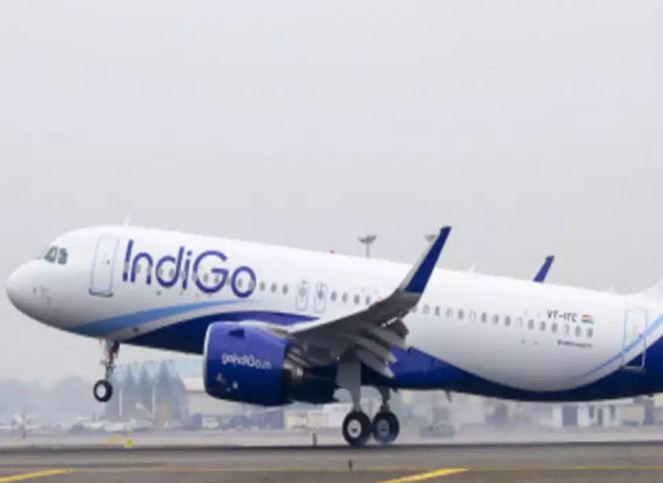
Tens of thousands of Indians had a harrowing experience last week as air travel virtually came to a grinding halt across the country. IndiGo, the country’s largest domestic carrier, suffered its worst-ever operational meltdown, leaving thousands of flights cancelled nationwide. At the root of the crisis is IndiGo’s operating policy that made it India’s most profitable airline. For years, the airline maximised night flying and operated with razor-thin pilot buffers, relying on a “use-every-aircraft, use-every-crew” strategy that boosted profitability and aircraft utilisation. Under older duty-time rules, this approach worked. But with stricter pilot rest mandates, the system buckled. In January 2024, the Directorate General of Civil Aviation (DGCA) introduced tightened Flight Duty Time Limitations to combat rising concerns over pilot fatigue and to bring India closer to global safety norms. These rules raise pilots’ weekly rest from 36 to 48 hours, sharply reduce the number of night-time landings per week, cap night-flying hours at 10, and prohibit more than two consecutive night duties. Collectively, these changes dramatically reduce the number of hours pilots can legally fly in a week. Although the revised rules were first notified in January 2024 and theoretically applied from 31 May 2024, their implementation was subsequently staggered into a phased rollout from July 2025, with full compliance required by 1 November 2025. Yet IndiGo, despite having all these months to respond, appears to have miscalculated, maybe deliberately, as some critics point out, the operational scale of the transition.
The consequences were there for all to see. For six consecutive days, IndiGo cancelled thousands of flights. As India’s largest airline, commanding more than 65 per cent of the domestic market, the disruptions created a nationwide chain reaction. Airports struggled to cope with the sudden surge in displaced passengers, terminals were crowded with anxious and furious travellers, and thousands of bags piled up unclaimed. Rival airlines, already operating at near-full capacity, were unable to accommodate the overflow and resorted to blatant overpricing. Air ticket cost from Mumbai to Bhubaneswar shot up to an unprecedented Rs 84,000, while from Mumbai to Kolkata skyrocketed to Rs 90,000. Passengers bore the brunt of the meltdown with many missing job interviews, crucial business meetings and even their own wedding receptions.
As is always the case in India, regulators stepped in with fare caps, advisories and increased oversight, but only after all the damage was done. Also, in a duopolistic market where IndiGo and Air India jointly control more than 91 per cent of domestic capacity, restoring full normalcy will take time. And, herein lies the main problem that is plaguing almost all sectors in the country. When one player or at most two players are allowed to dominate a particular sector or industry, it comes with a huge price for the general population. We see this in airport and seaport operations where one particular corporation is being given all the contracts. Likewise, we see duopolies in telecom and other essential services sectors.
Also Read: US defence policy bill stresses broadening engagement with India, including via Quad
Monopolies and duopolies create structural problems that hurt consumers, competition, innovation, and even the broader economy, especially in the service sector. Such markets always come with higher prices for consumers, a gradual decline in service quality, market manipulation and predatory behaviour and concentration of economic power. Also, when one or two firms dominate a sector, their failure can disrupt the entire market, trigger job losses or even force government bailouts. Moreover, such markets are vulnerable to systemic shocks like financial crisis, technical crisis or supply chain issues. In all of these cases, the whole country suffers simply because there is no other alternative.
Apart from the companies operating in the Indian aviation sector, it’s also the government and the regulator that are responsible for the mess that the sector finds itself in. The government has been keeping ATF prices at very high levels, which makes it difficult for low-cost airlines to operate at scale. Also, the demand-based pricing system followed by the airlines, with no control whatsoever by the regulator, has led to air ticket costs skyrocketing in the country. Besides, the government’s eagerness to go all out on privatisation has resulted in India not having even one state-owned airline, whereas countries like Singapore, Indonesia and even Pakistan use their national carriers as diplomatic leverage.
Under these circumstances, the recent recall of Airbus’ A32O aircraft over a software glitch is going to have its impact on the Indian aviation sector.
In the IndiGo case, it was seen that even the regulator lacked teeth to take action on the errant officials of the airline. This was amply evident in the show-cause notice that the DGCA sent to IndiGo. The letter had no mention of the CEO’s name nor of the action the regulator wanted to take against the airline.
If the government continues with its misguided policy of nurturing monopolies and duopolies in essential sectors such as airports, seaports, telecom and other critical infrastructure sectors, it would prove to be disastrous for the country.