
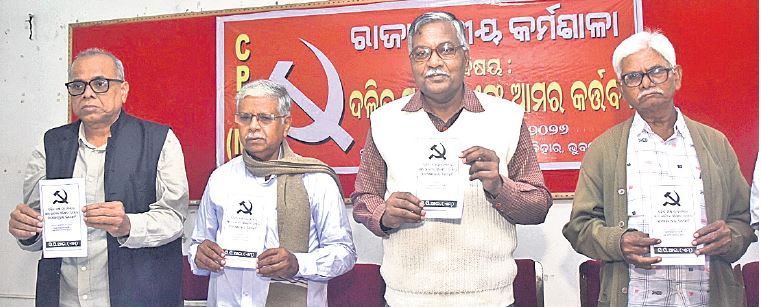
Bhubaneswar: Rising caste-based atrocities, social discrimination, landlessness and economic insecurity have intensified the exclusion of Dalits in Odisha, speakers said at a state-level workshop organised by the CPI(M) state committee in Bhubaneswar Sunday.
The workshop, chaired by senior leader Santosh Das, highlighted the multiple challenges confronting the community, including forced migration for livelihood, social boycotts, unsafe working conditions and discrimination in accessing common resources and basic amenities.
Ram Chandra Dom, national convener of the Dalit Shoshan Mukti Manch and former MP, who was the main speaker, expressed concern over what he described as a growing assault on the economic, social and educational rights of Dalits across the country over the past 12 years.
Citing official data, Dom claimed that more than 12,000 cases of atrocities against Dalits had been registered in Odisha between 2022 and 2026. He also alleged a rise in such incidents in Uttar Pradesh, Madhya Pradesh, Rajasthan and Bihar.
Participants drew attention to the lack of employment opportunities, which has forced many Dalit workers to migrate and take up jobs in unsafe conditions. They also raised concerns over caste-based social boycotts, humiliation and injustice allegedly imposed through kangaroo courts in rural areas.
Growing landlessness, denial of access to village common property, inadequate drinking water and poor civic amenities in Dalit settlements also figured prominently in the discussions. Speakers further highlighted attacks by self-appointed cow vigilantes, which they said disrupted traditional livelihoods and cattle trade, besides the denial of welfare entitlements.
The closure of government schools was another major concern, with participants arguing that the move had adversely affected educational opportunities for Dalit children.
CPI(M) State Secretary Suresh Panigrahi, Dalit Shoshan Mukti Manch state convener Ram Chandra Nayak and Badrinarayan Dash also addressed the gathering. Several other activists, academics, women’s representatives and advocates participated.
The workshop concluded with a call for a united and sustained movement against caste atrocities and discrimination, and for safeguarding Dalit rights and social justice.