
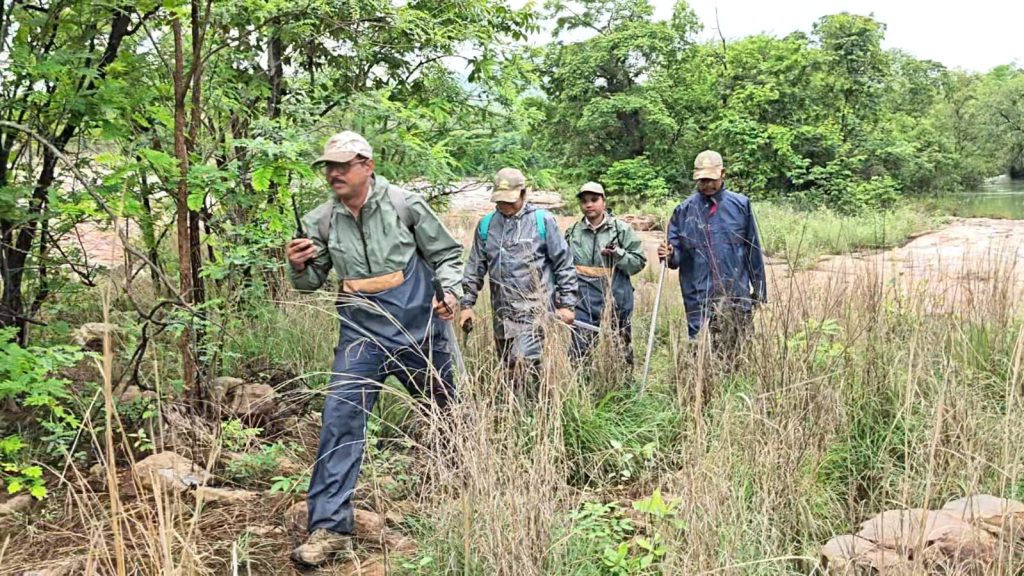
Sambalpur: The Hirakud Wildlife Division has rolled out an extensive monsoon protection plan for the Debrigarh Wildlife Sanctuary, issuing a Standard Operating Procedure (SOP) that mandates intensive patrolling, anti-poaching surveillance, and emergency response measures from July to October to safeguard wildlife during the vulnerable rainy season.
The move comes as the onset of the monsoon heightens the risk of poaching, timber smuggling and human intrusion into the 353-sq km sanctuary, one of Odisha’s most important protected areas. Home to a thriving population of gaur, leopard, sloth bear, sambar, spotted deer and four-horned antelope, Debrigarh has also recorded successful breeding of the endangered Indian dhole.
A major challenge is the sanctuary’s nearly 100-km boundary along the Hirakud Reservoir, which can be exploited by poachers and timber smugglers using boats. The sanctuary’s six waterfalls, a popular attraction during the monsoon, also witness a surge in visitors, increasing the risk of unauthorised entry, illegal picnicking, and disturbance to wildlife. Heavy rains further complicate wildlife management by inundating low-lying habitats and driving animals towards fringe villages.
To strengthen field protection, the division has identified 129 foot-patrolling routes covering 941 km. Beat Officers in all 26 Beat Offices have been directed to prepare daily patrol plans based on vulnerability assessments, intelligence inputs and previous incidents. As many as 28 patrolling teams—11 inside the sanctuary and 17 along its boundary—have been deployed for round-the-clock surveillance, said Divisional Forest Officer (DFO), Hirakud Wildlife Division, Anshu Pragyan Das.
The SOP identifies vulnerable areas requiring intensified monitoring, including 21 entry points, 100 km of reservoir shoreline, 115 km of forest roads, 96 km of village boundaries, 31 village footpaths, six waterfalls, and six reservoir access points, she informed.
The sanctuary’s 71 Eco-Development Committees (EDCs) have been integrated into the protection strategy to report wildlife movement into villages and share intelligence on illegal activities. Forest officials have been instructed to maintain close coordination with these community groups.
To ensure uninterrupted communication during emergencies, three control rooms, including that of the DFO, will function round the clock throughout the monsoon. Field staff will be supported by 21 VHF communication stations and 112 wireless handsets, ensuring connectivity even in remote forest areas.
Surveillance along the Hirakud Reservoir has also been strengthened with three dedicated boat-patrolling teams stationed at Parbatitung, Chowrasimal and Badduma. They will operate five motorboats equipped with life jackets, communication devices, and emergency supplies.
The SOP also provides for regular anti-snare operations using metal detectors and live-wire detectors to detect illegal traps. Field staff have been directed to remain alert to suspicious movement of people, boats, and vehicles and to check for traps, firearms, poison, timber felling, illegal camping, and unauthorised picnicking.
The intensified protection measures were built on the division’s sustained patrolling efforts. Forest personnel covered 97,730 km on foot during 2025-26, including 6,694 km in June and 1,381 km during the first half of July, underscoring the department’s focus on safeguarding wildlife during the monsoon, the senior forest official concluded.
Orissa POST – Odisha’s No.1 English Daily