
By Dr Debabrata Swain
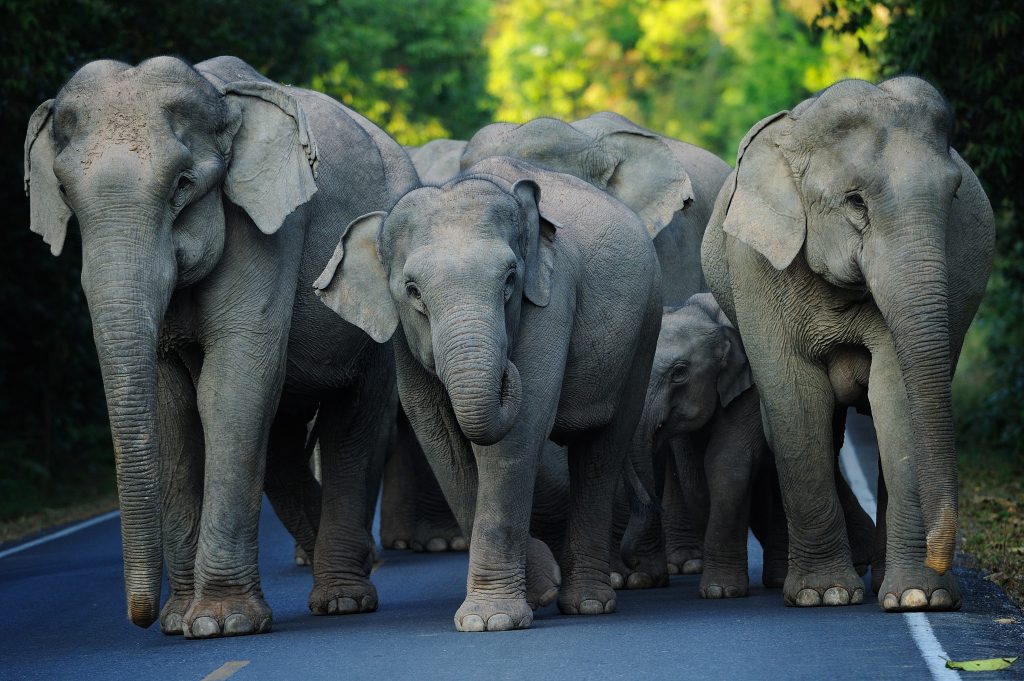
The elephant, Earth’s largest terrestrial mammal, is deeply woven into Odisha’s cultural, spiritual, and geopolitical history. Simple and serene with its magnificent proboscis, this gentle giant requires massive, unbroken forested terrains to forage, consuming hundreds of kilograms of foliage and grass from more than a hundred different plant species daily. Today, those very habitats are vanishing, pushing an ancient legacy to the brink of extinction.
A glorious past sculpted in stone
In the famous Arthashastra of Kautilya, written in the third century BCE, the elephants of Kalinga—the present-day state of Odisha—were explicitly admired as the absolute best of their type across the entire Indian subcontinent. This deep-rooted reverence is carved directly into our landscape. The forepart of a majestic elephant, carved in the fourth century BCE onto a piece of solid rock at Dhauli near Bhubaneswar, stands as a spectacular rock relief, speaks volumes of Odisha’s ancient ecological past.
Furthermore, elephant figures were created in abundance by ancient artisans, being meticulously moulded and chiselled on the sculpted friezes of the historic Khandagiri and Udaygiri caves, as well as on the walls of the world-famous Sun Temple at Konark. These animals were so central to regional commerce and prestige that they were even transported across the sea to Sri Lanka, a maritime exploit clearly evidenced by a historical motif currently exhibited in the Odisha State Museum.
The monarchs of Odisha drew their imperial authority from these giants. On account of their unmatched elephant armies, the kings were styled in their offi cial inscriptions as Gajapati, meaning the “Lord of Elephants.” King Chodaganga Deva (1087–1150 CE), the historic founder father of the imperial Ganga dynasty, was offi cially christened as Nava navati sahasra kunjaradhiswara—the Lord of ninety-nine thousand elephants. Centuries later, historical accounts note that Kapilendra Deva (1435–1467 CE), the legendary founder of the Gajapati dynasty, inherited an army of two hundred thousand war elephants at the time of his accession to the throne.
Crucially, all of these hundreds of thousands of elephants were captured directly from the local forests of Odisha, demonstrating that the region’s wilderness was once teeming with innumerable elephant herds. Beyond the battlefields, these animals were also widely used to enhance the majesty, pageantry, and daily life of the royal palaces. From battlefields to broken habitats
Today, the modern reality forms a grim contrast to this royal history. The survival of these serene giants is now heavily at stake due to relentless human encroachment. Historically, wild elephants confi ned their movements to just 18 out of the 30 districts within Odisha. Today, however, they are found wandering across 26 districts— excluding only the highly coastal areas of Jagatsinghpur, Kendrapada, Nuapada, and Nabarangpur. Wildlife experts emphasize that this dramatic geographical expansion is not an indicator of a growing, healthy population.
Instead, it is a desperate, chaotic flight triggered by severe, irreversible habitat degradation. Deprived of quiet sanctuaries, local elephant populations face a barrage of modern threats that result in tragic, unnatural deaths. Herds are routinely decimated by train accidents along expanding railway lines, struck down by speeding vehicles on highways, or electrocuted by sagging, low-hanging power lines running through rural areas. Others meet agonizing ends by falling into uncovered village wells, suffering from severe climate conditions like heat strokes during erratic summers, or falling victim to poachers.
Driven by a lucrative and ruthless international illegal ivory trade, poachers intentionally target mature male tuskers using poisoning, crude bows and arrows, or heavy gunshots. The selective killing of these tuskers severely disrupts the natural breeding cycles, genetics, and gender ratios of elephant herds, pushing the species even faster toward localized extinction.
The desperate march for survival
The root cause driving elephants out of their natural forest enclosures is entirely ecological. To fulfil their natural survival instincts, elephant herds require vast, contiguous home ranges encompassing hilly terrains, dense forests, scrublands, open grasslands, and savannas.
However, these natural landscapes are being rapidly swallowed up by expanding agriculture, human habitations, aggressive mining, state roads, railway tracks, and heavy industrialization. As traditional grazing grounds shrink, forests are fractured into small, isolated patches. Driven by their biological need for food and water, both nocturnal and diurnal herds are forced to migrate across these disjointed forest pockets, marching directly through human settlements and active crop fields.
This crisis has expanded into a complex interstate issue. Heavy, unregulated mining activities coupled with dams and irrigation canals in the rich forest tracts of neighboring Jharkhand have completely devastated local elephant habitats. Displaced, starving, and deeply disoriented, entire herds have been forced to initiate long-distance migrations, moving out of Jharkhand, traveling across parts of West Bengal, and subsequently entering the northern and eastern districts of Odisha in a frantic search for basic sustenance. These migratory herds naturally cause trail of destruction along their paths. Terrifi ed villagers respond with aggressive driving operations, which only serves to make the wild elephants highly agitated and aggressive, causing them to trample homes, properties, and people out of sheer distress.
The vanishing bamboo forests
While elephants are known to consume over 129 different plant species, their absolute staple diet consists of Salia bamboo (Dendrocalamus strictus) and thorny bamboo (Bambusa bamboos). Historically, when bamboo reserves were dense and abundant, elephants rarely had any reason to stray out of their natural forest enclosures.
Deforestation and commercial exploitation, however, have systematically dried up this critical food supply. Out of Odisha’s 58,000 square kilometers of forest cover, bamboo forests historically spanned a massive 17,000 square kilometers. Today, that vital bamboo cover has drastically shrunk to just 10,000 square kilometers, much of which is severely depleted, stunted, or degraded. A striking example of this ecological decay is seen in the Kuldiha forest of Baleshwar district.
In the 1960s, Kuldiha boasted incredibly rich, abundant bamboo reserves. Today, while the Kuldiha sanctuary plays host to a population of more than 60 elephants, its once-thriving bamboo canopy is conspicuously absent. Starved of their primary forage inside the forest, the elephants are naturally lured outward by the sprawling, lush green emerald rice fields that now directly boundary their shrinking habitats.
The escalating cycle of violence
This forced interface between man and beast has triggered an unprecedented, highly destructive cycle of human-elephant conflict. When wild herds enter agricultural lands to consume and trample seasonal crops, desperate farmers attempt to safeguard their yearly livelihoods by deploying high-decibel microphones, bursting loud fi recrackers, and firing blank gunshots to scare the animals away. When villages are breached, local forest department staff deployed in nearby areas are immediately alerted to initiate driving operations. However, caught in the middle of flashing lights, shouting crowds, and loud noises, the disoriented elephants run amok helter-skelter. In their panic, they destroy mud houses, crush stored grain, and attack human beings and domestic livestock with a vengeance.
According to official Odisha Forest department records, this modern crisis has reached a staggering annual toll, highest in India; it claims an average of 150 human lives, destroys 17,500 acres of valuable crop land, and damages or demolishes 1,500 homes every single year, average of last five years and increasing year after year. In tragic retaliation, an average of 87 elephants die annually due to human intervention, traps, or retaliatory violence.
Compensations and grassroots hope
To cushion the financial blow, the state government has formulated compassionate payment rules to assist affected families, providing Rs 10 Lakh for a human casualty, Rs 20,000 per acre for the loss of cereal crops, and Rs 25,000 per acre for the destruction of cash crops and horticultural crops. Despite these progressive rules, the stark reality remains that these compassionate payments are often deemed too small to cover total losses and frequently arrive too late due to bureaucratic delays.
Consequently, communities continue to view the pachyderms as direct, dangerous adversaries rather than protected wildlife. If local authorities can guarantee swift, timely, full, and reliable compensation, communities will no longer feel forced to harm the animals. Providing these immediate financial cushions is absolutely essential for enabling the local population to treat the pachyderms as friends instead of enemies.
Bridging this trust gap between struggling communities and government authorities is the Save Elephant Foundation Trust, an organization that has been actively working on the ground in wildlife conservation since 2012. The trust drives critical community awareness through its highly successful educational campaign, “Haathi Aamara Saathi” (Elephants are our friends).
Utilizing targeted school and college lectures, educational slide shows, nature films, essays, drawings, debates, and poetry competitions, the initiative reaches deep into local villages and joint forest management committees. Beyond creating awareness, the trust actively steps into assist affected communities hit by elephant depredation by providing support in both cash and kind. They also celebrate frontline conservation heroes by awarding prizes to outstanding forest personnel, dedicated elephant squads, and village-level conservation groups who risk their lives daily to maintain the peace.
A shared moral duty
The modern human-elephant conflict is not a sudden natural phenomenon; it is an issue entirely created by human actions, urban expansion, and industrial greed. To save the only remaining proboscidean species on Earth from localized extinction, our conservation strategies must change. We must bestow equal importance to both the tragic human losses and the severe, systemic harm meted out to the animals. State machinery cannot win this battle in isolation; public cooperation is completely non-negotiable.
Crucially, the corporate sectors—particularly the operators of large mines and heavy industries that profit from tearing down natural forest habitats—must step forward generously to finance long-term conservation and reforestation efforts. Simultaneously, the international community must provide strategic funding, resources, and encouragement to the local institutions taking up this noble cause. Elephants remain one of nature’s most unique, intelligent, and magnificent creations.
Protecting their remaining natural habitats, enforcing strict regulations on industrial activities within their zones, aggressively replanting Salia and thorny bamboo seeds, and extending love, empathy, and institutional protection to these ill-fated giants is no longer just a policy requirement—it is our absolute moral duty.
On this World Elephant Day, August 12, 2026, Orissa POST has taken an extraordinary and commendable step by dedicating an entire special page to the existential crisis facing our state’s wild elephants. As an environmentalist and former custodian of the state’s forest force, I wish to extend my deepest gratitude to the editorial board and management of the Orissa POST for such novel, forward-thinking journalism.
Sparing a full page for wildlife conservation is a rare and vital public service. It gives a loud, clear voice to a species that cannot speak for itself, and forces us to confront an ecological reality we can no longer afford to ignore.I invite our readers to deeply refl ect on the text below, as we examine the path from our glorious past to our shared moral responsibility.
The author is former PCCF & HoFF, Odisha, Founder of Save Elephant Foundation Trust, and holds a Ph.D. specializing in the elephants of Odisha