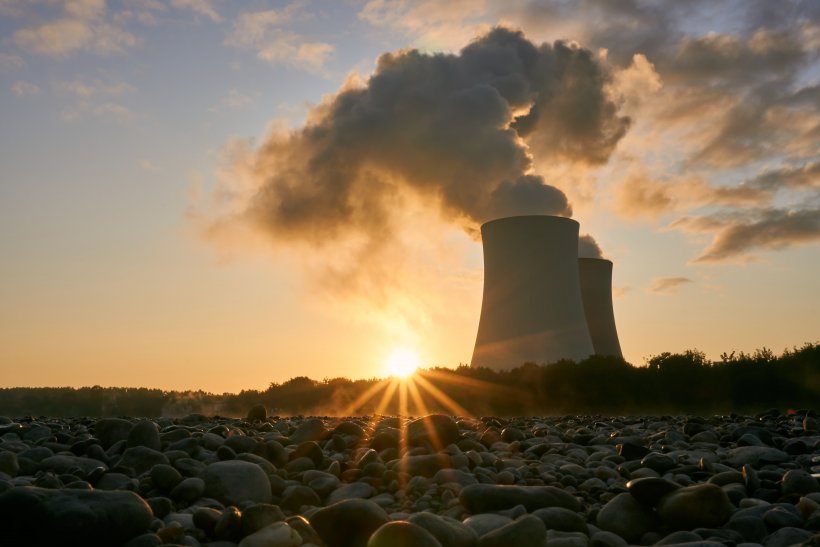
Multilateral development banks (MDBs) have historically been reluctant to invest in nuclear energy, and the World Bank has not financed a nuclear power plant since 1959. In the absence of MDB funds, the majority of international financing for such projects has come from state banks in Russia and China, establishing Russian and Chinese companies as the primary suppliers of nuclear technology to low- and middle-income countries.
While this approach has allowed MDBs to avoid controversy, they must acknowledge that the world has changed. The urgent need to curb greenhouse-gas emissions, together with Russia’s war in Ukraine and subsequent surge in oil and gas prices, has increased global demand for nuclear power. With the 2011 Fukushima disaster fading in the rearview mirror, even Japan is planning to restart its reactors.
Also Read


France, the Netherlands, and the United Kingdom have all announced plans to build new nuclear power plants, Sweden is considering it, and the European Union now allows nuclear energy to be labeled as a green investment. In the United States, the federal government is expected to pump about $40 billion into the sector over the coming decade, and private investment in nuclear energy is surging.
This change in sentiment coincides with rapid technological advances. The development of smaller and safer reactors has made nuclear power cheaper, faster to deploy, and easier to maintain. Whereas the construction of traditional nuclear power plants has historically been a major national undertaking, with costs frequently running into the dozens of billions of dollars, so-called small modular reactors allow for a more tailored approach and more manageable financing packages.
This is particularly important for developing countries, which must figure out how to expand their power supply while curtailing greenhouse-gas emissions as they become increasingly industrialised and urbanised. The International Energy Agency estimates that demand for energy in Africa will jump by one-third by the end of the decade, owing to population and income growth, as well as improved access.
While increased MDB support for renewable energy has helped put developing economies on the path toward carbon neutrality, most countries still rely on coal-fired power plants and natural gas for baseload electricity production. To complete the shift away from fossil fuels, governments must complement wind and solar energy with low-carbon sources that are not dependent on weather conditions.
But without nuclear power (or hydroelectricity, but not all countries have that option), governments will find it difficult to replace their fossil-fuel baseload. While it may be possible to achieve this by combining renewable energy with utility-scale battery storage, the costs are prohibitive, and modern batteries come with their own sustainability issues. Geothermal energy could also play this role, but currently it is limited to areas where geothermal heat is available close to the Earth’s surface. New technologies could expand access to geothermal power, but they are costly.
By abandoning their reticence about nuclear power, MDBs could help scale up low-carbon energy supply while enhancing global security. Western countries’ withdrawal from nuclear energy over the past few decades has enabled Russia to establish itself as the leading international provider of reactors, services, and financing for nuclear-power projects. At a time of heightened geopolitical tensions, it is in the interest of MDBs’ democratic shareholding governments to establish an alternative for emerging countries interested in nuclear power but hesitant to make their energy security dependent on Russia. Simultaneously, MDBs would promote better safety and sustainability standards.
Given that international development agencies tend to follow MDBs’ lead, and that private financing of energy infrastructure projects in developing countries often depends on multilateral lenders’ risk-mitigation policies, MDBs should reverse their position on nuclear power. Otherwise, Russia and China will remain the world’s primary suppliers of such projects.
To be sure, MDBs must carefully assess proposed nuclear energy projects to ensure that they meet appropriate technological and sustainability standards. While some under-resourced countries with weak institutions might not be ready to pursue nuclear power, MDBs are uniquely positioned to support emerging economies seeking alternatives to Russian and Chinese technologies and financing.
The climate crisis, too, has created unprecedented momentum for reform. The US, Germany, a G20 expert panel, and Barbadian Prime Minister Mia Mottley have all called for strengthening MDBs’ capacity to support developing countries in mitigating and adapting to climate change and in mobilising private financing for this purpose.
Meanwhile, the World Bank recently published an “evolution roadmap” that aims to increase its capacity to respond to climate change.
Reforming MDBs’ financing structures and energy policies is crucial to supporting developing countries in mitigating the worst effects of climate change. Moreover, Russia’s war against Ukraine has revealed the critical role of the multilateral financial system as a bulwark against tyranny. Since the start of the war, the World Bank has disbursed $16 billion in financial support to Ukraine, with other multilateral finance institutions providing comparable amounts.
By explicitly permitting MDBs to finance nuclear power, their shareholding governments could weaken Russia’s still-considerable influence in emerging countries.
The momentum generated by nuclear energy’s renaissance, the geostrategic imperative to reduce Russia’s role as the dominant international provider of nuclear energy infrastructure, and the looming climate crisis, has presented MDBs with a unique opportunity to update their nuclear energy policy. To fight climate change and achieve a safer, more sustainable future, they must seize it.
Håvard Halland, Senior Economist at the OECD Development Centre, is a former senior economist at the World Bank.
Jessica Lovering, Executive Director of the Good Energy Collective, is a fellow at the Energy for Growth Hub and the Fastest Path to Zero Initiative at the University of Michigan. ©Project Syndicate