
India’s ethanol policy has become a classic case of solving one problem by creating several others. A programme designed to reduce oil imports has expanded into sugar, rice, maize, water, food stocks and even livestock-feed policy. The question is no longer whether ethanol can be blended into petrol, but whether the country has calculated the full economic, food and environmental cost of doing so at scale.
No wonder a country torn between different generations of people, today are ruing that they are pushed into a situation they had only wildly guessed – looming water scarcity to food famine, if corrections are not drastically done.
India has largely been a sugar exporter since Independence. Deep probe is needed for the sudden change to the country becoming an importer, first time in a decade. It is being ascribed to the ethanol policy rushed in great haste, imports of maize and unnecessary cattle-feed, a US farm waste.
The food ministry caution and curb on bulk consumers like confectioners, soft drink manufacturers, food processing industries, sweetmeat sellers and other institutional buyers using more than 10 tonnes of sugar a month can hold inventories for more than 15 days just at the eve of the Dussehra-Diwali festive season.
The average sugar retail price was Rs 52.3 a kg on 18 August, 13% higher than a year ago, says the consumer affairs department. In July, retail prices rose 9%. There are speculations that sugar prices might increase further.
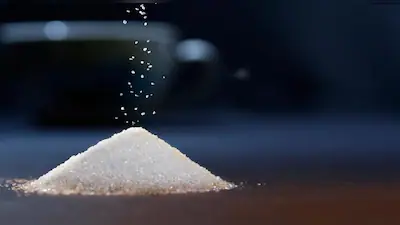
Diverting sugarcane from sugar production to fuel ethanol creates a direct “food versus fuel” tension. Using arable land and scarce water resources for energy policies will only tighten domestic sweetener supplies, push up retail food prices, and force tough regulatory trade-offs between national energy security and nutritional affordability. Policymakers increasingly look at shifting the blending burden toward non-food or alternative feedstocks—such as maize, damaged food grains, or sugarcane—to decouple transport fuel targets from human food chains.
Perhaps a 20% decline in the opening sugar stock is predicted. This is to be fulfilled with 10 lakh tonnes of import, the government says as a precautionary measure. Average sugar demand remains at 280 lakh tonnes. The February estimate was at 290 lakh tonnes.
About 31 lakh tonnes sugar-molasses are diverted for ethanol. India’s total annual ethanol production capacity stands at approximately 1,822 crore litres backed by nearly 499 distilleries. Maharashtra leads the country with a capacity of 396 crore litres, followed closely by Uttar Pradesh at 331 crore litres and Karnataka at 270 crore litres. Sugar, molasses, grain feedstocks, mainly maize and surplus Food Corporation of India rice, supply about three-fourths of ethanol production; FCI rice alone accounts for 24.64%.
More alarming is the increase in national distillery capacity nearly five-fold since 2014, driven by bio-refinery investments. There were reports of “damaged” food grains being diverted from FCI warehouses to distillers. It supplied 6.35 million tonnes of rice to ethanol distilleries between June 2025 and June 2026, valued at Rs 14,596.78 crore. This grain was sold at rates between Rs 2,250 and Rs 2,320 per quintal, which is roughly 40% below the average acquisition cost. Directing sugarcane juice or heavy molasses toward ethanol distilleries cuts the volume of cane processed into table sugar. Reduced sugar availability triggers domestic price spikes, placing economic burdens on households and food processing industries.
Officially it is said that ethanol does not necessarily cause sugar prices to rise; rather, when sugarcane is diverted to ethanol, less sugar is produced. In a tight-supply year, that diversion can amplify the price pressure. And there is an interesting policy contradiction: India is now considering restricting cane-to-ethanol diversion precisely because sugar has become scarce and expensive. It also needs to scrap the 20% ethanol-blending programme.
Ethanol has raised another question that it vaporises but it does not add to the thrust of vehicle engines. It is stated in another way that ethanol burns, but it contains substantially less energy per litre than petrol. Ethanol has roughly 34% less energy per litre than gasoline. Therefore, when 10% ethanol is blended into petrol (E10), the energy content per litre falls by roughly 3–4%; with E20, it is said to be a doubtful 6–7%.
The market is circumspect. The US pushes to export subsidised maize and animal feed to India to offload domestic surpluses, but India resists due to strict bans on GM crops, cultural opposition to animal-derived cattle feed in dairy farming, and the need to protect millions of smallholder local farmers. India has approved a quota to import 0.5 million metric tonnes (5 lakh tonnes) of Dried Distillers’ Grains with Solubles (DDGS)—a maize/corn-based byproduct used for cattle and livestock feed—from the US under a bilateral trade agreement. Washington leverages tariffs and trade negotiations to force market access for its agricultural sector. India has to protect its interests and stop these imports that does not help the country at all apart from causing inflation and loss of foreign exchange. The primary situation calls for total ban on ethanol blending with petrol to save poor people from having their vehicles being damaged.
INFA