Odisha News, Odisha Latest news, Odisha Daily - OrissaPOST
  • Home
  • Trending
  • State
  • Metro
  • National
  • International
  • Business
  • Feature
  • Entertainment
  • Sports
  • More..
    • Odisha Special
    • Editorial
    • Opinion
    • Careers
    • Sci-Tech
    • Timeout
    • Horoscope
    • Today’s Pic
  • Video
  • Epaper
  • News in Odia
  • Home
  • Trending
  • State
  • Metro
  • National
  • International
  • Business
  • Feature
  • Entertainment
  • Sports
  • More..
    • Odisha Special
    • Editorial
    • Opinion
    • Careers
    • Sci-Tech
    • Timeout
    • Horoscope
    • Today’s Pic
  • Video
  • Epaper
  • News in Odia
No Result
View All Result
OrissaPOST - Odisha Latest news, English Daily -
No Result
View All Result

Fashion industry’s environmental impact largely unknown; here’s why

PTI
Updated: September 17th, 2023, 18:09 IST
in Feature, Sci-Tech
0
Fashion

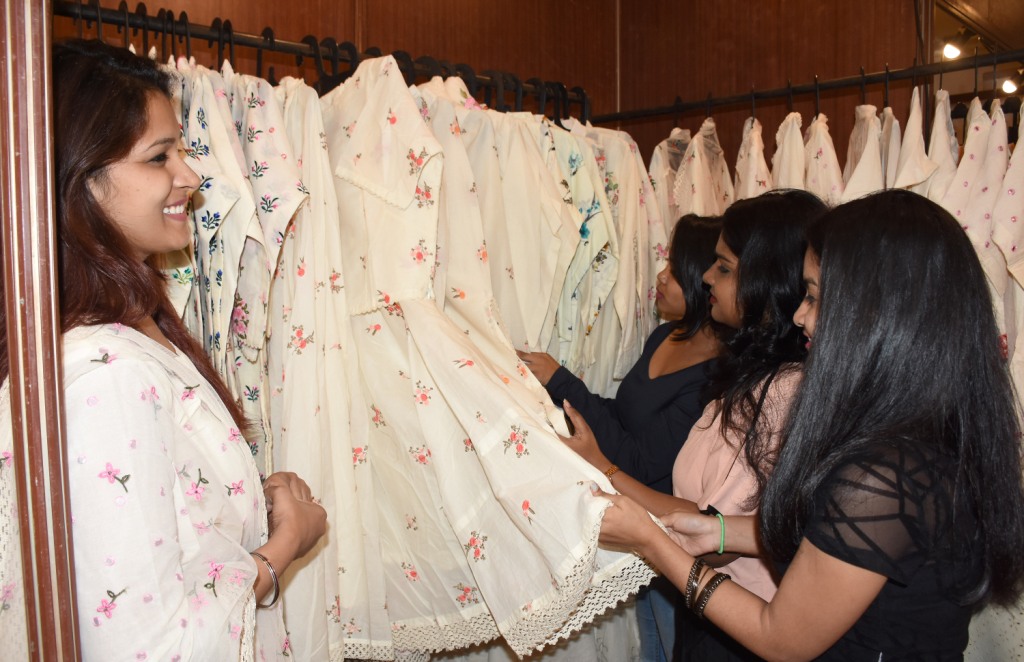
Representational image (OP Pic)

Share on FacebookShare on TwitterShare on WhatsAppShare on Linkedin

Newcastle: How do the clothes you buy wear out the natural world? To take stock of the damage you have to account for the materials, water and energy that went into making a garment, and the greenhouse gas emissions, chemical pollutants and other byproducts associated with its disposal.

For example polyester, a kind of plastic widely used in T-shirts, is made from oil – a fossil fuel. If you throw it out it degrades slowly, and chemicals from its dyes and surface treatments leach into the soil.


Also Read

Facebook outage hits users worldwide; thousands report access issues

3 days ago

Vikram-1 mission showcases strength of India’s growing space ecosystem: ISRO Chairman

4 days ago

The UK consistently buys more garments than any other European country, spending more than £45 billion (US$56 billion) annually. Fast fashion, an industry trend which involves getting cheap reproductions of catwalk designs out to a mass market as quickly as possible, encourages this buying frenzy.

Much of fast fashion is known to depend on sweatshop labour and polluting factories. But alongside the demand for ever faster fashion at low prices, there is a growing awareness among consumers that something has to change.

Some firms have caught on: many brands now report their environmental footprint and have disclosed their intention to shrink it.

But how trustworthy are these assessments? My research uncovers how the fashion industry collates, analyses and assesses environmental impact data. Unfortunately, as a result of inaccurate and unreliable methods, among other issues, the true cost of fast fashion remains largely unknown.

The hidden price tag

A multitude of metrics, certification schemes and labels mark the environmental consequences of making and selling clothing. Brands have been accused of greenwashing due to the poor quality of information used in some of them.

One common product-labelling tool within the industry was the Higg Materials Sustainability Index. Introduced in 2011, the Higg Index was a rating system used by several large brands and retailers to determine and report the global warming impact and water consumption of different products, among other environmental measures.

The approach adopted by the index was challenged by the Norwegian Consumer Authority for limiting its assessment to only certain phases of a product’s lifecycle, such as the sourcing of materials. It was criticised for overlooking pollutants such as microfibres, which are released from textiles during manufacture, wear and washing. As a result, the index was suspended in June 2022.

Since then, further issues have come to light. These include:

Unreliable data – measures often rely on brands self-reporting without their information being verified by an impartial third party

Vested interests – many tools and indices are funded, or part funded, by organisations that could benefit from more positive reporting

Tunnel vision – existing methods tend to focus on only one environmental impact, such as water use or carbon emissions, while the relationship between these factors is overlooked

Paywalls – many tools require brands to pay into them. This can effectively exclude smaller businesses and limit the tool’s coverage

Lack of standards – there is no official baseline to determine acceptable thresholds of environmental footprint of any one product.

Without reliable and accurate assessments of a product’s environmental impact, consumers are left in the dark. For example, a common misconception is that cotton, being a natural fibre, is better for the environment than synthetic materials such as acrylic and elastane.

But cotton requires vast quantities of water to grow, harvest and process. A standard cotton t-shirt, for example, requires 2,500 litres while a pair of jeans consumes 7,600 litres.

One fibre is not necessarily better than the other. Rather, every material and manufacturing process affects the natural world in one form or another. With such misconceptions rife, it’s difficult for consumers to make sound comparisons. That’s why accurate measures are desperately needed.

The true cost of fashion

The complexity of fashion’s global supply chain, which spans thousands of miles from fields to shop floors, makes accurate measurements exceptionally difficult.   Capturing an accurate picture of the industry’s environmental footprint will rely on a certain level of transparency across the industry. It will also require multiple sectors – including production, manufacturing and retail – working collectively towards a common goal.

An acceptable definition for “sustainable”, informed by standards and baselines, could empower consumers to make more informed decisions about their purchases. With Gen-Z labelled the sustainable generation, it is time for fashion to reform.

By Alana JamesAssistant Professor in Fashion, Northumbria University, Newcastle

The Conversation

Tags: Climate ChangeEnvironmentFashionnature
ShareTweetSendShare
Suggest A Correction

Enter your email to get our daily news in your inbox.


OrissaPOST epaper Sunday POST OrissaPOST epaper

Click Here: Plastic Free Odisha

#MyPaperBagChallenge

Shreyanshu Bal

December 12, 2019
#MyPaperBagChallenge

Subhajyoti Mohanty

December 12, 2019
#MyPaperBagChallenge

Bijswajit Pradhan

December 12, 2019
#MyPaperBagChallenge

Arya Ayushman

December 12, 2019
#MyPaperBagChallenge

Jhili Jena

December 12, 2019
#MyPaperBagChallenge

Faiza Firdous

December 12, 2019
#MyPaperBagChallenge

Nishikant Rout

December 12, 2019
#MyPaperBagChallenge

Akshaya Kumar Dash

December 12, 2019
#MyPaperBagChallenge

Adweeti Bhattacharya

December 12, 2019
#MyPaperBagChallenge

Mrutyunjaya Behera

December 12, 2019
#MyPaperBagChallenge

Anshuman Sahoo

December 12, 2019
#MyPaperBagChallenge

Sibarama Khotei

December 12, 2019
#MyPaperBagChallenge

Parbati Mohanty

December 12, 2019
#MyPaperBagChallenge

Keshab Chandra Rout

December 12, 2019
#MyPaperBagChallenge

Aman Kumar Barisal

December 12, 2019
#MyPaperBagChallenge

Pratyasharani Ghibela

December 12, 2019
#MyPaperBagChallenge

Ipsita

December 12, 2019
#MyPaperBagChallenge

Rajashree Pravati Mohanty

December 12, 2019
#MyPaperBagChallenge

Spinoj Pattnaik

December 12, 2019
#MyPaperBagChallenge

Tabish Maaz

December 12, 2019
#MyPaperBagChallenge

Subhajyoti Mohanty

December 12, 2019
#MyPaperBagChallenge

Surya Sidhant Rath

December 12, 2019
#MyPaperBagChallenge

D Rama Rao

December 12, 2019
#MyPaperBagChallenge

Sipra Mishra

December 12, 2019
#MyPaperBagChallenge

Mandakini Dakua

December 12, 2019
#MyPaperBagChallenge

Archana Parida

December 12, 2019
#MyPaperBagChallenge

Smitarani Sahoo

December 12, 2019
#MyPaperBagChallenge

Saishree Satyarupa

December 12, 2019
#MyPaperBagChallenge

Ramakanta Sahoo

December 12, 2019
#MyPaperBagChallenge

Sarmistha Nayak

December 12, 2019

Archives

Editorial

Tide Is Turning

Election Commission of India
July 22, 2026

Roger Waters once wrote: Tide is turning; Satellite buzzing through the endless night; Exclusive to moonshots and world title fights;...

Read moreDetails

ISRO In Limelight

ISRO
July 21, 2026

The resignation of about 120 scientists and engineers from the Indian Space Research Organisation (ISRO), including those associated with top...

Read moreDetails

Executive Accountability

CJP march: Few Parliament gates briefly shut as protesters move close
July 20, 2026

As Parliament prepares to convene for the Monsoon Session on Monday, 20 July, the Modi government stands accused of shrinking...

Read moreDetails

Power Fears Protest

July 19, 2026

By Aakar Patel A few thoughts on the Cockroach Janata Party’s protest come to mind. The hunger strike by activists,...

Read moreDetails
  • Home
  • State
  • Metro
  • National
  • International
  • Business
  • Editorial
  • Opinion
  • Sports
  • About Us
  • Advertise
  • Contact Us
  • Jobs
Developed By Ratna Technology

© 2025 All rights Reserved by OrissaPOST

  • News in Odia
  • Orissa POST Epaper
  • Video
  • Home
  • Trending
  • Metro
  • State
  • Odisha Special
  • National
  • International
  • Sports
  • Business
  • Editorial
  • Entertainment
  • Horoscope
  • Careers
  • Feature
  • Today’s Pic
  • Opinion
  • Sci-Tech
  • About Us
  • Contact Us
  • Jobs

© 2025 All rights Reserved by OrissaPOST

    • News in Odia
    • Orissa POST Epaper
    • Video
    • Home
    • Trending
    • Metro
    • State
    • Odisha Special
    • National
    • International
    • Sports
    • Business
    • Editorial
    • Entertainment
    • Horoscope
    • Careers
    • Feature
    • Today’s Pic
    • Opinion
    • Sci-Tech
    • About Us
    • Contact Us
    • Jobs

    © 2025 All rights Reserved by OrissaPOST