Odisha News, Odisha Latest news, Odisha Daily - OrissaPOST
  • Home
  • Trending
  • State
  • Metro
  • National
  • International
  • Business
  • Feature
  • Entertainment
  • Sports
  • More..
    • Odisha Special
    • Editorial
    • Opinion
    • Careers
    • Sci-Tech
    • Timeout
    • Horoscope
    • Today’s Pic
  • Video
  • Epaper
  • News in Odia
  • Home
  • Trending
  • State
  • Metro
  • National
  • International
  • Business
  • Feature
  • Entertainment
  • Sports
  • More..
    • Odisha Special
    • Editorial
    • Opinion
    • Careers
    • Sci-Tech
    • Timeout
    • Horoscope
    • Today’s Pic
  • Video
  • Epaper
  • News in Odia
No Result
View All Result
OrissaPOST - Odisha Latest news, English Daily -
No Result
View All Result

For minorities, biased AI algorithms can damage almost every part of life

PTI
Updated: August 29th, 2023, 12:01 IST
in Sci-Tech
0
AI or Artificial intelligence

Pic- IANS

Share on FacebookShare on TwitterShare on WhatsAppShare on Linkedin

London: Bad data does not only produce bad outcomes. It can also help to suppress sections of society, for instance vulnerable women and minorities.

This is the argument of my new book on the relationship between various forms of racism and sexism and artificial intelligence (AI). The problem is acute. Algorithms generally need to be exposed to data – often taken from the internet – in order to improve at whatever they do, such as screening job applications, or underwriting mortgages.


Also Read

Govt-Meta talks turn technical; company outlines measures to curb deepfakes, CSAM

1 day ago

Consumers, small merchants unlikely to pay charges for UPI transaction: Payments Council of India

1 day ago

But the training data often contains many of the biases that exist in the real world. For example, algorithms could learn that most people in a particular job role are male and therefore favour men in job applications. Our data is polluted by a set of myths from the age of “enlightenment”, including biases that lead to discrimination based on gender and sexual identity.

Judging from the history in societies where racism has played a role in establishing the social and political order, extending privileges to white males –- in Europe, North America and Australia, for instance –- it is simple science to assume that residues of racist discrimination feed into our technology.

In my research for the book, I have documented some prominent examples. Face recognition software more commonly misidentified black and Asian minorities, leading to false arrests in the US and elsewhere.

Software used in the criminal justice system has predicted that black offenders would have higher recidivism rates than they did. There have been false healthcare decisions. A study found that of the black and white patients assigned the same health risk score by an algorithm used in US health management, the black patients were often sicker than their white counterparts.

This reduced the number of black patients identified for extra care by more than half. Because less money was spent on black patients who have the same level of need as white ones, the algorithm falsely concluded that black patients were healthier than equally sick white patients. Denial of mortgages for minority populations is facilitated by biased data sets. The list goes on.

Machines don’t lie?

Such oppressive algorithms intrude on almost every area of our lives. AI is making matters worse, as it is sold to us as essentially unbiased. We are told that machines don’t lie. Therefore, the logic goes, no one is to blame.

This pseudo-objectiveness is central to the AI-hype created by the Silicon Valley tech giants. It is easily discernible from the speeches of Elon Musk, Mark Zuckerberg and Bill Gates, even if now and then they warn us about the projects that they themselves are responsible for.

There are various unaddressed legal and ethical issues at stake. Who is accountable for the mistakes? Could someone claim compensation for an algorithm denying them parole based on their ethnic background in the same way that one might for a toaster that exploded in a kitchen?

The opaque nature of AI technology poses serious challenges to legal systems which have been built around individual or human accountability. On a more fundamental level, basic human rights are threatened, as legal accountability is blurred by the maze of technology placed between perpetrators and the various forms of discrimination that can be conveniently blamed on the machine.

Racism has always been a systematic strategy to order society. It builds, legitimises and enforces hierarchies between the haves and have nots.

Ethical and legal vacuum

In such a world, where it’s difficult to disentangle truth and reality from untruth, our privacy needs to be legally protected. The right to privacy and the concomitant ownership of our virtual and real-life data needs to be codified as a human right, not least in order to harvest the real opportunities that good AI harbours for human security.

But as it stands, the innovators are far ahead of us. Technology has outpaced legislation. The ethical and legal vacuum thus created is readily exploited by criminals, as this brave new AI world is largely anarchic.

Blindfolded by the mistakes of the past, we have entered a wild west without any sheriffs to police the violence of the digital world that’s enveloping our everyday lives. The tragedies are already happening on a daily basis.

It is time to counter the ethical, political and social costs with a concerted social movement in support of legislation. The first step is to educate ourselves about what is happening right now, as our lives will never be the same. It is our responsibility to plan the course of action for this new AI future. Only in this way can a good use of AI be codified in local, national and global institutions.

The Conversation

By Arshin Adib-MoghaddamProfessor in Global Thought and Comparative Philosophies, SOAS, University of London


 

Tags: AIBiasTech
ShareTweetSendShare
Suggest A Correction

Enter your email to get our daily news in your inbox.


Mettle Meet 2026
OrissaPOST epaper Sunday POST OrissaPOST epaper

Click Here: Plastic Free Odisha

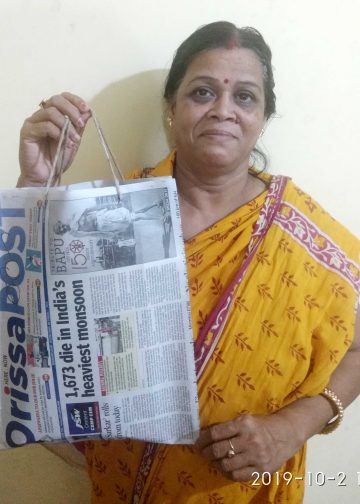
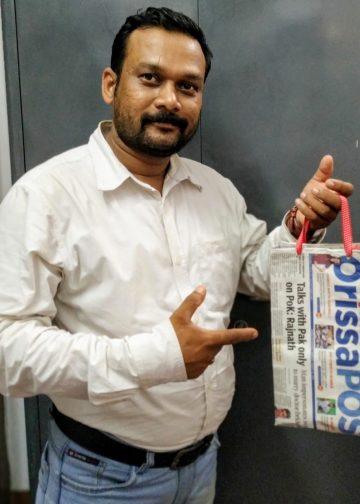
#MyPaperBagChallenge

Archana Parida

December 12, 2019
#MyPaperBagChallenge

Lopali Pattnaik

December 12, 2019
#MyPaperBagChallenge

Nishikant Rout

December 12, 2019
#MyPaperBagChallenge

Pitabas Tripathy

December 12, 2019
#MyPaperBagChallenge

Manas Samanta

December 12, 2019
#MyPaperBagChallenge

Keshab Chandra Rout

December 12, 2019
#MyPaperBagChallenge

Adweeti Bhattacharya

December 12, 2019
#MyPaperBagChallenge

Priyabrata Mohanty

December 12, 2019
#MyPaperBagChallenge

Sitakanta Mohanty

December 12, 2019
#MyPaperBagChallenge

Adrita Bhattacharya

December 12, 2019
#MyPaperBagChallenge

Aishwarya Ranjan Mohanty

December 12, 2019
#MyPaperBagChallenge

Vandana Singh

December 12, 2019
#MyPaperBagChallenge

Ipsita

December 12, 2019
#MyPaperBagChallenge

Priyasha Pradhan

December 12, 2019
#MyPaperBagChallenge

Jhili Jena

December 12, 2019
#MyPaperBagChallenge

Anasuya Sahoo

December 12, 2019
Aravalli committee
#MyPaperBagChallenge

Vanavasi Kalyan Ashram seeks 2-month extension for Aravalli committee deadline

New Delhi: The Akhil Bharatiya Vanavasi Kalyan Ashram has sought that the chairperson of the high-powered committee constituted under the ...

August 8, 2026
#MyPaperBagChallenge

Narendra Kumar

December 12, 2019
#MyPaperBagChallenge

Chinmay Kumar Routray

December 12, 2019
#MyPaperBagChallenge

Sipra Mishra

December 12, 2019
#MyPaperBagChallenge

Tapaswini Mallick

December 12, 2019
#MyPaperBagChallenge

Adyasha Priyadarsani Sendha

December 12, 2019
#MyPaperBagChallenge

Sarfraz Ahmad

December 12, 2019
#MyPaperBagChallenge

Bijswajit Pradhan

December 12, 2019
?????????????????????????????????????????????????????????????????????????????????????????????????????????????????????????????????
#MyPaperBagChallenge

Dibya Ranjan Das

December 12, 2019
#MyPaperBagChallenge

Rajashree Pravati Mohanty

December 12, 2019
#MyPaperBagChallenge

Ankita Balabantray

December 12, 2019
#MyPaperBagChallenge

Sisirkumar Maharana

December 12, 2019
#MyPaperBagChallenge

Debasis Mohanty

December 12, 2019
#MyPaperBagChallenge

Subhajyoti Mohanty

December 12, 2019

Archives

Editorial

Mandi House Reset

DILIP CHERIAN
August 8, 2026

By Dilip Cherian How an Education Ministry worthy wins a new post will be a tale told later. But for...

Read moreDetails

ISI After NEET

August 5, 2026

The Centre is courting yet another controversy by introducing a Bill in the Lok Sabha that seeks to fundamentally alter...

Read moreDetails

A Quiet Shift

Prashant Kishor
August 4, 2026

Change rarely arrives announced. But when a popular movement stirs, transformation can sweep in like a tide. The recent by-election...

Read moreDetails

Desperate Measures

Indian currency
August 3, 2026

The Reserve Bank of India (RBI) selling about $7 billion in a single trading session to arrest the rupee’s slide...

Read moreDetails
  • Home
  • State
  • Metro
  • National
  • International
  • Business
  • Editorial
  • Opinion
  • Sports
  • About Us
  • Advertise
  • Contact Us
  • Jobs
Developed By Ratna Technology

© 2025 All rights Reserved by OrissaPOST

  • News in Odia
  • Orissa POST Epaper
  • Video
  • Home
  • Trending
  • Metro
  • State
  • Odisha Special
  • National
  • International
  • Sports
  • Business
  • Editorial
  • Entertainment
  • Horoscope
  • Careers
  • Feature
  • Today’s Pic
  • Opinion
  • Sci-Tech
  • About Us
  • Contact Us
  • Jobs

© 2025 All rights Reserved by OrissaPOST

    • News in Odia
    • Orissa POST Epaper
    • Video
    • Home
    • Trending
    • Metro
    • State
    • Odisha Special
    • National
    • International
    • Sports
    • Business
    • Editorial
    • Entertainment
    • Horoscope
    • Careers
    • Feature
    • Today’s Pic
    • Opinion
    • Sci-Tech
    • About Us
    • Contact Us
    • Jobs

    © 2025 All rights Reserved by OrissaPOST