
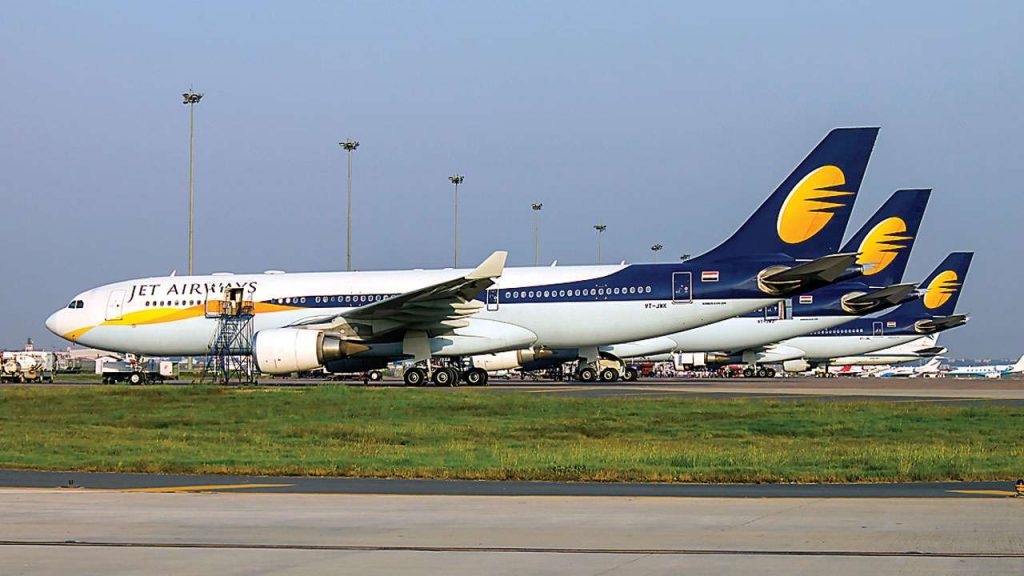
Mumbai: The grounding of India’s Jet Airways is turning into a quick windfall and long-term opportunity for international airlines keen to scoop up nearly a million outbound passengers from what was once the nation’s biggest airline.
Jet, which previously had a fleet of around 120 largely Boeing Co planes, was forced to indefinitely halt all flight operations April 17 after its banks rejected the carrier’s plea for emergency funds. The carrier’s descent into crisis has benefited international airlines in the form of rising fares and demand, data showed.
Fares from India to cities such as Dubai, London, New York, Singapore and Bali in the first quarter of 2019 rose between 4 per cent and 32 per cent from a year ago, according to Indian travel portal MakeMyTrip Ltd.
In the peak travel months of May and June, fares to London have spiked as much as 36 per cent and tickets to San Francisco are up nearly 20 per cent from a year ago, according to data from travel portal Yatra.com.
“For the next three months it’s actually bonanza time for international players,” said Ashish Nainan, a research analyst at CARE Ratings. “At least until the middle of June, the fares are not going to come down.”
Due to rising demand, even before Jet’s lessors grounded planes, carriers such as British Airways, Cathay Pacific Airways Ltd, Singapore Airlines Ltd and United Airlines saw an up to a 27 per cent increase in passenger numbers from India in the last quarter of 2018. That is the latest period for which the data is available.
India is one of the world’s fastest-growing aviation markets, clocking 15-20 per cent domestic growth in recent years. It has long had only two full-service long-haul carriers, state-run Air India and Jet.
Jet is now hoping to be bailed out by a new investor, with final bids due May 10.
Increasing capacity
Before its grounding, Jet Airways had the biggest share of India’s outbound international air traffic, carrying 12 per cent of the 7.8 million passengers headed overseas in the October-December quarter, down from 14 per cent a year earlier, data from the Directorate General of Civil Aviation showed.
The total number of passengers travelling overseas with Jet fell 10 per cent during the last quarter of 2018 even as the outbound travel market grew about 5 per cent.
Meanwhile, Singapore Airlines posted a 27 per cent increase in passengers from India, Cathay registered 17 percent growth and British Airways saw a 10 per cent rise in the same period.
Cathay said the events at Jet combined with increasing demand for travel had led it to deploy larger aircraft with more seats on some Indian routes.
“In the long term we would certainly like to be able to offer more capacity into India, not just on our existing routes but by establishing new services to secondary cities,” Cathay said in a statement.
Singapore Airlines, in an email to this agency, said the Indian market is “very promising” but declined to give details of airfare levels or demand patterns in the wake of Jet’s exit, citing a quiet period before the release of its annual results.
Domestic gains
Jet’s grounding has also had a big impact on the domestic market, with inter-city air fares to major cities such as New Delhi, Mumbai, Bengaluru and Kolkata soaring more than 20 percent in May and June, according to Yatra.com.
The spike in fares is expected to underpin strong earnings for IndiGo and SpiceJet Ltd, which are set to report results for the quarter ended March 31 in the coming weeks.
“Domestic Indian carriers are the main benefactors, but I suspect if Jet fails to be revived by May 10 then Vistara and other airlines that ply international routes, particularly the lucrative Gulf market, are the main winners,” said Shukor Yusof, the head of aviation consultancy Endau Analytics. Vistara is a joint venture of India’s Tata Sons and Singapore Airlines.
Inadequate bilateral traffic rights between India and other countries, however, could be an impediment to foreign carriers’ hopes of winning business lost by Jet, some analysts said.
Reuters