
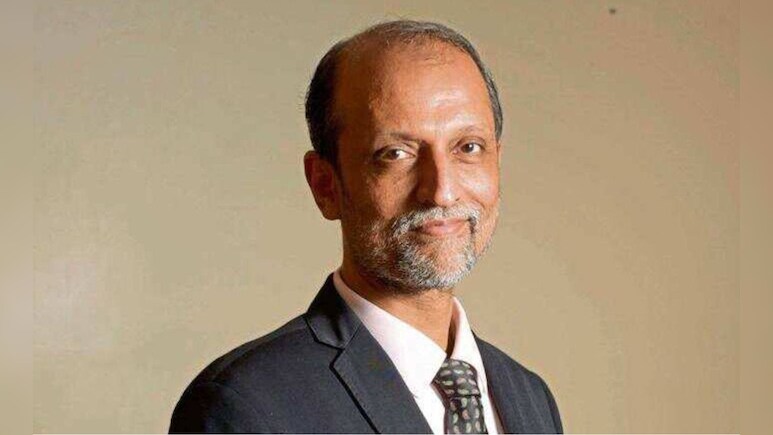
Ajit Ranade
There are moments in public life when a single news item captures the moral and fiscal drift of an entire political system. Last week, Maharashtra’s forest minister reportedly said that teak plantations worth Rs 12,000 crore may be monetised, including felling mature teak trees, to help raise funds and repay loans, partly necessitated by the mounting fiscal burden of welfare commitments such as the Ladki Bahin scheme. The annual outgo of that scheme alone is estimated between Rs 36,000 and Rs 46,000 crore, which is over 5% of the state’s total expenditure.
For a moment, we may pause and reflect on the symbolism. Forests are not surplus inventory. They are ecological assets meant for future generations. They are carbon sinks in a climate-stressed world. They regulate water cycles, protect biodiversity and serve as natural insurance against environmental collapse. To cut them down in order to finance annual revenue expenditure, that too recurring cash transfers, is not merely a budgetary decision. It is intergenerational liquidation. If trees are felled this year to fund this year’s freebie burden, what will be cut next year? Even if the teak plantation stock is being marketed as a “departmental asset,” the political symbolism is unavoidable: the state is contemplating drawing down long-lived environmental capital to service recurring revenue commitments. This is not an isolated case. Across India, competitive populism has acquired a new velocity. It has been enabled by technology.
The JAM trinity — Jan Dhan, Aadhaar and mobile connectivity — has made direct benefit transfers seamless. More than 500 million no-frills bank accounts, Aadhaar-linked targeting, and instant transfers have allowed governments to move from distributing goods to transferring cash directly into bank accounts. The shift is politically transformative. Cash transfers timed close to elections blur the line between governance and inducement. The Supreme Court, in recent hearings, has asked pointedly: why are such schemes announced just ahead of polls? Will indiscriminate benefits, without distinguishing between those who can afford and those who cannot, not amount to an “appeasing policy”? The Court has further warned that indiscriminate largesse hampers economic development and diverts resources away from roads, hospitals and schools. A pending PIL seeks regulation of such promises, arguing that “irrational freebies” may distort the level playing field and even violate constitutional provisions governing public funds.
The judiciary is of course, cautious about stepping into political territory, but its anguish is visible. The real issue is not whether welfare spending is legitimate. Rights-based entitlements such as food security, rural employment guarantee (now diluted), primary education and public health are constitutional commitments. Targeted support for the poor is morally defensible and economically sound. The problem is something else. It is the slippery slope and the steady transformation of voters into “beneficiaries”. The language itself has shifted. Citizens with rights have become recipients of state generosity. It is worth reminding that freebie resources are drawn from taxes collected from the same citizens, or from deficits and debt that their children will repay. In the freebie race, to retain political advantage, payouts have been escalating. What began as targeted support is becoming a quasi-universal entitlement. The 2017 Economic Survey had floated the idea of Universal Basic Income as a rational consolidation of subsidies. Instead, we are drifting into fragmented, election-driven quasi-UBI, layered on top of existing schemes, with duplication or overlaps, and without fiscal consolidation.
Resultantly, revenue deficits have widened. Capital expenditure has to be cut. States borrow to fund current consumption, which is a violation of the most basic “golden rule” of public finance, which says borrowing should finance investment, not recurring consumption. The SC’s recent remarks capture the anxiety: “Even if you are revenue surplus, is it not your obligation to spend that amount for development i.e. roads, hospitals, schools?” When forests are monetised to fund revenue expenditure, we cross from imprudence to peril. The phenomenon may not be unique to India, since democracies worldwide struggle with electoral populism.
Latin America has seen debt crises triggered by unchecked subsidies. Advanced economies face entitlement pressures as populations age. But what is different in India is the combination of scale, technology, development needs and demography. We are not a saturated welfare state. We are still building basic in frastructure, including human capital. Every rupee spent on indiscriminate giveaways is a rupee denied to irrigation, railways, climate adaptation, urban drainage, or to education, skilling and primary health. There is also a cultural cost. The Court has asked bluntly whether such schemes risk weakening work incentives. That concern should not be caricatured. Poor citizens are not lazy. Inflation and cost of living, unaffordable services are a real concern. However, when benefits are electorally driven, and when they expand rapidly without fiscal backing, the signal shifts from empowerment to appeasement.
Are voters becoming addicted to the freebie opium? Or are they so cynical about governance that they prefer immediate cash to long-term promises of infrastructure? Reversing this race to the bottom requires political courage and institutional reform. First, fiscal transparency must be mandatory. Every manifesto promise should be accompanied by a publicly disclosed costing and funding source, whether taxes or borrowing. Second, adopt the golden rule formally: borrow only for capital expenditure, not for revenue giveaways. This principle could be embedded in State fiscal responsibility legislation. Third, empower an independent fiscal council to publish pre-election fiscal impact assessments of major promises and describe the tradeoffs. Fourth, distinguish clearly between rights-based welfare and electoral inducements timed for political gain.
Finally, voters must reclaim their role as citizens. Infrastructure decay, polluted rivers, failing schools and now felled forests are not disconnected from freebie politics. They are its consequence. A democracy that is cutting down forests for votes risks mortgaging its ecological future for an electoral present. Welfare is essential. Appeasement is corrosive. The difference lies in fiscal discipline, transparency and respect for citizens, who are not beneficiaries but are owners of the republic. If we do not draw that line now, next year’s burden will demand another forest.
The writer is a noted economist.
Orissa POST – Odisha’s No.1 English Daily