
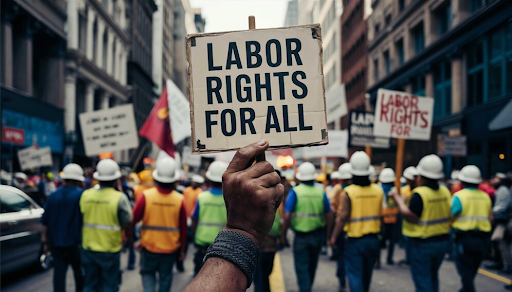
In legal discourse, the terms law and code are often loosely used, yet they embody funda mentally different ideas with far-reaching consequences for governance and social justice.
This distinction becomes critically important when examining India’s recent transition from a protective, welfare-oriented labour law regime to a consolidated framework of four Labour Codes.
In its classical sense, law is a broad and evolving concept. Jurists have defi ned law in multiple ways, but a commonly accepted understanding is found in Salmond’s definition: law is “the body of principles recognised and applied by the State in the administration of justice.” Similarly, the Supreme Court in State of Madras v. VG Row (1952) observed that law is not merely a set of rules but a mechanism to balance individual liberty with social order under constitutional values. Law thus includes statutes, constitutional provisions, judicial precedents, customs, conventions and principles of natural justice.
A code, on the other hand, is a specific legislative technique. Black’s Law Dictionary defines a code as “a systematic collection, compendium, or revision of laws, rules, or regulations that relate to a particular subject.” The Supreme Court echoed this understanding in RS Nayak v. AR Antulay (1984), where it described a code as a “complete and exhaustive statement of law on a subject, intended to replace scattered enactments.” Therefore, while law is organic and multi-sourced, a code is rigidly statutory, structured and intended to standardise application.
Judicial practice illustrates this distinction clearly. In Joseph Shine v. Union of India (2018), the Supreme Court struck down Section 497 of the IPC, holding that even a comprehensive code must yield to constitutional morality and fundamental rights. This reaffirmed that codes do not exist in isolation; they are subordinate to constitutional law and judicial interpretation.
This conceptual background is essential to understanding the implications of India’s labour law overhaul. Historically, Indian labour laws were not merely regulatory instruments; they were expressions of constitutional commitment to social and economic justice under Articles 14, 19, 21, 23 and the Directive Principles of State Policy. Laws such as the Industrial Disputes Act, 1947, the Minimum Wages Act, 1948 and the Factories Act, 1948 emerged from decades of struggle, judicial refinement and tripartite consensus involving workers, employers and the State.
The consolidation of 29 such laws into four Labour Codes — on Wages, Industrial Relations, Social Security, and Occupational Safety, Health and Working Conditions — has been officially justified on grounds of simplification, ease of doing business and uniformity. However, codification in this context has not been a neutral exercise of organisation; it has significantly altered substantive rights, enforcement mechanisms and power balances, often to the detriment of workers.
The most troubling aspect of the new regime lies in its implementation philosophy. Unlike earlier labour laws that prioritised protection, the codes emphasise flexibility, employer discretion and executive rule-making. The Industrial Relations Code, for instance, raises the threshold for mandatory government approval for layoffs, retrenchment and closure from 100 to 300 workers. While presented as an administrative reform, this change effectively removes job security for a vast segment of the organised workforce. The Supreme Court in Workmen of Meenakshi Mills v. Meenakshi Mills Ltd. (1992) had earlier upheld prior restrictions precisely because sudden unemployment threatens the right to livelihood under Article 21. The new code departs from this constitutional sensitivity.
Equally problematic is the dilution of collective bargaining rights. By tightening conditions for legal strikes and increasing procedural barriers, the Industrial Relations Code weakens trade unions’ negotiating power.
The Code on Wages, while projecting universal minimum wages, leaves critical determinations to executive notifications. Without strong enforcement machinery and independent wage boards, minimum wages risk becoming not a living wage but a statutory formality. Past judicial interventions, such as in People’s Union for Democratic Rights v. Union of India (1982), treated payment below minimum wage as forced labour under Article 23. The present code, however, weakens inspection systems and replaces them with “facilitation” models, undermining deterrence against wage violations.
The Code on Social Security is often cited as progressive for extending coverage to gig and platform workers. In practice, however, it creates entitlements without enforceable guarantees. Benefits are dependent on schemes yet to be notified, budgetary discretion and employee contributions that remain undefined. The Supreme Court in LIC of India v. Consumer Education and Research Centre (1995) held that social security is an intrinsic part of the right to life. A framework that promises inclusion without legal certainty risks becoming symbolic rather than substantive.
Perhaps the most significant concern is the method of enforcement. The labour inspector, once a watchdog against exploitation, has been trans formed into a “facilitator,” reducing the likelihood of sur prise inspections and criminal accountability. This administrative softening contrasts sharply with judicial observations in M.C. Mehta v. State of Tamil Nadu (1996), where strict enforcement was deemed essential to prevent labour abuse.
Another serious issue is federal unevenness. Labour being a concurrent subject, the effectiveness of the codes depends on state-level rules. This has resulted in fragmented and delayed implementation, legal uncertainty and differential standards across states. Workers’ rights, which should be uniform and fundamental, now vary based on administrative readiness and political priorities.
Ultimately, the transformation of labour laws into codes reflects a deeper ideological shift. Codification has been used not merely to consolidate but to recalibrate labour relations in favour of capital mobility and investment competitiveness. While economic growth is essential, the Constitution does not permit growth at the cost of dignity, security and collective rights of workers.
The true test of the new Labour Codes will not be in their textual elegance but in whether courts, governments and society can restore the constitutional spirit that once defi ned India’s labour law regime.
The writer is a service union representative and columnist.