
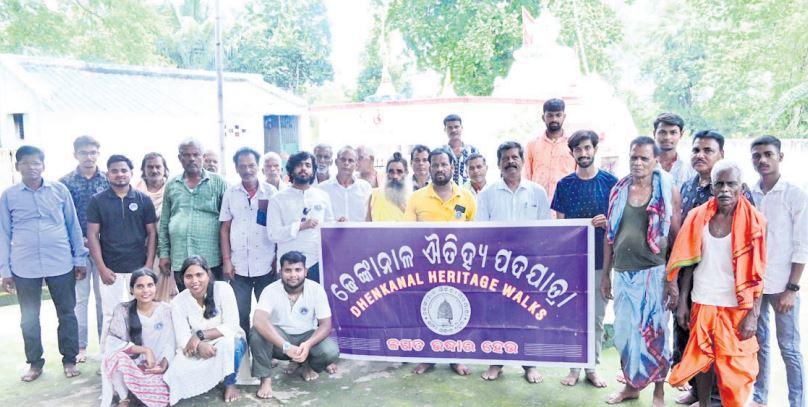
Bhubaneswar/Dhenkanal: The archaeological, religious and cultural significance of Sogaeshwar Shiva Peetha, an ancient Shiva shrine on the banks of the Brahmani River in Dhenkanal district, was highlighted during the 38th edition of the Dhenkanal Heritage Walks (DHW) held at Sogar village under Kamakhyanagar sub-division.
Heritage experts and enthusiasts explored the shrine’s history and its place in the Brahmani river valley, which emerged as an important centre of religious, cultural and political activity during the 9th and 10th centuries AD. The walk also examined the region’s geological evolution and the growth of early temple architecture along the river.
Dedicated to Swayambhu Sogaeshwar Mahadev, the shrine is believed to date back to the early medieval period when a network of Shiva temples flourished across the Brahmani valley, particularly during and after the Bhaumakara rule.
According to local tradition, the existing temple preserves only part of its original structure. Repeated flooding by the Brahmani is believed to have buried sections of the shrine beneath layers of sand and alluvial deposits over the centuries. While portions of the ancient superstructure were damaged, villagers later rebuilt the upper section to protect the original stone core.
The shrine also preserves several significant sculptures, including a broken ten-armed image of Mahishamardini, a four-foot Ganesha idol worshipped as a parshva devata, and a rare Chaturmukha Brahma image now installed in the adjoining Trinath temple.
Heritage scholars said these sculptural remains suggest the existence of a much larger early medieval religious complex in the locality. A unique feature of the shrine is the worship of two Swayambhu lingams—Sogaeshwar and Swapneshwar—within a single sanctum sanctorum, a rare ritual tradition that adds to its heritage value. Despite its antiquity, Sogaeshwar Shiva Peetha remains vulnerable to recurring fl oods and inadequate conservation. Heritage enthusiasts called for systematic documentation and preservation of the monument and its sculptural treasures.