
The leaders’ declaration adopted at the end of the recent G20 summit in South Africa reaffirmed the group’s commitment to tackling some of the world’s most pressing challenges, from inequality and long-running conflicts to AI and climate change. It also marked a historic milestone: for the first time, the G20 identified education as one of its top global priorities.
The declaration went on to highlight the urgent need to invest in children’s early development, pledging to “advance a comprehensive approach” that recognises investment in early childhood care and education (ECCE) as “vital…for a country’s social and economic future.” This recognition is long overdue. In a world marked by economic volatility, the most effective investments are those made in people, and few yield greater returns than supporting children in their first five or six years of life, when they develop the skills that underpin long-term growth, social cohesion, and peace.
Today, we are failing far too many children before they even reach school age. Globally, more than 40% of preschool children – roughly 350 million – lack access to quality care. The result is a vast loss of human potential that holds back communities, economies, and societies.
Early childhood, when 90% of brain development occurs, is a unique window for establishing the foundations of lifelong learning, health, and well-being. Decades of evidence show that every dollar invested in ECCE generates up to $17 in economic returns, helping to break cycles of poverty and reduce inequality. Expanding access to child care also enables more women to enter and stay in the workforce, strengthening households and national economies alike.
The UN already recognised the importance of investing in ECCE when it adopted the SDGs in 2015. This was reaffirmed in UNESCO’s 2022 Tashkent Declaration, with more than 150 countries pledging to provide at least one year of free, compulsory pre-primary education for all children and to allocate at least 10% of their education budgets to preschool programmes. Despite these commitments, funding for early education remains woefully inadequate. In low- and middle-income countries, 180 million three- and four-year-olds still lack access to basic early-childhood services.
Against this discouraging backdrop, momentum for change is building, driven largely by major emerging economies within and beyond the G20. Early childhood support was central to Brazil’s social-inclusion agenda during its G20 presidency, while the launch of the Global Alliance Against Hunger and Poverty in late 2024 signalled a broader push to tackle intergenerational inequities.
Brazil has also introduced a bit domestic measures. Earlier this year, it launched its National Integrated Policy for Early Childhood, which established a single national database to track children’s needs and support a unified strategy across all of the country’s 5,568 municipalities, featuring a massive data platform covering daycare availability, vaccination records, and developmental milestones.
The recent G20 summit in Johannesburg – the first to be held in Africa – brought the scale and urgency of the prob lem into sharp focus. Childhood mortality rates across the continent remain 14 times higher than in high-income countries, and only one in four children in sub-Saharan Africa attends preschool. South Africa, which views investment in ECCE as a national priority, recently launched the largest early-years education programme in its history. President Cyril Ramaphosa has also used South Af rica’s G20 presidency to frame early-childhood education as a global imperative and urge governments worldwide to invest in their youngest citizens.
Mobilising the political will and financing needed to trans form ECCE will require a sustained, coordinated multilateral effort. Over the past two years, Theirworld has championed this agenda through its Act for Early Years campaign, and the recent announcement of the world’s first international gathering devoted specifically to funding pre-primary education – initiated by a coalition of stakeholders from both the Global South and North – indicates that early childhood is finally receiving the attention it deserves.
Looking ahead, the International Finance Summit for Early Childhood in 2027 offers a rare opportunity to raise new funding, redirect domestic investment, and unlock private capital. Crucially, it could demonstrate that investing in preschool education is not a secondary concern but a precondition for achieving the SDGs. One principle should guide the policy debates that will inevitably follow: putting children first is the surest route to a more prosperous, peaceful, and stable world.
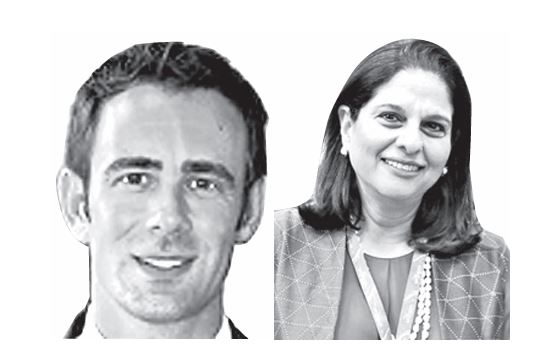
Justin van Fleet is President of Theirworld. Pia Rebello Britto is Global Director of Education & Adolescent Development at UNICEF.