
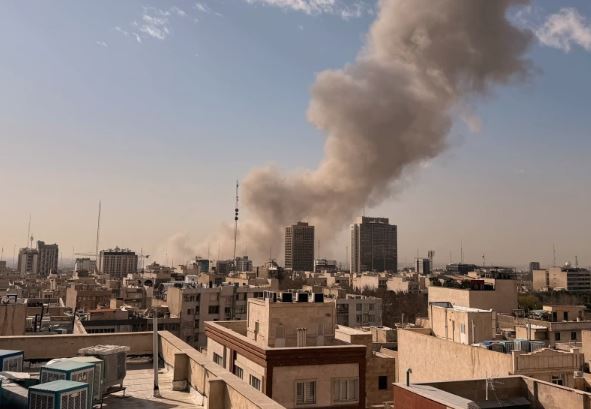
With the announcement that Ayatollah Ali Khamenei has been killed in joint American and Israeli airstrikes, the 86-year-old Iranian supreme leader’s reign has come to a violent close, cementing what many observers call a “lost half-century” for the Iranian nation. For decades, Khamenei governed with the paranoid vigilance of an autocrat convinced that his own people and the world’s superpower sought to unseat him. In the end, they did. But as the Middle East confronts this sudden, unpredictable void, the celebration in Washington must be tempered by a chilling reality that President Donald Trump has decapitated a regime without offering a map for the terrain that follows, plunging the region into an unbridled spiral of chaos. From the sedition trials of reformers to the recent slaughter of thousands of protesters on Iranian streets, Khamenei’s legacy is written in blood. He impoverished his citizens to bankroll an “axis of resistance” spanning Gaza, Iraq, Lebanon and Yemen, prioritising a nuclear programme over the prosperity of his people.
The airstrikes opened a stunning new chapter in US intervention in Iran, marking the second time in eight months that the Trump administration has attacked the country during talks over its nuclear programme. Trump’s “controlled chaos” doctrine of striking from the air while avoiding the “endless wars” loathed by his MAGA base is a high-wire act. His administration’s current strategy of using massive strikes to tame the regime while calling for an unarmed populace to “bring the government down” is an outright gamble. For it ignores the fact that bare hands rarely topple a regime that still holds the guns. In fact, the US has been indulging in such sort of misadventures in the region for decades. In 1991, the US encouraged the Iraqi people to rise up, only to stop short of Baghdad and leave those who dared to resist to a gruesome fate. While Iranians may loathe their oppressors, the instinct to “rally around the flag” when American and Israeli bombs fall is a powerful deterrent to the very uprising Washington expects.
By decapitating the Islamic Republic without a “day after” plan, Washington has traded a known enemy for a volatile, unpredictable void. Instead of a democratic dawn, the power vacuum is likely to be filled by the Islamic Revolutionary Guard Corps, a cadre of “true believers” who may prove even more radical than their predecessors.
The consequences are already visible. Retaliatory ballistic missiles have crossed the Arabian Peninsula, striking targets in Qatar, Kuwait, Bahrain, the United Arab Emirates and Saudi Arabia. The Revolutionary Guard on 1 March threatened to launch its “most intense offensive operation” ever, targeting Israel and more US bases in the region.
The current war in West Asia has plunged the globe into a nightmare. With the Russia-Ukraine war entering its fifth year, the world is now caught between two massive fires, each capable of incinerating global economic stability and human security. The most immediate consequence is an unprecedented energy and inflation shock. As the Strait of Hormuz, the artery for 20 percent of the world’s LNG and millions of barrels of oil, faces a de facto blockade, energy prices are surging toward $100 per barrel. This compounding crisis mirrors the 2022 shock from Ukraine. Asian countries face a disproportionate threat to their industries, while Europe’s hard-won energy independence from Russia is being undermined by the halt of Qatari gas.
By fighting two wars at once, one through proxies in Europe and one directly in the Middle East, the America-led West risks a systemic collapse of the liberal world order. If these two conflicts merge into a singular, globalised struggle for resources and influence, the “lost half-century” won’t just belong to Iran, it will belong to the whole world.