
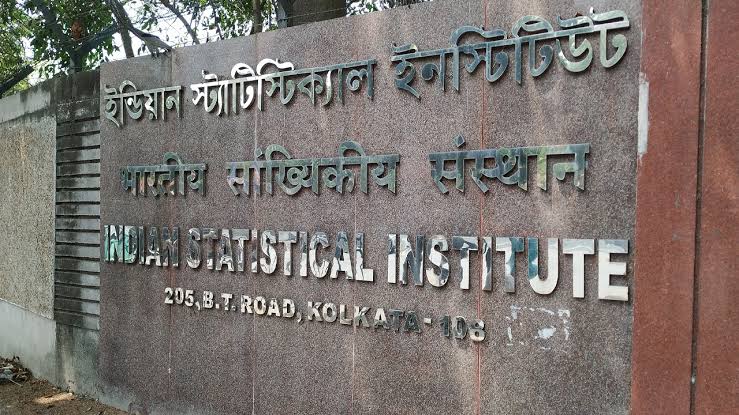
The Centre is courting yet another controversy by introducing a Bill in the Lok Sabha that seeks to fundamentally alter the structure and governance of the Indian Statistical Institute (ISI), a premier institute of higher studies. This is at a time when the government is facing growing criticism over its inept handling of the country’s education system, especially conducting exams which are a gateway to coveted professional careers for students and youths. Intense nationwide Gen Z protests over NEET paper leaks have already led to the resignation of a Union Education Minister. Young people are still seething with anger over police high-handedness and arrests during and the continuing persecution after the recent agitations. The amendment in regard to ISI is feared to deal a severe blow to the institution’s autonomy in formulating its courses and running it without government interference.
Going by concerns expressed by ISI teachers, students, alumni, former directors and staff, the legislation threatens the institution’s autonomy, academic excellence and long-standing tradition of providing free education. Founded in 1931 at Presidency College, Kolkata, by renowned statistician Prasanta Chandra Mahalanobis before moving to its historic Baranagar campus, the ISI has all along operated as a registered society. Even after Parliament passed the ISI Act in 1959, granting it the status of an Institute of National Importance, its Society structure remained unchanged. The new Bill, however, seeks to abolish that model entirely. Instead of being governed by a 33-member council comprising elected representatives alongside government nominees, the institute would now be managed by a board of governors largely appointed by the Central government. The director would also become the institute’s chief executive officer (CEO) which is being construed as a shift towards corporate-style governance.
The proposals were purportedly formulated on the basis of recommendations by eminent scientist Prof. Raghunath Anant Mashelkar. Academics and faculty members point out the amendment deviates significantly from Prof. Mashelkar’s recommendations. It proposes a complete structural overhaul that was never discussed with the ISI Society. The government’s intent is being viewed with suspicion, and it is feared, if implemented, the ISI would have multiple autonomous centres, each with its own director and management council. This is an attempt to dilute the importance of the main Kolkata Centre and destroy its autonomy.
The original Baranagar campus, established by Mahalanobis, could eventually become just one among many centres rather than remaining the institution’s recognised headquarters. The manner in which the legislation was drafted raises questions as well. The Bill needs consultation with academics and ideally should not have been adopted without discussion. Even the ISI director was reportedly not consulted during its drafting. Faculty members have complained that the ISI Society, ISI Council and the Academic Council all requested discussions with the government, but their concerns have not been addressed. It is feared the proposed governance structure would significantly increase government control over the institute. The board of governors is to be headed by a chairperson appointed by the President of India on the advice of the Centre. The board will include three Central officials, four nominated statisticians and four professors from the institute, including the director. There is every reason to question what purpose would be served by reducing the powers of the Academic Council and opening the doors to political influence over research.
Given the government’s track record, fears that the Centre could manipulate data and reports to suit its own agenda, particularly on sensitive issues such as unemployment and poverty, appear to be not without basis. Truth and facts seem to scare the present Establishment. The legislation has also raised concerns about access to education. Presently, students pay no tuition fees for undergraduate and postgraduate programmes and receive monthly stipends ranging from Rs 5,000 to Rs 10,000. The new Bill contains provisions enabling the institute to generate revenue, including through student fees. Such changes could shatter the dreams of talented students from poorer backgrounds to study at ISI. Studying at IITs and NITs often costs more than Rs 100,000 per semester, something ISI has historically avoided through its commitment to free education. The academic community has been upset since the draft of the Bill was released last year.
During the institute’s convocation ceremony in February, students wore protest badges while collecting their PhD degrees and called for the rejection of the ISI Bill 2025. The ISI’s galaxy of alumni speaks volumes for the quality of education produced by the institute enjoying autonomy. It prides itself on its alumni and faculty that include some of India’s most distinguished statisticians and mathematicians, including Professor CR Rao, recipient of the International Prize in Statistics, and SRS Varadhan, widely regarded as one of the world’s greatest mathematicians. The government needs to tread cautiously and consult experts and professors before pushing the legislation in the Rajya Sabha. It is already under scanner and accused of playing with the careers of youths in the paper leak case as well as the education policy. Watering down powers of the ISI will fuel suspicions that the government could be harbouring ill intentions of controlling the statistical data released by the institution to maintain control over narratives presented before the people. The government can ill afford another education controversy at the moment.