
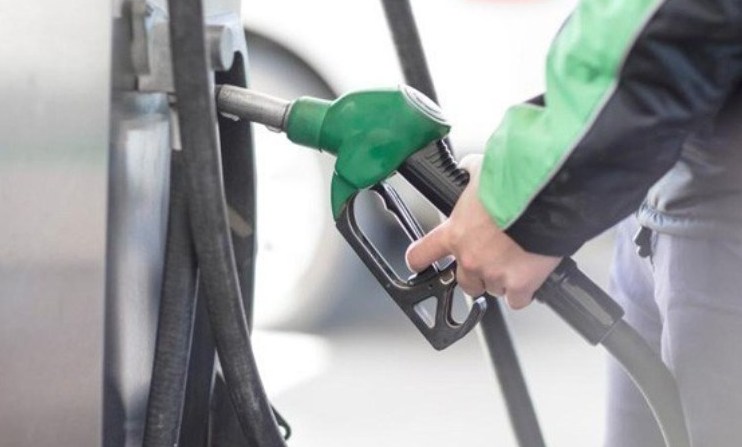
New Delhi: Private fuel retailers Jio-bp and Nayara Energy have imposed limits on diesel purchases at their retail outlets as industrial and other bulk consumers turn to petrol pumps to take advantage of cheaper retail fuel, putting pressure on supplies and retail networks.
Jio-bp outlets have capped diesel purchases at 50 litres per customer per day, while transaction limits at Nayara Energy outlets range from 70 litres to 200 litres, people aware of the matter said.
Public sector fuel retailers Indian Oil Corporation (IOC), Bharat Petroleum Corporation Ltd (BPCL) and Hindustan Petroleum Corporation Ltd (HPCL) too are likely to impose quantity restrictions.
Petrol and diesel prices at retail outlets have remained unchanged since May even as international crude oil prices have surged to around USD 108 a barrel in a bid to control inflation. Prices charged to industrial and other bulk consumers, who typically procure fuel through dedicated consumer pumps, have meanwhile moved more closely in line with international rates.
The divergence has created a price gap of as much as Rs 40 a litre between retail diesel and fuel supplied to bulk consumers, prompting large users to increasingly turn to retail outlets, the people said.
Bulk consumers include factories and manufacturing plants that use diesel to run machinery or backup power systems, as well as telecom companies, hotels, malls, data centres and hospitals that rely on diesel generator sets for emergency power.
Some such users are buying 400 to 600 litres at a time from retail outlets, significantly more than the quantities typically purchased by individual motorists, the people said.
The surge in bulk purchases has put pressure on fuel inventories at individual retail stations. Each outlet has finite storage capacity, while replenishment through fuel supply chains can take at least a couple of days, they said.
The resulting drawdown in stocks has prompted Jio-bp and Nayara to introduce daily purchase limits at their outlets, the people said.
Jio-bp, the joint venture of Reliance Industries and BP of UK, operates 2,227 petrol pumps in the country while Russia’s Rosneft-backed Nayara Energy has 7,105 outlets. Public sector retailers dominate the space, owning majority of the 104,069 petrol pumps in the country. IOC alone has 43,289 outlets while BPCL had 25,587. HPCL owns 25,238 petrol pumps.
Reached for comments, a Jio-bp spokesperson in a statement said, “All Jio-bp Mobility Stations are operational and adequately stocked to serve our customers. We continue to offer our high-performance Active Technology Petrol and Diesel and remain committed to providing seamless and reliable refuelling services across our network.
“Given the prevailing demand dynamics, we are taking appropriate measures to ensure equitable availability of fuel for mobility and transportation needs, particularly in view of demand from industrial and other non-transport use. These measures are intended to support the broadest possible access to fuel for customers based on demand conditions,” it said without elaborating. “Our focus remains on ensuring fuel availability and a seamless customer experience across the Jio-bp network.
A Nayara spokesperson did not immediately respond to emails and phone calls made for comments.
Petrol and diesel prices in India are free, but rarely have they moved in tandem with cost in the last 10-12 years. Pump rates are not immediately aligned with cost when international oil prices rise, and when retail prices are increased, they are often not in step with the rise in cost. Even with full pricing freedom, PSU retailers act in tandem when revising rates and often after ‘informal’ consultation with the government.
If international oil prices fall, the government has in the past raised taxes to take away gains.
The restrictions imposed by Jio-bp and Nayara highlight the distortion created by the widening gap between retail and bulk diesel prices. If the differential persists, industrial consumers could continue diverting purchases to retail pumps, potentially straining supplies at stations serving motorists and forcing private retailers to ration sales despite having fuel available in the broader supply system, sources said.