
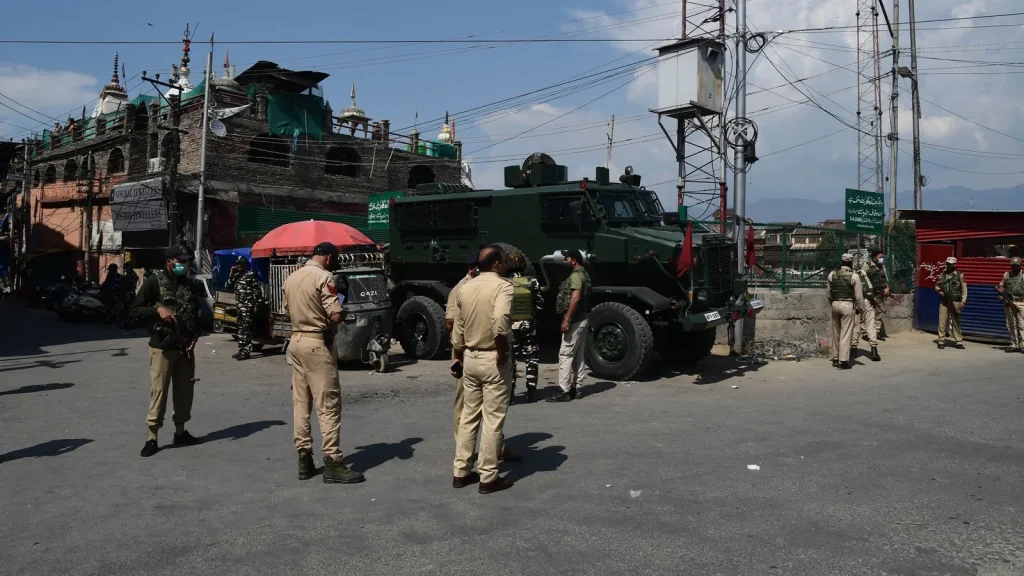
New Delhi: Investigating agencies are probing in-depth the digital trail as Jammu and Kashmir witnesses an increasing number of threat notes and letters being issued to government employees, particularly Kashmiri Pandits.
A lesser-known outfit, the United Liberation Council (ULC), which the agencies confirm is a proxy of the Jaish-e-Mohammad, has been issuing threat notes back-to-back in the last one and a half months.
Four such threat letters were sent in August itself.
August 7, a ULC letter signed by Ahmad Bilal threatened Kashmiri Pandit government employees. Bilal, who calls himself a media coordinator of the ULC, threatened to kill these employees who are working in government departments under the Prime Minister’s Special Package.
This letter explicitly put out the names, phone numbers and addresses of these employees while also threatening the Jammu and Kashmir Police.
August 23, another letter by the ULC issued a similar threat. However, this time, along with personal details, even the vehicle numbers of these employees were leaked.
Two more letters were issued in late August, and the threats made were similar.
In these letters too, the ULC put out the personal details of these employees. It also warned locals working with the Jammu and Kashmir Police.
The agencies have now launched an in-depth investigation into the digital trail of these letters.
Tracing the origins of these letters is crucial, and prima facie it appears that they originated from Pakistan. However, looking at the changing trends whereby Pakistan is doing everything to have a deniability factor, there is every chance that an ISI element may be sending these letters from within the country.
An Intelligence Bureau official said that the worrying factor is the frequency at which these letters are being sent. Such letters have done the rounds in the past as well. However, this time around it is happening too often.
An official, weighing in on the frequency at which the letters are being issued, said that there could be two reasons behind this.
Earlier, there were many locals who would get carried away and execute the task of targeting Kashmiri Pandits or non-locals. This time around, the traction is not that much and hence the ULC is doing this more frequently, the official said.
This could also be a clear attempt to engage in a psychological war. This keeps the security agencies stressed and creates panic in the minds of the people, the official said.
Another official said that after the abrogation of Article 370, a lot has changed in Jammu and Kashmir. Many migrant workers have found jobs in Jammu and Kashmir. Several Kashmiri Pandits too are returning to J&K and have taken up government jobs. The locals too have shunned terror and stone pelting and are engaged in businesses and tourism.
The ULC wants this to change and hopes that sending out such letters more frequently will drive fear in the minds of the people and hopes that they will eventually back the Pakistani narrative where Jammu and Kashmir is concerned, the official added.
The ULC is Pakistan’s latest proxy and has been created exclusively as an online organisation. Its prime goal is to carry out psychological warfare and run intimidation campaigns.
An official said that tracing the digital footprint is an important part of the investigation.
However, there are many locals too who are under the scanner. They are the ones who are passing on sensitive information such as addresses, phone numbers and vehicle numbers of these government employees. It is very hard to have so much information unless and until some local or insider is involved. Finding the local link will be key to tracking the ULC and learning about its area of operation and modus operandi.
Finding the local link will also help the agencies find out who is circulating these letters in Jammu and Kashmir. The ULC has not just put out letters in the online space but is also involved in the circulation of a physical copy in J&K. While trying to find the digital trail of these letters and the local link is important, the agencies are also verifying the credibility of these letters, an official said.