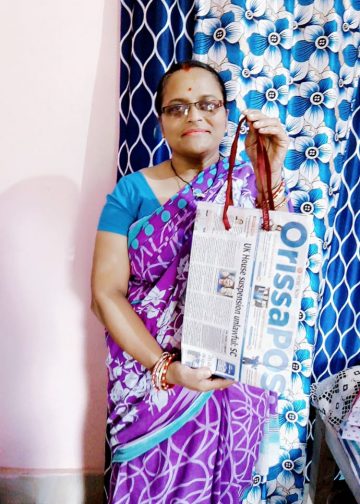
Suman Dalmia is the visionary Chairperson of Indian Public School (IPS) in Sambalpur, Odisha. Under her leadership, the institution has grown into a premier CBSE-affiliated day-cum-residential school known for its holistic approach to education. Dedicated to student-centric learning, she has integrated modern infrastructure with specialised coaching for competitive exams like JEE and NEET. Her focus on high academic standards and innovative teaching methods has established her as a prominent figure in the region’s educational landscape.
Being a major player in the education industry, what do you think are the challenges that the education sector is facing in the country?

As someone deeply connected to children and their journeys, I feel the biggest challenge today is balance. I believe the real challenge is to not lose the soul of education, which is to nurture good human beings, not just high achievers.
The digital revolution is here. What implications will artificial intelligence have in the education sector?
Artificial intelligence is a powerful tool, and like all tools, its impact depends on how we use it. I see AI as an enabler—it can personalise learning, identify gaps, and support both teachers and students in ways we never imagined before. However, as a mother, I also feel strongly that technology should never replace human connection. A child does not just need information; a child needs encouragement, empathy, and guidance. So, while we welcome AI into education, we must ensure that it complements the teacher, not replaces the warmth of a teacher’s presence. The heart of education must always remain human.
The Indian education system has often been criticised for its emphasis on rote memorisation and test scores. What measures should be taken to prepare students better?
This is something I feel very deeply about. Learning should never feel like a burden—it should feel like discovery. We need to move from “learning what to think” to “learning how to think.” Classrooms must become spaces where children ask questions freely, express ideas without fear, and learn through experience. Practical learning, project-based activities, exposure to arts, sports, and real-life problem-solving are essential. Teachers also need to be empowered and trained to adopt more child-centric approaches. And as parents and educators, we must shift our mindset—marks are important, but they are not everything. Confidence, curiosity, and character are equally important.
How has your journey been so far? What makes Indian Public School a preferable place for students?
My journey has been one of learning, patience, and deep emotional connection. Building an Indian Public School has never been just a professional journey; it has been like nurturing a child. Every challenge has taught me something, and every success has been a collective effort of our students, teachers, and parents. What makes IPS special, I believe, is the environment we have created. It is a place where children feel safe, valued, and encouraged. We focus not only on academics but on the overall development of each child—emotionally, socially, and morally. As a residential school, we also provide a home-like atmosphere where children learn independence while always feeling cared for. For me, every child here is like my own, and that makes all the difference.
Your vision and dedication have taken this institution to new heights. What advice would you give to newcomers who want to start their journey in this industry?
Education is not just a profession, it is a responsibility and a calling. My advice to anyone entering this field is simple: lead with your heart. If you truly care for children, you will always find the right path. Be patient, because results in education are not immediate. Be open to change, because the world is evolving. And most importantly, stay rooted in values, because that is what shapes future generations. Do not aim to build just an institution, aim to build a space where children feel inspired, respected, and loved. When you focus on that, success will follow naturally.