
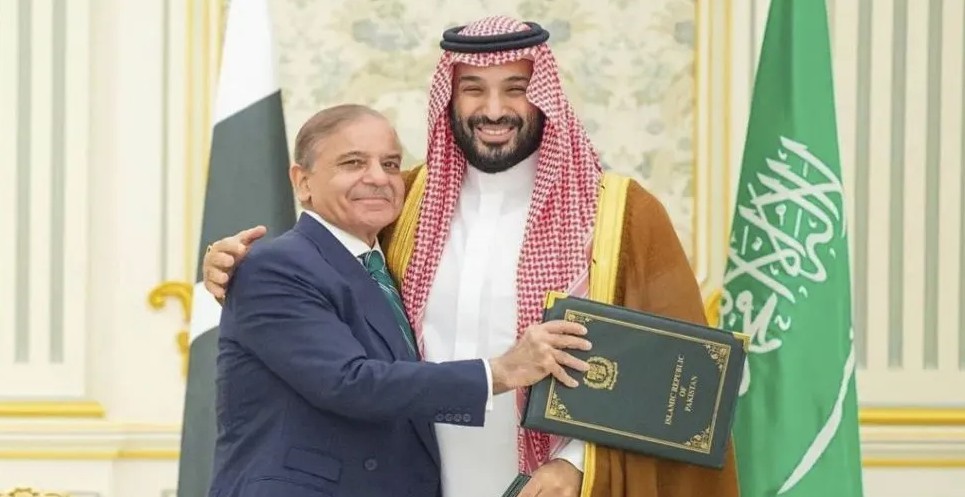
The prospects of Turkey joining a Saudi Arabia–Pakistan security arrangement that mirrors NATO’s collective defence principle could be a cause of major strategic concern for India. Ankara is in advanced talks with Riyadh and Islamabad to join the pact, which is in line with NATO’s Article 5, under which an attack on one member is treated as an attack on all. Under the emerging division of responsibilities, Saudi Arabia would act as the primary financial backer; Pakistan would bring in its nuclear deterrent, ballistic missile capabilities and military manpower, while Turkey would contribute operational expertise and its rapidly growing domestic defence industry, which has set its focus on drone warfare technology.
Turkey’s possible inclusion in the alliance is particularly noteworthy given its status as a long-standing member of NATO and the holder of NATO’s second-largest military after the US. Its participation would lend considerable military might and political weight to the pact. While Saudi Arabia and Turkey have historically competed for influence in the Sunni Moslem world, they share common concerns about Shia-majority Iran’s regional role. They are also aligned in their support for a stable, Sunni-led Syria and in advocating Palestinian statehood.
Ankara’s defence ties with Islamabad are already deep and multifaceted. Turkey is building corvette warships for the Pakistani navy, has upgraded a significant number of Pakistan’s F-16 fighter jets, and has shared drone technology with both Pakistan and Saudi Arabia. It has also invited both countries to participate in its ambitious Kaan fifth-generation fighter jet programme, underlining the growing technological dimension of their cooperation.
The trilateral talks come in the aftermath of a ceasefire between India and Pakistan, which ended a four-day military standoff in May 2025. During that brief conflict, Turkey openly backed Pakistan, highlighting its willingness to take sides in South Asian security disputes. Pakistan had then used hundreds of Turkish drones that had swarmed Indian skies during the four nights. Although open hostilities between India and Pakistan have ceased since then, tensions remain elevated, with Islamabad also facing persistent friction with Afghanistan amid accusations that the Taliban is sheltering hostile militant groups while India, doing virtually nothing tangible, is constantly claiming ‘Operation Sindoor’ is still alive and active.
For Turkey, the alliance is lucrative as a means of strengthening its deterrence and strategic autonomy at a time when doubts linger over long-term US reliability and President Donald Trump’s sceptical stance towards NATO.
On the other hand, a Saudi Arabia–Pakistan–Turkey defence pact would have significant strategic, diplomatic and military implications for India. The most immediate impact would be on India’s security calculus on its western front. A pact that implicitly extends political and military backing to Pakistan could embolden Islamabad for its misadventures aimed at India. While Saudi Arabia, with which India has significant trade ties, is unlikely to offer direct military intervention against India, the perception of collective support could strengthen Pakistan’s deterrence posture and complicate India’s response. Such a scenario could be imminent in case of a future war with Pakistan, given New Delhi’s inept handling of foreign affairs.
The pact would also significantly add to Pakistan’s conventional defence capabilities with Turkish drones, naval platforms, avionics and fighter jets. Combined with Saudi financing, this would strengthen Pakistan’s overall military resilience, potentially narrowing India’s conventional edge in certain domains such as UAV warfare and naval operations in the Arabian Sea.
The three-nation security grouping that spans the Middle East and South Asia is significant as the old-world order is undergoing a major shift with the big three – the US, China and Russia – carving their own spheres of influence. Other regional powers are also nurturing alliances for the benefit of their people. India, sadly, finds itself alone in this world of emerging geopolitical alignments due to an inconsistent and visionless foreign policy followed over the past decade.