
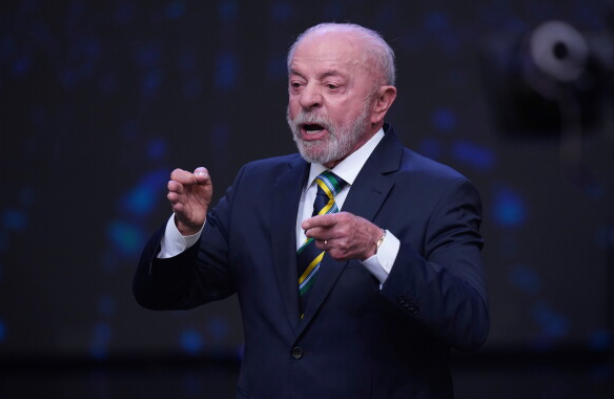
Brazil has come as a surprise at a time when extreme Right parties in Europe, Latin America and elsewhere, helped and encouraged by US President Donald Trump, had been on a winning streak. Brazil’s veteran Left-wing President Luiz Inacio Lula da Silva recorded a historic win beating his Right-wing rival Flavio Bolsonaro.
The victory came when defeat was staring Lula in the face. After trailing behind his rival in the earlier vote, he succeeded in securing 51.79 per cent of the votes, compared with Bolsonaro’s 48.21 per cent in the run-off polls.
As could be expected, Bolsonaro, like his father in 2022, refused to accept the result citing the extension of polling time by two hours as “inexplicable” even though both the parties had requested that polling stations be kept open longer for different reasons. Bolsonaro told his supporters in Brasilia that he would seek the annulment of the election.
It is Lula’s fourth win in a presidential election, having served two terms as President from January 2003 to December 2010, and again from January 2023. Bolsonaro had beaten Lula in the first round on 4 October and it appeared virtually impossible for Lula to turn the result around in just three weeks. The victory reverses the trend across Latin America where Right and conservative forces recently took control of one country after another such as Argentina, Chile and Colombia.
Since his defeat in the first round, Lula spared no pains to mobilise Left and democratic supporters through street demonstrations and a massive social media push. He had been facing a hostile Trump administration though the US President did not directly endorse Lula’s rival unlike what he did with the Right-wing candidates who went on to win presidential elections held in Colombia and Honduras.
Undoubtedly, the Trump administration would have preferred to see a conservative at the helm of this massive country of 213 million people. Sensing this possibility, Lula had warned the US not to interfere with his country’s election.
It has been the strategy of the White House to spread its influence in Latin America so as to get support to its policies, including on defence, security and trade. It is also keen to reduce China’s influence in the Western Hemisphere.
Brazil, which is oil-rich and holds the world’s second-largest reserves of rare earth minerals, is the only big country in South America not governed by a Right-wing leader, while Lula is largely seen as China-friendly. Flavio Bolsonaro, in contrast, had promised to make Brazil a close ally of Washington. Lula’s victory is also good news for environmentalists who had feared that a win by Bolsonaro would have given Brazil’s influential agribusiness and mining sectors more power.
They remembered and were concerned over record levels of deforestation and forest fires in the Amazon during the presidency of his father, Jair Bolsonaro. Despite Lula’s remarkable victory the results show how deeply divided the Brazilian population is with more than 48% of voters choosing Bolsonaro.
He would also have to confront the most Right-wing Congress in Brazil’s democratic era. This is the reason why Lula sounded a conciliatory tone at the hour of victory.
He promised to bridge the gap between Brazil’s opposing political poles with “a new way of governing.” However, he did not provide any detail as to how he would look after the interests of both his supporters and rivals.
Credit goes to Lula, who was once a factory worker and trade union leader, for rousing most of his Left supporters to go to the polling stations and cast their votes so that the Rightist forces could not assume the reins of power.
The working class responded well by turning out in large numbers. The message that Lula and his party drove home was that the return of autocratic forces in Brazil would spell doom for democracy. The victory could dampen the spirit of autocrats and anti-democratic parties across the globe.