
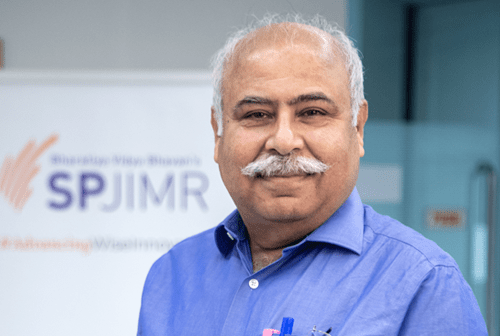
Jagdish Rattanani
The district police chief of Meerut in Uttar Pradesh has triggered widespread Dalit protests after he was recorded beating up an advocate in a police van and peaceful protesters who were demanding a thorough probe into the murder of a 20-year-old girl. The shameful and criminal action by the 2015 IPS recruit named Avinash Pandey highlights the multiple levels at which India’s premier administrative services continue to fail the nation. While the case stands out because of the distinct casteist bias and the officer’s bizarre and patronising comments “counseling” people to plant trees with some lecturing on the Constitution, this is by no means an isolated instance of governance that is rotten, abusive and has lost touch with reality.
At regular intervals, in stances keep emerging that show the top tier of administrative services as an elite group which has normalised misuse of power and exploitation of the State machinery, often to the detriment of the weakest sections of society and for personal profit. The Meerut case begs the question: how can such a person be hired in the first place and further given medals and allowed free run of a key assignment? We must ask questions about the political cover offered in such cases, but also about the entire process of recruitment, appointment, promotion and supervision of seniorlevel cadres. The nation must challenge assumptions that have entrenched the view of the civil services as the “steel frame of governance” and its 100-year-old recruiter, the Union Public Service Commission (UPSC), as its “guardian.” Changing a complex and long-running system is fraught with difficulty, particularly with new worries about politicisation of the bureaucracy. These worries were visible in the debates around the system of lateral entry that was announced by the government in 2024 but later withdrawn because of the justifiable uproar over bypassing reservation quotas. A new lateral entry policy is said to be on the anvil. It will have to protect reservations and guard against falling into the trap of the so-called spoils system, an American model that has the political winner appointing his supporters to the administration.
Clearly, India cannot afford a political bureaucracy though some will argue that key posts have been already heavily politicised in recent years. Given all this, a broad political consensus on reform is still possible. While adding new members laterally via a carefully calibrated policy is one way, an equally important way is removing those who are in the system and have clearly misused authority like in the Meerut case in the headlines. The top tier of administration today largely means permanent membership of a club with almost unlimited power though some 400 have been sacked for corruption since 2014. This is less than 4% of the total IAS and IPS numbers at 10,171, as of Feb. 2026.
Most continue to retirement, a rarity in the non-government sector. The promise of continued employment with light-touch supervision in powerful roles attracts and retains the wrong pool of aspirants, mostly the risk-averse looking for lifelong guarantees in a changing landscape that demands new inputs and ideas. UPSC hires at the top tier need not be offered a job for life, with promotions insulated from political pressures, just as and to the extent that the current recruitment system is. An ‘Agniveer’ inspired framework that limits initial appointments to a fixed short tenure with rigorous mid-career review for extensions is far more vital for senior bureaucrats than it is for frontline soldiers. With strict guardrails to prevent it from falling into a “spoils system,” it should be possible to design a transparent, performance-linked retention system overseen by independent, statutory public panels. This approach, coupled with lateral entry to fill in the gap and open opportunities for those with a wider set of experiences, can shock the system out of its Rip Van Winkle slumber and the atrophy it has fallen into. India must also deglamorise its bureaucracy. Bureaucrats occupy oversized office spaces, are allotted luxury housing, use oversized vehicles, get large numbers of support staff and personal assistants who work like personal valets and concierges. Political leaders across the globe carry their own bags.
Here bureaucrats get servants to have their boots polished. This must clearly stop forthwith. The Karnataka DGP Dr. MA Saleem was recently praised for reassigning some 3,000 personnel engaged in personal home duties of senior officers back to core policing work, but such actions are rare. Coupled with strong action in cases of corruption, violation of rules of conduct and any attempt to reduce transparency, the messaging can de-emphasise glamour and over-emphasise service.
In public-facing roles in particular, officers will have to be asked to work with citizen committees to build confidence and meet the real needs of the people they are meant to serve. It is well studied how in Mumbai, senior officers worked with local area Mohalla Committees to rebuild trust with the police after the devastating Bombay riots of 1993. Public and police became friends to keep peace and maintain harmony, setting new examples of imaginative, creative and secular policing that was respectful of the rights of citizens. In the end, we cannot escape the reality that the bureaucracy has largely failed to serve the people.
Prime Minister Modi has complained about the bureaucracy’s slow pace of project execution, just as his predecessor Dr. Manmohan Singh spoke of reforming the government and public institutions. Former PM VP Singh famously asked of civil servants: What am I to do with your merit when you do not have the heart to serve the people? When the challenge posed in that question is met, the bureaucracy will be reformed.
The writer is a journalist and faculty member at SPJIMR.
Orissa POST – Odisha’s No.1 English Daily