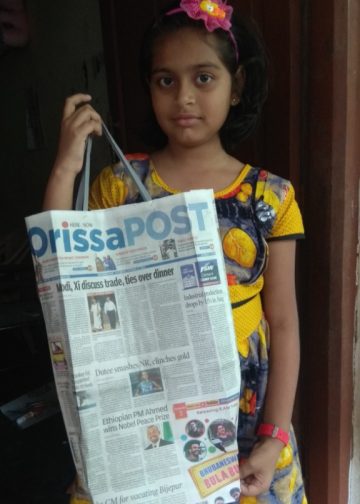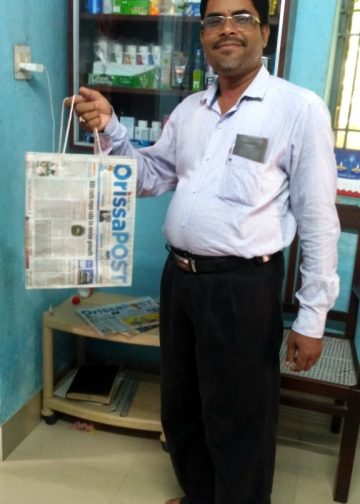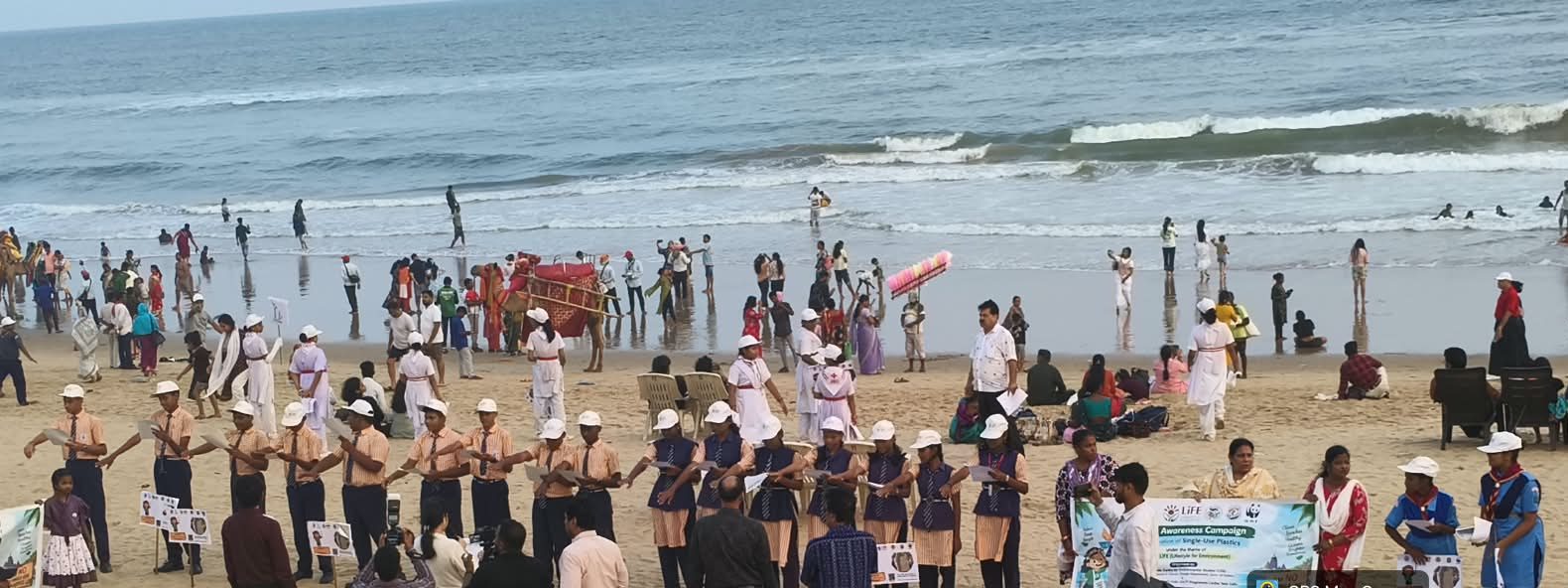
Puri: A mega awareness campaign against single-use plastics was held at Puri Sea Beach Tuesday under Mission LiFE (Lifestyle for Environment), bringing together tourists, students and local residents to promote sustainable lifestyles and encourage collective action against plastic pollution.
The campaign was organised by the EIACP Hub, Centre for Environmental Studies (CES), Forest, Environment and Climate Change Department, in collaboration with WWF EIACP PC-RP, New Delhi, with the support of the Ministry of Environment, Forest and Climate Change.


Similar awareness programmes were conducted in Baripada, Kendrapada and Koraput, attracting more than 25,000 participants across the four locations. The programmes were held under the guidance of PCCF and HoFF and CES Director K Murugesan.
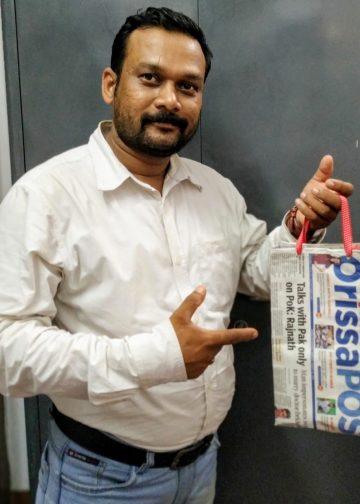
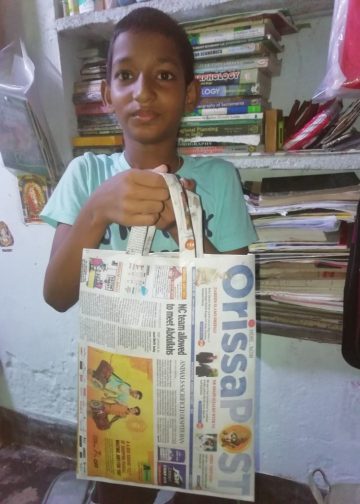
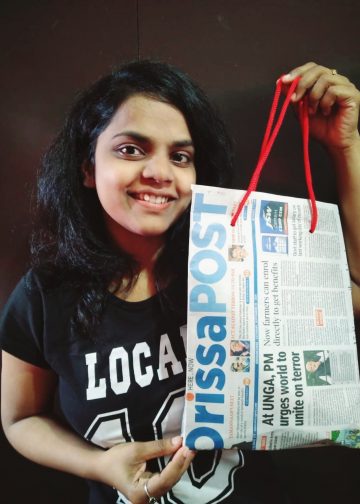
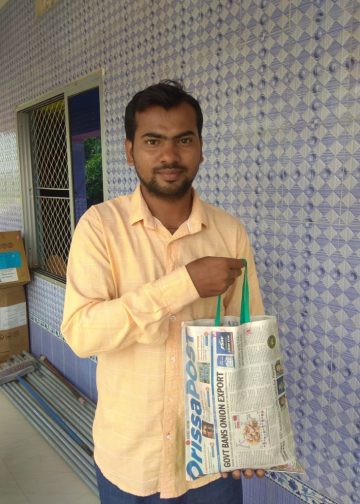
At Puri, a mobile awareness chariot travelled through the beachfront and pilgrim areas, spreading information about restrictions on single-use plastics and promoting alternatives made from bio-based and environmentally friendly materials. Visitors were also encouraged to take the ‘Mission LiFE Green Pledge’, committing themselves to reducing the use of single-use plastics, following the principles of Reduce, Reuse and Recycle, segregating wet and dry waste, conserving water and energy, and supporting community cleanliness initiatives.
The campaign featured awareness stalls, competitions, distribution of information, education and communication (IEC) materials, interactive selfie kiosks and a symbolic pledge-taking drive. Caps and cups were distributed among participating students, while competition winners were presented with mugs in recognition of their active participation. The campaign also drew attention to scientific evidence on the movement of plastic waste through the Mahanadi River system to the Odisha coast.
Findings from WWF-India’s Tech for Conservation programme, supported by Automation Anywhere, were highlighted to demonstrate the scale and pathways of plastic pollution reaching the marine environment. The initiative uses satellite remote sensing, machine learning and Web GIS to identify and monitor floating litter across the Mahanadi basin and Odisha coastline.
The Mahanadi Litter Detection Dashboard can help identify litter accumulation zones and seasonal hotspots, potentially supporting pollution-control authorities, municipalities and conservation agencies in planning targeted waste-management and clean-up measures. Organisers appealed to tourists, students and residents to refuse unnecessary plastic, reduce consumption and dispose of waste responsibly, particularly plastic bottles, wrappers and carry bags. They stressed that preventing plastic leakage at source is essential to protecting Puri’s coastline, the Mahanadi delta and the wider marine ecosystem.
Orissa POST – Odisha’s No.1 English Daily