

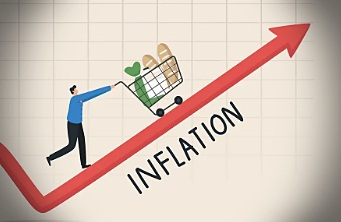
Life is getting difficult by the day for Indians with all us citizens reeling under the dual shocks of rising cost of living and stagnant purchasing power. Now news has come that retail inflation has soared to a two-year high of 6.09 per cent in October, breaching the Reserve Bank of India’s upper tolerance limit of 6 per cent.
The upward tick in inflation was led by higher food prices that show no sign of easing. Likewise, the wholesale inflation in October was recorded at 12.29 per cent, the highest in the new Wholesale Price Index (WPI) series with 2022-23 as base year, driven mainly by costlier fuel and power, and non-food items.
Food retail inflation rose to 8.94 per cent in October from 7.74 per cent in September with onion, garlic, ginger and lemon among the commodities recording the highest inflation rates nationally. In fact, onion price has doubled in one year from Rs 26.91 per kilogram recorded a year ago to 53.81 per kilogram on 12 November.
Likewise, garlic prices have grown by nearly 61 per cent, while ginger and lemon have gone up by 50 per cent and 47 per cent respectively. Sugar prices have also increased from Rs 46.59 per kilogram to Rs 60.40 per kilogram with some observers blaming this on the government’s aggressive push for ethanol blending in petrol. Rainfall deficits linked to the El Nino phenomenon and crop diseases have also led to the growing pressure on food prices.
Nationally, the monsoon was the weakest since 2023, while there are apprehensions that this year’s El Nino could prove exceptionally harsh and long in which case the damage may extend well beyond this year’s crops. Also, inflation has been higher in rural areas at 6.63 per cent than in urban areas at 5.41 per cent.
This could aggravate the rural distress that the country has been witnessing for some years due to stagnant, or in some cases, falling farm incomes and negligible employment opportunities in villages and semi-urban areas. Adding to the inflationary pressure is the higher global com modity costs caused by the ongoing conflict in West Asia.
Supply chain disruptions in energy and international trade have already pushed up the costs of crude oil and fertilizers. India which imports about 90 per cent of its crude oil requirement is already bearing the brunt of higher oil and fertilizer prices that have hit households and farmers. At the same time, a weaker rupee has made imports more expensive.
There appears to be no let-up in people’s miseries with experts predicting that inflation is yet to make its peak, while the RBI may again hike the repo rate. The RBI’s inflation target is around 4 per cent, with an allowable range of 2 per cent on the lower side and 6 per cent on the higher side.
October’s inflation of 6.09 per cent will most likely pressure the central bank to go for another repo rate hike early next month. The RBI has already raised its benchmark lending rate by 25 bps to 5.50 per cent, its first increase in nearly four years.
Another 25-bps hike in December, as expected by economists, will lead to 5.75 per cent repo rate. This will only add to the pressure on households in the form of higher borrowing costs. This is the true sad story of most Indians, no matter what GDP figures the government throws up.