
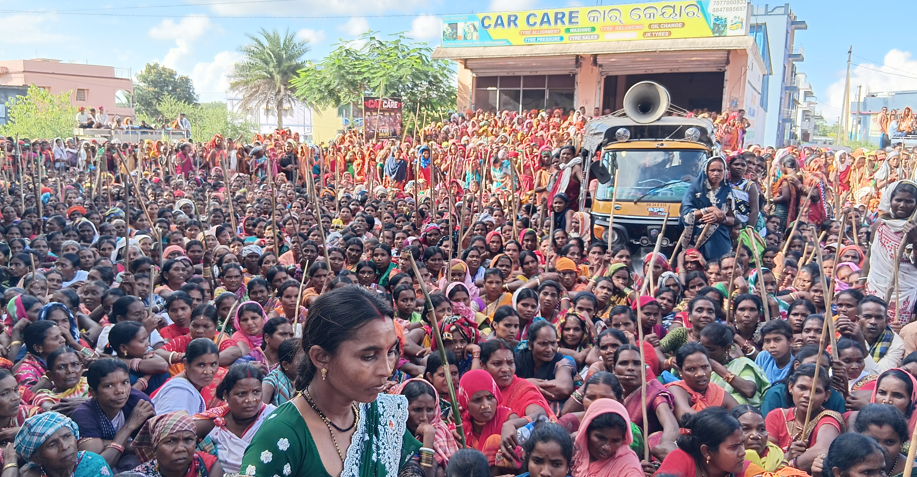
Nabarangpur: The alleged production and sale of adulterated liquor in tribal-dominated Nabarangpur district have raised concerns ahead of the festive season, prompting women’s groups to take to the streets and demand stronger enforcement against illegal traders.
Members of women’s federations have submitted petitions to the district administration and Excise department, alleging that repeated complaints identifying those involved in the illicit trade have failed to trigger effective action.
Women in several villages are also campaigning to make their communities liquor-free. Traditional alcoholic beverages in the region include drinks made from salap and date palm sap, as well as handia, a fermented preparation made from rice and other grains.
However, concerns have emerged over the alleged use of chemicals, including ammonia and urea fertiliser, in illegally manufactured liquor. Such adulteration can cause serious health complications and may prove fatal. Rising alcohol consumption has also been linked by residents to financial hardship, domestic violence and other social problems.
With demand expected to increase during festivals, residents have called for coordinated raids, the closure of illegal manufacturing units and strict action against those involved in the trade. Rajesh Jani, chief adviser to the Nari Mahasangha, said the women’s organisation has been demanding raids on illegal liquor outlets and the arrest of liquor mafias in all 10 blocks of the district.
He said women have submitted written complaints to the Excise department, identifying those involved in the illegal liquor trade in their villages, but no exemplary action has been taken against them. Jani alleged that the police and Excise department were not extending the level of cooperation needed to support the organisation’s efforts to curb the illegal liquor trade.
Excise Superintendent Prat ap Kumar Dash could not be reached for comment. ASP Aditya Sen said complaints were being taken seriously. Special squads were being formed to conduct immediate raids, and enforcement drives were continuing across the district, he said.
The district has been set an excise revenue target of about Rs 28.4 crore for the 2026-27 financial year, raising questions about the balance between revenue collection and effective enforcement against illegal liquor production and sales.